
















Lithuania is set to take over the presidency of the Council of the EU, but the full agenda has not been made public
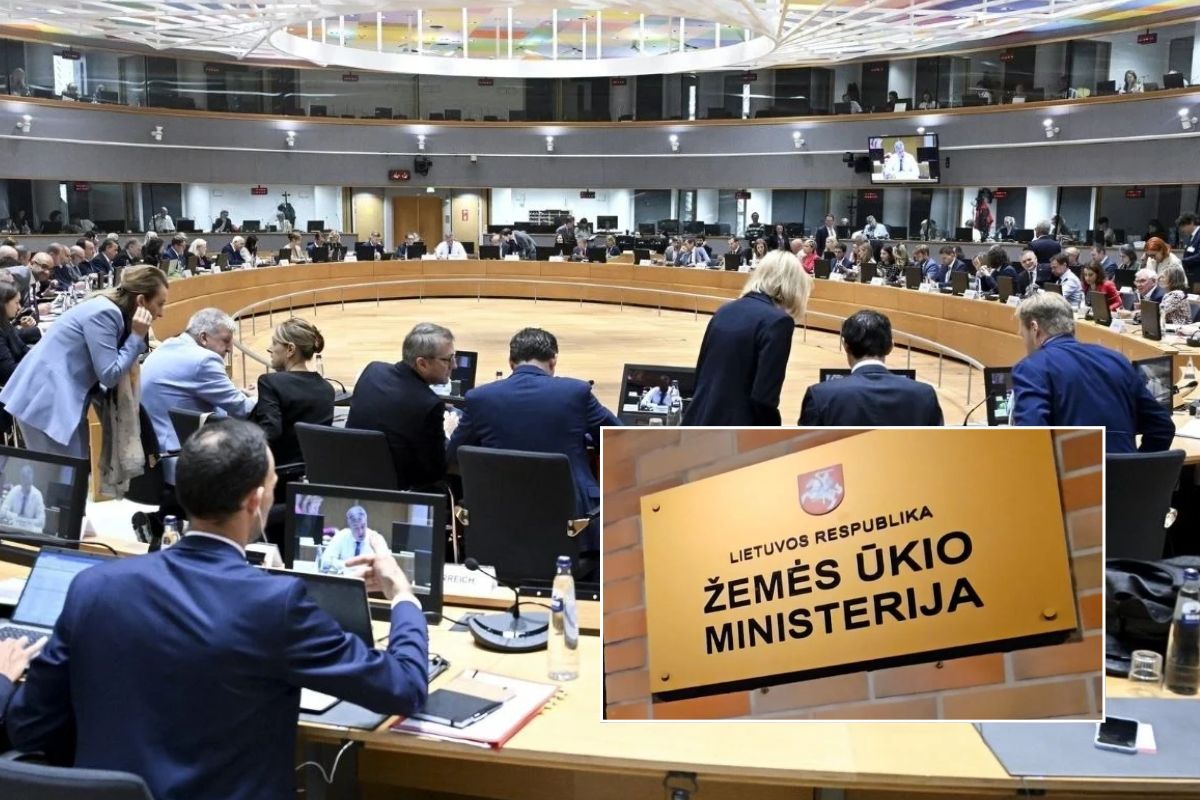
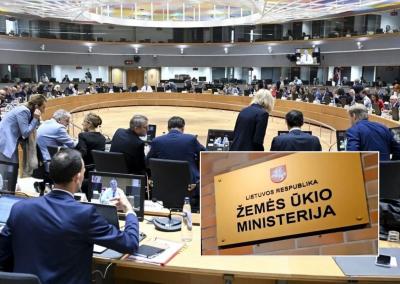
On 1 January 2027, Lithuania will assume the Presidency of the Council of the European Union for the first time since 2013. The Ministry of Agriculture (MoA) has so far spoken publicly mainly about staff training and preparations for negotiations, but in its responses to “Agrobite” it also outlined several specific objectives. However, the full agenda for the upcoming presidency remains confidential. Eighteen sets of negotiating briefs fall within the remit of the Ministry of Agriculture. The documents are currently being discussed in closed-door sessions of the Seimas.
It is preparing 18 negotiation dossiers, but is not making them public
The Ministry of Agriculture states that 18 negotiation dossiers relating to Lithuania’s Presidency fall within its remit: 16 issues are on the agenda of the Agriculture and Fisheries Council, whilst a further two – the General Affairs Council and relate to amendments to food and feed safety requirements.
However, the Ministry has so far only specifically outlined five key legislative priorities: the terms of the Common Agricultural Policy (CAP) and its funding after 2027, a review of the Regulation on the common organisation of agricultural markets, an update to the rules on unfair trading practices, the conditions for future fisheries support, and a review of the EU’s Common Fisheries Policy.
The remaining issues have not been specified individually. The Ministry of Agriculture explained that the negotiating mandates are being considered by the Seimas, and that their examination by the Committee on Rural Affairs took place in a closed session. They are due to be considered next by the Committees on European Affairs and Foreign Affairs.
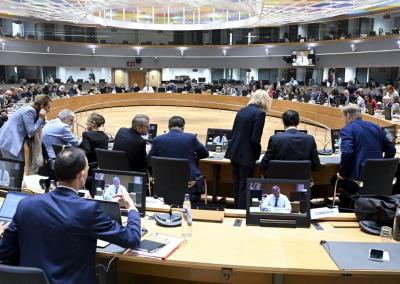
The Ministry emphasises that the country holding the Presidency cannot simply prioritise its national interests over the common interests of the EU – it must organise the work of the Council, coordinate the positions of the 27 Member States and prepare compromise proposals.
Lithuania’s requirement – €6.9 billion
The Ministry of Agriculture provided the most concrete response regarding future agricultural funding. Under the financial framework for 2028–2034 proposed by the European Commission, approximately €4.3865 billion is currently earmarked for Lithuanian agriculture and rural development. The Ministry of Agriculture considers this amount to be insufficient.
“We aim to complete the external convergence of direct payments and reach 100 per cent of the EU level of direct payments, whilst not reducing funding for rural development. According to preliminary estimates, Lithuania would need around €6.9 billion in EU funds for the period 2028–2034,” the ministry stated.
This is approximately €2.51 billion, or around 57 per cent, more than the amount currently earmarked by the Commission. However, the Ministry of Agriculture does not regard the €6.9 billion as the minimum acceptable threshold for Lithuania.
“This amount is a negotiating benchmark justifying Lithuania’s funding needs, rather than a predetermined minimum acceptable threshold,” the ministry explained.
Direct payments – 100 per cent of the EU average by 2034
The Ministry of Agriculture has also, for the first time, clearly set out the ultimate target for the convergence of direct payments.
“Lithuania’s position is – to complete the external convergence of direct payments during the period 2028–2034 and to reach 100 per cent of the EU average for direct payments by 2034“, – states the ministry.
According to the Ministry of Agriculture’s assessment, the average level of direct payments in the EU in 2027 is expected to be around 270–280 euros per hectare. However, this does not yet represent the specific level of payments in Lithuania in 2034 – the overall EU average may change before then.
The range of area-related income support proposed by the European Commission – 130–240 euros per hectare – is, as the Ministry explains, not directly equivalent to the average direct payment in the country.
The Ministry of Agriculture states that it will seek to ensure the proposed range is as narrow as possible, whilst reducing the differences in payments between countries. However, the Ministry has not specified what specific lower limits in euros per hectare Lithuania will demand in the negotiations.
It will not set purchase prices, but promises to change the rules of trade
During its Presidency of the Council of the EU, Lithuania will not directly set purchase prices for milk, cereals or other agricultural products. However, the Ministry of Agriculture promises to initiate a review of EU rules on unfair trading practices in the food supply chain. According to the Ministry, the aim is to better protect farmers and other suppliers from unfair behaviour by buyers, ensure fairer contracts and create conditions for producers to receive fairer remuneration.
During its Presidency, Lithuania intends to examine the European Commission’s proposal in working groups, submit its own compromise amendments to the legislation and prepare a progress report on the negotiations. If no agreement is reached, consideration of the document will be handed over to Greece, which will take over the Presidency from Lithuania.
However, the Ministry of Agriculture has not yet specified what specific legal measures Lithuania will seek: whether mandatory written contracts, stricter pricing transparency, new sanctions against buyers, or additional tools to strengthen producers’ bargaining power.
Market issues to be discussed at least three times
The Ministry of Agriculture promises that, during Lithuania’s Presidency, the situation in agricultural markets will be included on the agenda of at least three meetings of the EU Agriculture and Fisheries Council.
“This will provide an opportunity for Member States to discuss the challenges facing the agricultural sector and, where necessary, to ask the European Commission to take measures to stabilise the markets,” – the ministry states. However, the response does not specify what specific measures Lithuania would seek regarding fertiliser, fuel and energy prices: a new EU support fund, a larger agricultural reserve, amendments to the rules on temporary state aid, or some other mechanism.
Which farmers’ organisations were involved? – no response
“Agrobitė” The Ministry of Agriculture also asked for details of which specific farmers’ and agricultural organisations were involved in drawing up the Presidency’s objectives, when the consultations took place, and which of their proposals were included in the programme.
The Ministry did not provide the names of the organisations, the dates of the meetings, or the specific proposals that were accepted. The Ministry of Agriculture limited itself to a general statement that it cooperates with farmers’ and agricultural sector organisations, takes their problems, proposals and expectations into account, and will continue the dialogue in the future.
It is therefore impossible to determine from the Ministry’s response whether the 18 negotiation documents were actually coordinated with farmers’ organisations, which of them were involved, and how many of their proposals were incorporated into Lithuania’s position.
It is unclear when the public will see the full programme
The Ministry of Agriculture states that the Government approved the draft list of issues and descriptions for the Presidency programme as early as 2 September and forwarded them to the Seimas. However, there is no specific deadline by which the full programme or a summary of the issues falling within the Ministry of Agriculture’s remit should be published for the public.
„“Whether the Ministry of Foreign Affairs, which is responsible for the programme, intends to publish the overall programme for Lithuania’s Presidency, summaries of the areas falling within the Ministry of Agriculture’s remit, or individual issue descriptions, should be enquired about separately“”, – replied the Ministry.
Thus, specific objectives have already been drawn up, approved by the Government and are being debated in the Seimas, but farmers and the public are still unable to familiarise themselves with the full agenda of 18 issues.

Similar articles

Video