






















































A proposal has been made to postpone the ban on the fur trade, which is due to come into force next year
The Government does not support the Seimas’ initiative to amend the compensation arrangements for fur farms ceasing operations, but proposes drafting a new bill that would postpone the ban on this industry – due to come into force next year – until 2030.
Although the Ministry of Agriculture (ŽŪM) supports the aim of establishing a more precise compensation scheme, it does not agree with the bill proposed by the parliamentary committee – the Government adopted this conclusion by the Ministry at its meeting this week.
In the Ministry’s view, the proposal is inconsistent with last year’s ruling by the Constitutional Court (KT) and, furthermore, requires significant budgetary resources.
The Seimas approved the ban on the fur farming industry back in September 2023 – the law stipulates that existing fur farms must be closed by 2027, with a transitional period in place until then during which business owners can receive compensation.
This parliamentary decision was challenged before the Constitutional Court, but the Court deemed the ban lawful, although it did find that the adopted bill made it more difficult for some business owners to receive compensation.
The Seimas Committee on Rural Affairs proposes amending the procedure for payments and stipulating that their amount should be determined on the basis of the value of the business at the time of cessation of operations, and, if operations have not yet ceased, at the time the business valuation contract was concluded.
The Committee also proposes that the demolition of buildings and facilities used on fur farms, as well as the disposal of waste, be funded from the state budget.
This work should be carried out within six months of the date on which the specified compensation is paid; otherwise, the state would have to compensate for the loss incurred by the business as a result of being unable to use the land on which it previously operated.
However, instead of this initiative, the Ministry of Agriculture proposes to draft another bill on the Animal Welfare and Protection Act, stipulating that the date for the ban on fur farming be postponed by three years – until 1 January 2030.
During this additional transitional period, only businesses that were lawfully engaged in fur farming by the end of this year would be permitted to continue their activities, and they would be eligible for the compensation provided for in the Act.
„Establishing an additional three-year transitional period would enable businesses continuing their operations to prepare for their cessation over a longer period, to recoup the investments made in carrying out their activities, to sell off their existing stock and, where possible, to switch to other economic activities“, argues the Ministry of Agriculture.
According to the Ministry, it would be financially easier for a business to cease operations, as it could cover part of the resulting economic burden from the income generated by its activities during the transitional period, and this would also mean that fewer funds would need to be allocated from the budget.
It is estimated that €1.554 million will be required to compensate fur farms whose operations are ceased by the end of this year.
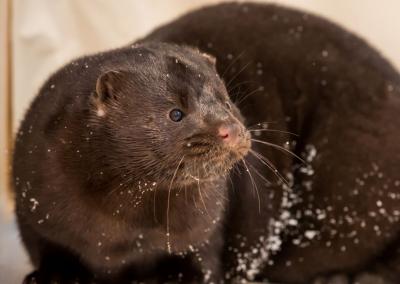
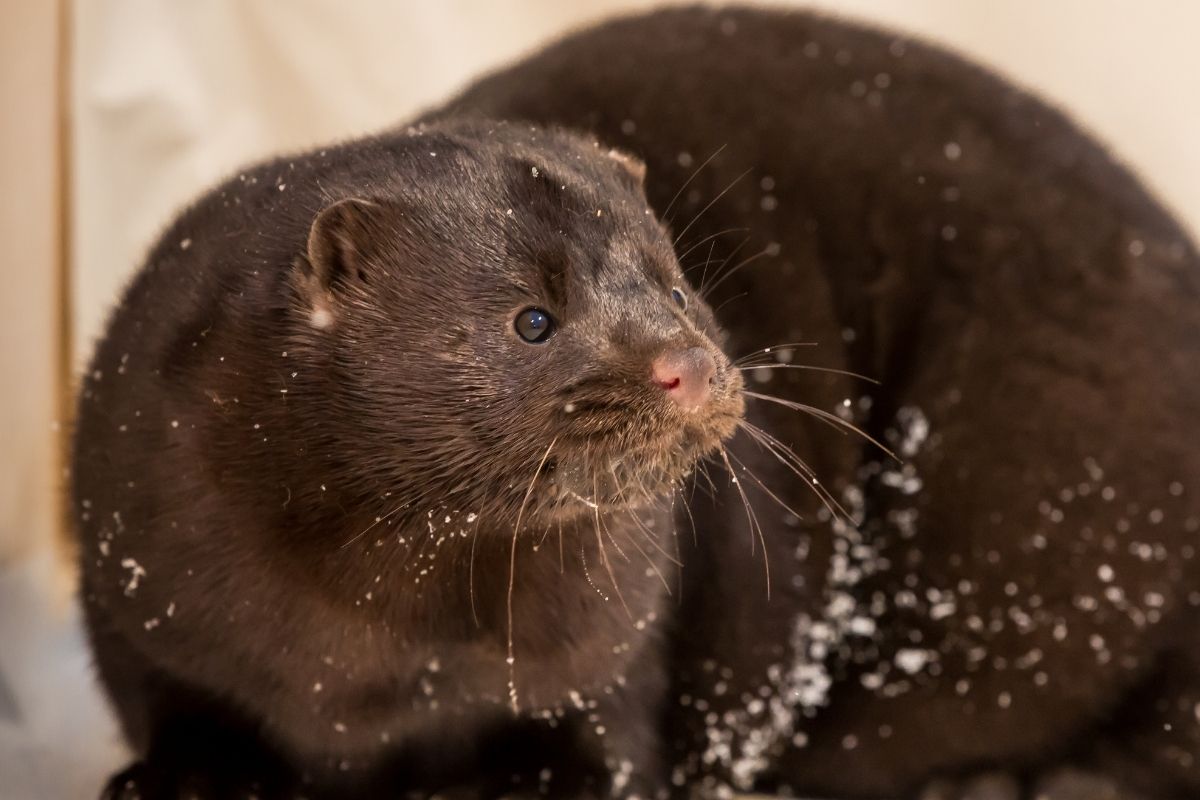
According to data from the Agricultural Data Centre (ŽŪDC), in January this year there were 40 businesses that had registered 50 herds and kept a total of 703,700 mink, whilst 24 businesses kept chinchillas, totalling over 20,000 of these animals.
During the period 2024–2026, 10 businesses applied for compensation and were paid approximately 293,000 euros.
As reported by ELTA, for a long time there was no political consensus on the ban on fur farms; ultimately, the decision to impose the ban was taken during the term of Ingrida Šimonytė’s government.
Since this decision was taken, attempts have been made several times in the Seimas to overturn the ban, and the fur farmers themselves have taken the matter to court – a complaint from 48 farms is currently being heard by the Regional Administrative Court, in which they are seeking more than 113.6 million euros in damages from Lithuania.
Fur farms have been banned in more than 19 European countries. The other two Baltic states have already taken this decision, as have Austria, France, Ireland, the United Kingdom, the Netherlands and others.

Similar articles



Video