










































Keeping calves outdoors is worth considering as a first option
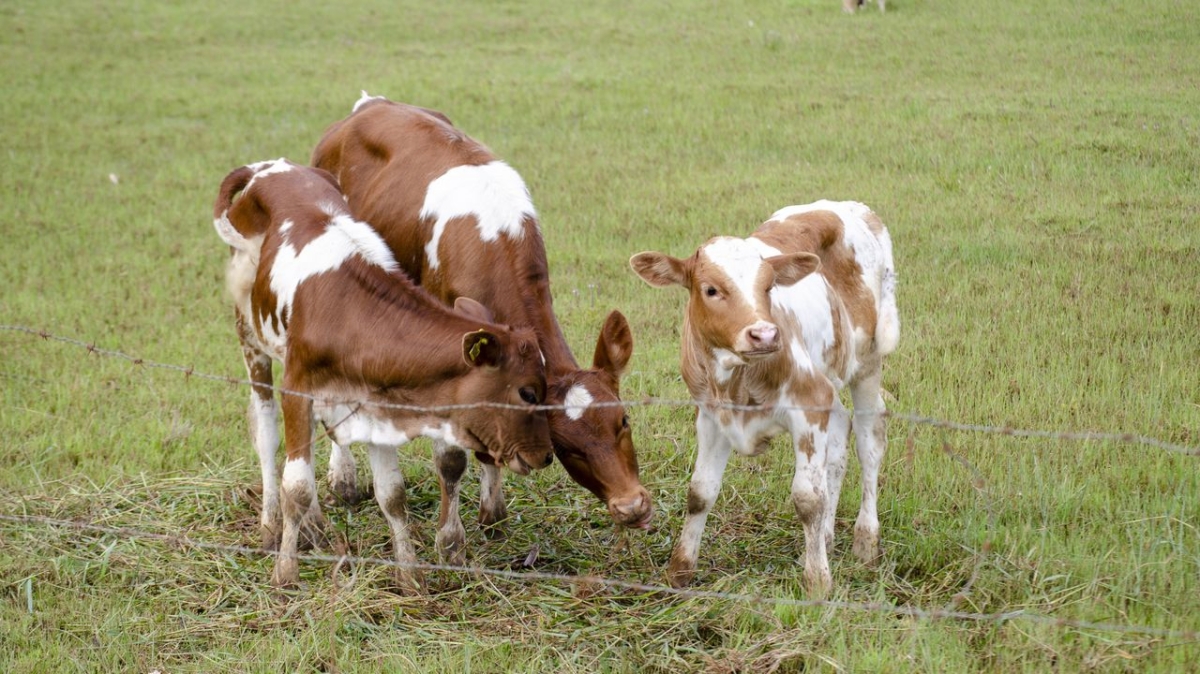
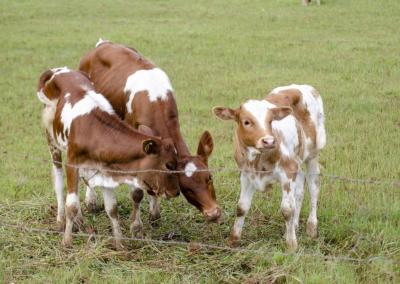
When planning new facilities for milk-fed calves, I would first suggest considering outdoor huts, group shelters and other open, simple structures. In a well-chosen location, these can ensure good air quality with a lower initial investment. It is worth opting for a more expensive building only when there are clear additional benefits for the specific farm.
This choice begins with the calf’s resting area. It is important to assess whether fresh air will reach the area even on calm days, whether windbreaks will obstruct air circulation, and whether watering and bedding changes will remain convenient during rain and cold spells.
Ammonia control starts with the bedding
Ammonia irritates the mucous membranes of the respiratory tract, and the calf spends considerably more time near the source of pollution than a worker inspecting the pen. Therefore, assessing air quality whilst standing in the aisle can be misleading. A study carried out on Belgian farms found that prolonged exposure to an environment where ammonia concentrations exceeded 4 ppm was associated with a higher incidence of lung lesions detected by ultrasound. This figure is not a universal safety threshold, but it illustrates why waiting for a pungent odour is not sufficient.
Air exchange and the source of pollution must be managed together. Wet bedding saturated with urine and faeces increases ammonia emissions; simply adding an extra layer of straw does not replace its removal. Recommendations from the University of Wisconsin rightly link good air quality to dry bedding and adequate ventilation. Where in doubt, it is worth measuring ammonia levels in the calves’ breathing zone in several pens, including those with the poorest ventilation. These measurements help determine whether the priority should be to change the bedding management, improve airflow, or address both issues.
The advantage of outdoor systems must be maintained through design
The strength of outdoor systems lies in the ability for fresh air to reach the calves directly. The Teagasc calf rearing guide recommends outdoor huts and shelters for the prevention of respiratory diseases. This approach is also supported by trial results: calves housed indoors were more likely to require repeat treatment for respiratory diseases. In the same trial, calves reared outdoors were more likely to suffer from diarrhoea.
However, it is easy to lose good air quality by closing the hutch’s openings ‘to keep it warmer’. The position of the shed, the roof and the barrier around the sleeping area should provide protection from direct wind and precipitation, whilst still allowing air to circulate. A damp floor and closed vents in an outdoor shed can create the very problem that calves are trying to escape from the barn. Therefore, the yard, drainage and the layout of the huts are all part of the system.
In winter, it is essential to maintain dry, plentiful bedding and to meet the increased energy requirements through feeding. In summer, it is necessary to assess the heating of the hutch and the need for shade: microclimate measurements of different housing systems show that huts and polytunnel structures can become hotter than barns. I would only opt for an outdoor solution if it is clear how it will be managed and how a suitable microclimate will be maintained in both seasons. Outdoor housing does not necessarily mean individual huts. When designing the system, it is also worth considering housing in pairs or small, stable groups to ensure social contact between calves. (EFSA, 2023)
When does additional ventilation serve a clear purpose?
To address air quality issues in an existing barn, supplementary ventilation can be a sensible investment. Young calves generate little heat, so during calm periods, natural draughts may not be sufficient. If fresh air does not reach some of the pens, a properly designed positive-pressure perforated air duct can distribute it to the required areas without causing draughts in the sleeping area. A fan simply blowing along the length of the pens does not guarantee this result.
It is therefore important to identify which shortcoming the equipment will address. On one farm, it may be more cost-effective to improve an existing building, whilst on another, it may be better to set up new outdoor pens. Mechanical ventilation also supplies fresh air; its value depends on whether the air supply in a particular building becomes more reliable and whether this benefit justifies the costs.
Let’s calculate the total cost of the rearing facility and labour
The purchase price of a shed does not, in itself, indicate how much an operational calf-rearing facility will cost. Additional costs include the foundation, drainage, fencing, water, watering equipment and access. This is clearly illustrated in the AHDB’s 2021 comparison of UK system cost estimates: when a concrete foundation and drainage were included, a single-unit shed was more expensive than a space in a calf house with a positive-pressure vent, whilst some group sheds were cheaper. The scale and specifications varied, so these cost estimates are useful as a guide for comparing the entire system. They cannot be used to replace Lithuanian prices.
Day-to-day operations can alter the assessment of the investment even further. In a system comparison carried out in Ireland, the time taken to tend to hand-fed groups was 55 seconds indoors and 87 seconds outdoors per calf per day, excluding pen cleaning. No difference in health outcomes was observed in that trial. The layout of the systems and the size of the groups differed, but the direction is important for the farm: the capital saved may be offset by daily milk collection, longer routes and more manual labour.
I therefore recommend designing the outdoor option in conjunction with the workflow. The design must specify where the milk is prepared, how it will reach the calves, how bedding will be removed and how water will be supplied during cold spells. Group housing can help to shorten the service route, but this option needs to be checked on the plan. It is worth calculating the annual costs of labour, bedding, feeding and care per calf reared, taking into account space utilisation. Any expected reduction in treatment costs should not be recorded in advance as a guaranteed saving.
My proposed sequence of investments is clear: first, let us select a fully-fledged outdoor system or open-shed option; then, with the same number of calves and the same workload, let us compare it with a building. If a simple solution ensures good air quality, a dry lying area and an acceptable level of labour costs, the lower capital requirement is a strong argument in its favour. If this cannot be achieved, we will have a concrete basis for investing more.

Similar articles


Video