















































The harvest is becoming a test of business acumen: why do some farms make a profit whilst others do not?
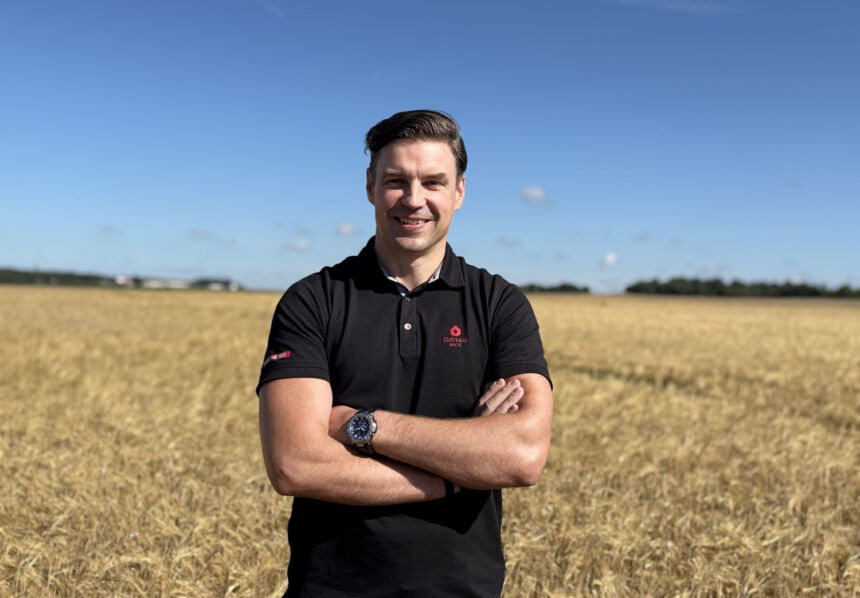
According to experts in the agricultural sector, the success of farms today is increasingly determined by the ability to manage available resources effectively, apply advanced technologies and make sound investment decisions.
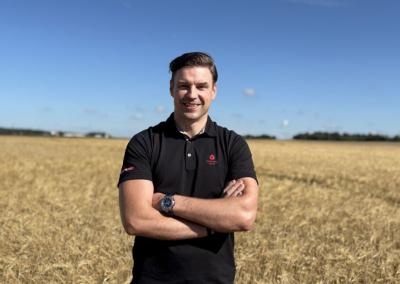
According to Dangis Valaitis, Lithuanian agriculture has undergone a fundamental transformation over the past two decades: “If we look back to the 1990s, one person could cultivate 20–40 hectares, whereas on a modern farm today, that figure is 150–250 hectares.”&“
This change reflects more than just advances in machinery and technology. It shows how farms’ approach to efficiency, planning and investment has evolved.
This year’s grain harvest: what do the early signs suggest?
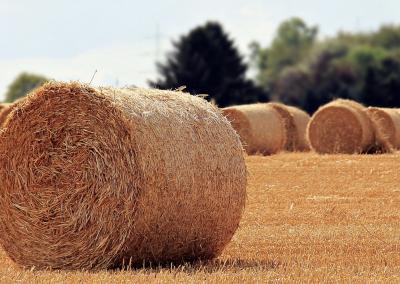
Although the final results will only be known once the season is over, the initial harvest data allow us to assess the main trends. The situation varies across different regions due to uneven rainfall, soil conditions and other factors.
“This year’s grain harvest began earlier in northern Lithuania. The situation in southern and central Lithuania looks good, whilst the greatest concern remains in western Lithuania, where crops have been affected by a lack of moisture and spring frosts.“
According to D. Valaitis, the country’s total grain harvest may be similar to or slightly higher than last year’s. “At present, it is likely that we will achieve a harvest in Lithuania that is similar to or up to 5 per cent higher than last year. The greatest potential is expected from cereal crops.
However, the actual result will be reflected in the farm’s profit, which is influenced not only by the harvest itself but also by all the decisions taken previously.
The grain harvest – the result of decisions
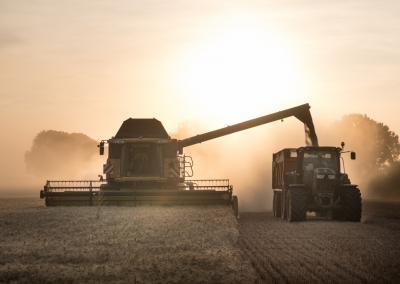
According to D. Valaitis, the best results will be achieved not by those farms that were lucky with the weather, but by those that were properly prepared for the season. A well-planned crop rotation, the technologies used, sufficient machinery capacity and the ability to carry out sowing and crop protection work on time were all of great importance.
“This year, there were several occasions when the most important tasks had to be carried out within an extremely short timeframe. We are seeing the same pattern during the grain harvest: a few days of sunshine, followed by rain again. That is why the farms that succeed are those that can harvest quickly and have sufficient machinery and grain-drying capacity. We’ll discuss the final harvest in a month’s time, but we can already assess today whether all the decisions made prior to the harvest were the right ones.“
The final cost of production is also determined by when and at what prices fertilisers and plant protection products were purchased, and how accurately and effectively they were applied in the fields.
Profitability is not determined by hectares
It is often thought that only a large farm size ensures a competitive advantage. However, practice shows that this is no longer the main factor for success. Experience in recent years has shown that rising costs of machinery, fertilisers, energy and labour are forcing farms to assess their business decisions much more carefully.
Who is making a profit today? It is the farm that has invested in productivity, reduced its workforce, adopted precision farming and started working according to maps. Investments in machinery must also be calculated very precisely: “Idle machinery does not create value. It depreciates, and leasing payments must be made for it, so every investment must meet the farm’s actual needs.”&“
Over the past few years, agricultural machinery has risen in price by around 30 per cent, whilst farmers have faced particularly sharp price fluctuations in the fertiliser market. „When grain prices had fallen to around 190 euros per tonne, profitability became a serious challenge for many farms. In recent months, prices have recovered to around 245 euros per tonne, so the mood in the market is slightly more optimistic.“
Technology is becoming a necessity
On modern farms, technology is no longer a competitive advantage, but a prerequisite for operating efficiently. Precision farming solutions, automated steering systems, satellite data, field maps and various analytical tools are being used with increasing frequency.
Automatic steering systems, which were a rarity two decades ago, have now become a standard feature of modern machinery, helping to reduce overlap, save up to 15 per cent of working time and around 10 per cent of fuel costs.
However, according to D. Valaitis, the information generated by these technologies is becoming even more important than the technologies themselves. Yield maps allow for a very accurate assessment of the potential of each field. Based on this data, farmers make decisions regarding fertilisation, sowing or other agronomic measures, and sometimes find that it is simply not cost-effective to cultivate certain areas.
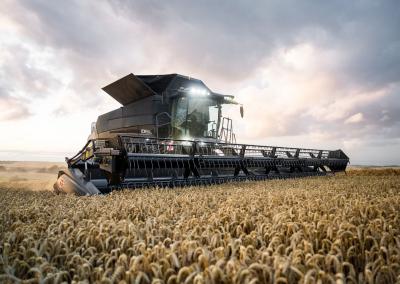
Today, combine harvesters, tractors and other machinery have long since become not just tools of the trade, but also platforms for collecting large amounts of data.
“Data collection is the farm’s primary task. If we don’t use it today and don’t know how to use it, in a few years’ time artificial intelligence will analyse everything and suggest solutions,“ he says.

Similar articles


Video