









































































Robots that collect and analyse grain samples have been tested in US grain silos
A technology is being trialled in the US grain sector that could fundamentally change one of the most important processes at grain elevators – the taking of grain samples. Such research usually sparks considerable controversy in Lithuania between farmers and grain buyers.
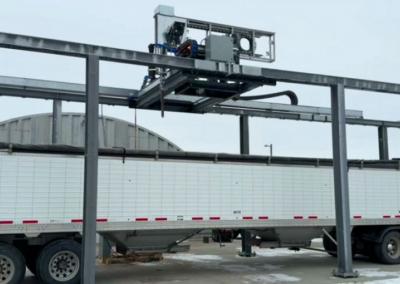
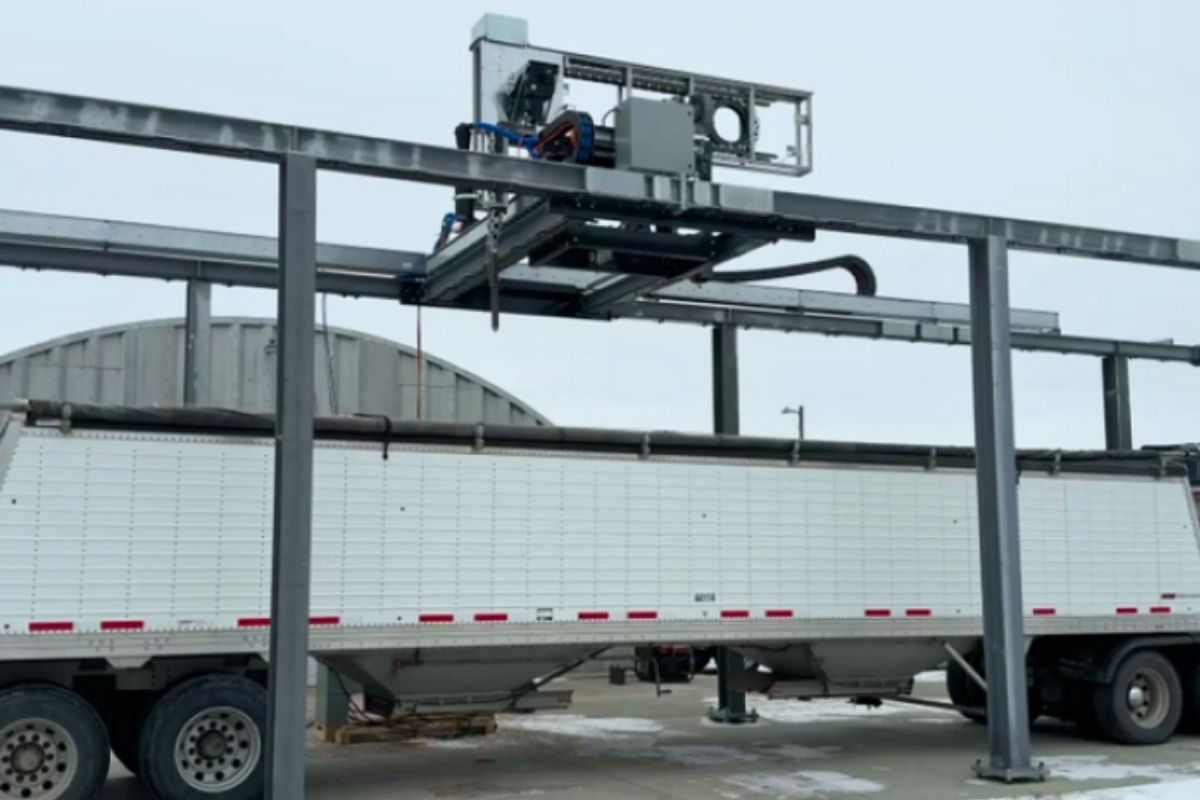
The US company “RealmFive” has tested the “FlowGrade AutoProbe” system under real-world elevator operating conditions; the system automatically takes grain samples from lorries and tractor trailers arriving at the reception point without any operator intervention. In one of the trials during the season, the system took around 3,500 samples, and the co-operative that tested it noted faster vehicle processing and a reduced need for manual labour.
The technology’s operating principle is based on LiDAR – a laser-based environmental scanning technology widely used in autonomous vehicles and robotics. Before starting work, the system scans the truck’s body and creates a three-dimensional model of it. It determines where the grain is located and identifies partitions, lashing straps, tarpaulins and other obstacles. Only then does the system independently select the sampling points.
One of the key advantages of this solution is that the sampling points are not predetermined and are not repeated according to a fixed pattern. The system can select different locations across the entire load area, thereby aiming to obtain a more representative overall grain sample. The automated process also reduces the influence of the human factor – both the risk of random operator errors and the risk of potential tampering.
The automated probe can descend right down to the bottom of the load, where heavier impurities, sand or damper grains often accumulate. Samples taken from different locations are combined into a single composite sample, which can then be sent directly to the laboratory or to an automated grain analysis system. Such a technological workflow would enable the grain reception process to be carried out more quickly and reduce the number of manual operations performed by laboratory staff.
The “RealmFive” technology was tested by the US agricultural co-operative “Agriland FS”. Over the course of a single season, the automated system collected approximately 3,500 grain samples.
The trial showed that lorries were able to move more quickly through the grain reception area, whilst staff had less manual work to do. Another co-operative – “New Vision Cooperative”, which operates a network of grain silos with a total storage capacity of around 727,000 tonnes – was also satisfied with the results following the trials. There are plans to increase the number of grain intakes without increasing the number of staff on duty.
Automation is particularly important during the peak harvest period, when queues of lorries form at the grain elevators, and every extra minute spent in the reception area reduces the efficiency of the entire logistics chain. In traditional systems, grain sampling and initial quality assessment often require the intervention of an operator or laboratory staff member. An automated solution can operate independently or be integrated with scales, laboratory equipment and the company’s grain accounting system.

Similar articles





Video