





































































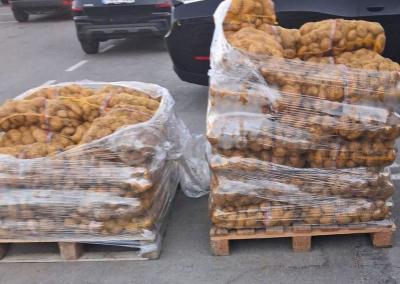


























A blow to exports: around 10 million tonnes of grain are being stored in plastic sacks in Russia

The Russian grain sector is facing a serious crisis in exports and storage. Due to disruptions to shipping in the Black Sea, around 10 million tonnes of grain – or 7 per cent of the country’s annual harvest – is already being stored in silos. Analysts predict that the surplus of unexported grain could reach as much as 20 million tonnes.
Since the start of July, Russian grain exports have fallen by around a third. The main reason is the hostilities in the Black Sea region and attacks on port infrastructure and ships, which have disrupted one of the world’s most important grain trade routes.
According to data from the Russian Grain Union, between July and October 2026, just 11.2 million tonnes of grain were exported via the country’s ports, compared with 24.2 million tonnes a year earlier. In October alone, cargo volumes fell threefold – from 7 million to 2.3 million tonnes. Wheat shipments fell to 2 million tonnes, whilst barley shipments fell to 161,400 tonnes.
The share of the Azov and Black Sea basin in the cargo handled by Russian grain ports fell from 71.6 per cent to 5.5 per cent over the year. Exporters are attempting to reroute shipments via ports on the Baltic and Caspian Seas, but alternative routes are unable to fully compensate for the lost capacity.
The total capacity of Russia’s grain storage infrastructure stands at around 160 million tonnes, but only 40 per cent of this capacity meets modern requirements. As a result, polymer silos, which can hold up to 200 tonnes of grain and, under suitable conditions, preserve it for up to 18 months, are rapidly gaining popularity.
In November, the US Department of Agriculture (USDA) reduced its forecast for Russian wheat exports from 40 to 39 million tonnes – the lowest level in five years. By the end of the season, wheat stocks could reach 20.1 million tonnes. The analytics firm “SovEcon” provides an even more pessimistic export forecast – 36 million tonnes.
At the start of November, the export price of Russian wheat with a 12.5 per cent protein content at Baltic Sea ports stood at around 227 euros per tonne (FOB), having fallen by approximately 8 euros over the course of a week.
Russia’s export difficulties may present additional opportunities for grain exporters from Lithuania and other EU countries. However, once full shipping operations resume in the Black Sea, the millions of tonnes of grain stockpiled there could trigger a new wave of falling prices on the global market.

Similar articles





Video