

































Heavy rain, hail and a shortage of seasonal workers will reduce the harvest of Lithuanian vegetables
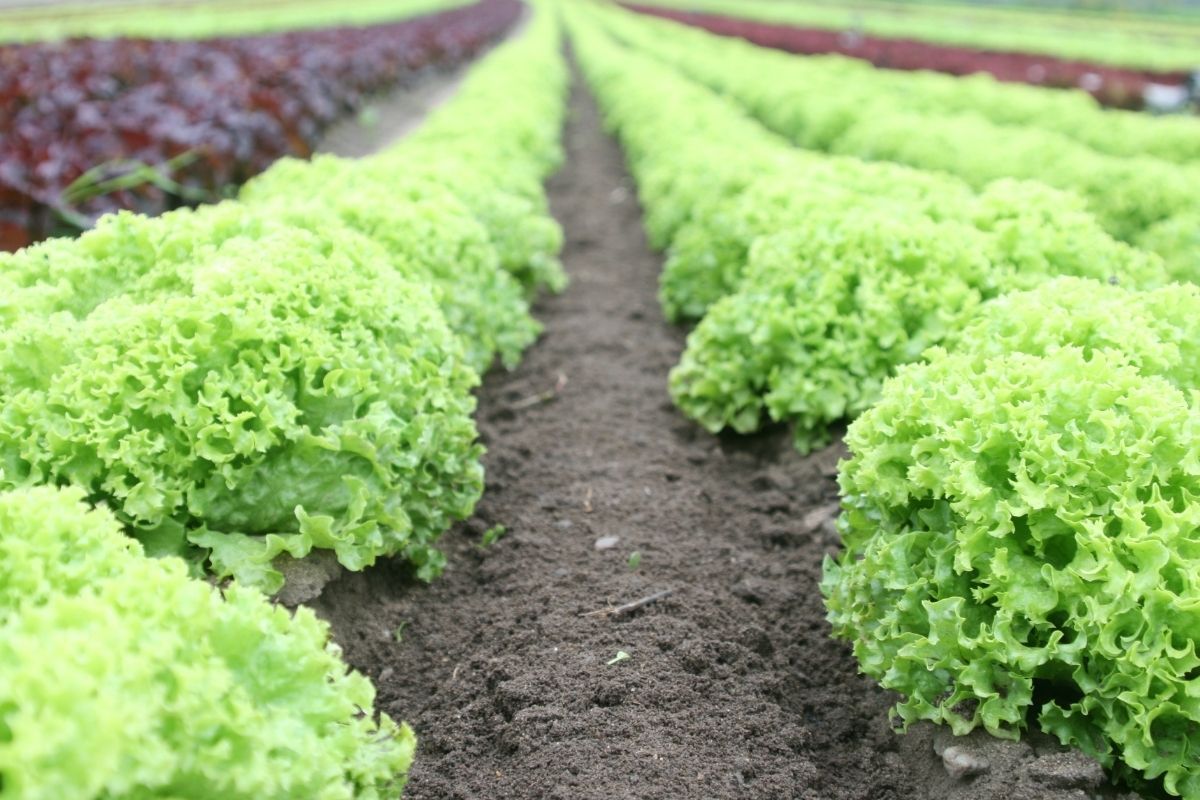
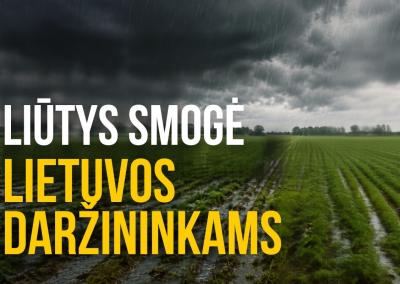
The recent heavy rain and hailstorms have affected vegetable growers differently across various regions of Lithuania. In some districts, heavy rainfall caused the greatest damage, whilst in others it was hail; consequently, the extent of the damage varies greatly depending on the specific farm and location. However, growers across Lithuania are also facing another serious problem – a shortage of seasonal workers, which further increases potential crop losses.
On the farm of Virgilijus Kuprevičius, a farmer in the Kėdainiai district, the heavy rains have not yet caused any significant direct losses. Nevertheless, the prolonged damp conditions and a sudden rise in temperature have created particularly favourable conditions for the spread of plant diseases. Rot is already spreading in cabbage crops, whilst fungal diseases are affecting carrots. In an effort to save as much of the harvest as possible, growers will be forced to react swiftly and use more plant protection products. This will inevitably increase the cost of production.
On the farm of Algimantas Vaupšas, a farmer in the Kelmė district, the effects of the rain are already evident – around 2 ha of cabbages, 3 ha of potatoes and 5 ha of beetroot have been lost due to waterlogging. Although the overall losses are not yet critical, part of this year’s harvest has already been lost.
Julius Šateika, a farmer in the Šiauliai district, has also suffered significant losses. Over a seven-day period, more than 70 mm of rainfall fell on his farm, and the crops were further ravaged by hail. This damaged around 58 ha of onions – practically no healthy leaves remain. Diseases are spreading rapidly through the damage, and the onions are developing and maturing more slowly, so it is likely that the harvest will be smaller. It is still too early to assess the exact extent of the losses, but it is already clear that the impact of the hail will be significant.
The situation is even more serious on the farm of Vincentas Lataitis, a farmer in the Joniškis district. The hailstorm completely destroyed the leaves on around 45 ha of onions. It is currently unclear whether the plants will be able to regrow their foliage and produce a high-quality harvest, so the final losses can only be assessed before or after the harvest. However, it is already clear that part of the onion crop may be lost.
However, this year’s challenges are not limited to natural disasters alone. Vegetable growers across Lithuania are also facing a particularly acute shortage of seasonal workers. The situation is especially difficult on organic farms, where a large proportion of the work is carried out by hand – weeding is falling behind due to the shortage of workers, and once the harvest begins, there is a risk of not being able to gather the produce in time.
According to a survey of members carried out by the Lithuanian Vegetable Growers’ Association (LDAA), each farm is short of an average of around 10–15 seasonal workers this season. The peak demand for seasonal workers is only just beginning, so the situation may become even more complicated in the coming months.
Simona Marmienė, director of the Lithuanian Vegetable Growers’ Association, says that vegetable growers are having to weather several blows at once this year.
“This year’s situation is exceptional in that farmers are having to contend simultaneously with both extreme weather and a critical shortage of seasonal workers. Heavy rain and hail have already caused significant damage to some farms, and where crops have survived, diseases are spreading rapidly due to excessive moisture. At the same time, many farms do not have enough people to carry out weeding and harvesting work. We estimate that the shortage of seasonal workers alone could result in the loss of more than 15 per cent of Lithuanian vegetable production this year, and when the damage caused by natural disasters is also taken into account, the overall reduction in the harvest will be even greater. We will only be able to assess the exact extent of the losses once the season is over, but it is already clear that consumers may see a significantly smaller supply of Lithuanian vegetables this year.“
Algimanta Pabedinskienė, Chair of the Chamber of Agriculture, emphasises that this year’s situation has once again highlighted the need to strengthen the resilience of the agricultural sector.
“Today we can see that farmers are having to cope with not just one, but several challenges at once – extreme weather events, the spread of plant diseases and an increasingly acute shortage of seasonal workers. Such situations show that the state must pay greater attention to risk management measures, accelerate the modernisation of land drainage infrastructure and seek solutions that would help farms secure the necessary workforce. Not only does the competitiveness of farms depend on this, but so does the ability of Lithuania’s population to purchase high-quality Lithuanian vegetables. “Close cooperation between state institutions, farmers’ self-governing organisations and farmers is therefore essential to ensure the resilience and competitiveness of the country’s food production,” – says Algimanta Pabedinskienė, Chair of the Chamber of Agriculture.
According to the Lithuanian Vegetable Growers’ Association, this season has once again shown that extreme weather events caused by climate change and the ever-increasing labour shortage are becoming long-term challenges for the Lithuanian vegetable-growing sector. This means not only lower farm incomes, but also a reduced supply of Lithuanian vegetables on the market and higher production costs.
What is important for farmers to know?
If your farm has suffered losses due to excessive rainfall, or if it becomes impossible to fulfil your commitments on time, the most important thing is not to delay and to document the situation.
First steps for farmers
First of all, it is recommended that you:
• contact the National Paying Agency (NMA) and inform them of the circumstances;
• document the damage caused – take photographs and gather other evidence;
• contact your local council to have the damage assessed and recorded.
If the data collected from local authorities indicates a significant extent of damage, local authorities may declare a local-level state of emergency. Where the phenomenon is widespread, the declaration of a national-level state of emergency may also be considered.
If a state of emergency has not yet been declared
It is important to note that even if a state of emergency has not been declared, farmers do not lose their right to apply to the NMA.
If, due to adverse weather conditions, you are unable to fulfil your support commitments or other requirements on time, for which no automatic exemptions are provided for in the legislation, you must contact the NMA within 15 working days of the date on which you became aware, or could have become aware, of the circumstances.
Applicants do not lose their entitlement to support if they have failed to fulfil their obligations due to recognised force majeure or exceptional circumstances. In such cases, you must submit documents substantiating why it is impossible to fulfil the obligations.
Applications should be submitted by email to dokumentai@nma.lt, and it is recommended that photographs be submitted via the “NMA agro” mobile app. Each situation is assessed on a case-by-case basis.
It is also important to note that applicants may withdraw their application for support for a declared field by 15 September if, for objective reasons, they are no longer able to fulfil their obligations. This option does not apply in cases where the NMA has already notified the applicant of a planned inspection, identified errors in the application, requested additional documents, or where infringements have already been identified during the inspection.
What should be done following the declaration of a national state of emergency?
Once a national state of emergency has been declared, agricultural operators who have suffered damage are entitled to apply to the local authority for an assessment of the damage incurred and for the allocation of state aid. The local authority organises the damage assessment, sets up a commission to inspect the affected crops and determines the extent of the damage.
It is also recommended that you gather all evidence as soon as possible – photographs, video footage and documents confirming the damage suffered and its extent. This may be particularly important both when assessing eligibility for support and when deciding on possible compensation.
If, due to the heavy rain, you are unable to fulfil other obligations
If, due to force majeure, you are unable to fulfil your obligations to banks, produce buyers or other creditors, it is recommended that you inform them of the situation immediately and seek solutions regarding the extension of deadlines or other possible arrangements.
If necessary, you may contact your local Chamber of Commerce, Industry and Crafts to obtain a certificate confirming the circumstances of force majeure. The state reimburses the costs of issuing such certificates (up to €200), and once the certificate has been obtained, the application must be submitted to the NMA within one month.
The most important thing is not to wait until the situation worsens further. By informing the NMA and the local authority in good time and gathering evidence, you can safeguard your right to support, avoid penalties and lay the groundwork for a subsequent assessment of the losses incurred.

Similar articles
Video