









































Bears return to Lithuania's forests: are they already here or are they just wandering around?

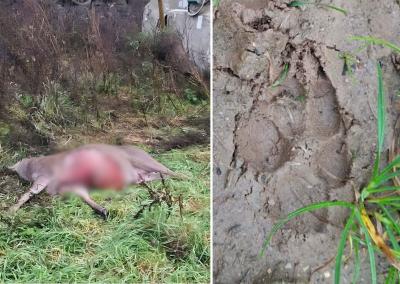
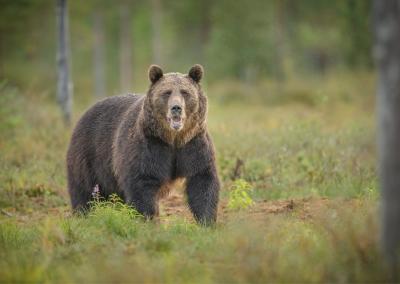
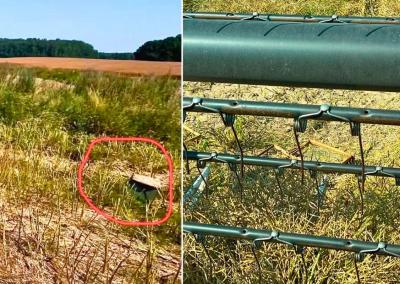
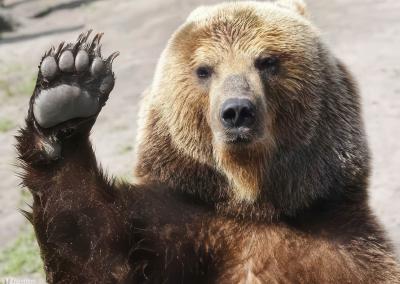
Not so long ago, an encounter with a brown bear in a Lithuanian forest sounded like a rarity or even a sensation. Today, such stories are increasingly reaching foresters and naturalists – tracks in the sand, CCTV footage, or even encounters with them on forest paths show that these animals are making a comeback in our country.
Specialists from the State Forest Enterprise (SFE) note that brown bears are increasingly being recorded in different regions of Lithuania. This raises the question – have bears already settled permanently in Lithuania?
Trying to establish themselves
At least two overwintering brown bears have been recorded in Aukštaitija this year, which shows that they are not choosing the area randomly.
„We can now say that bears are partly our species,– says S. Paltanavičius.
However, according to the naturalist, it will be possible to speak definitively about their comeback when cubs are recorded in Lithuania.
Young wanderers looking for new homes
Bears seen in Lithuania are mostly young animals that have been driven from their territories. They come to Latvia from neighbouring regions such as Latvia and Belarus, and also from Estonia, where the bear population is much larger.
These young beasts can travel up to 20–30 kilometres a day, so national borders are no obstacle for them.
A comeback that happens without human help
Although the appearance of the bears is alarming to some residents, experts urge the situation to be seen as a natural process.
„Bears don't come to Lithuania – they go home. This is a kind of restoration of historical injustice“, – emphasizes S. Paltanavičius.
According to him, these animals were common in Lithuania more than a century ago, but eventually disappeared due to human activity. Now their return is happening naturally, without human interference.
Forest „manager“, not just a predator
„The brown bear – is our largest carnivore, with a very wide diet ranging from plants to small animals or dead game“, – says K. Alekna.
Bears contribute to the natural balance of the forest by collecting food, regulating the populations of some animals, and their wide dietary spectrum allows them to adapt easily to their environment, he points out.
Meeting a bear: what's important to know
The chances of encountering a bear in Lithuania remain low, but experts remind us that it is important to behave responsibly in the forest. People should not panic or run when they see a bear – sudden movements can cause the animal to become stressed or defensive.
It is advisable to remain calm, back away slowly and do not turn your back on the animal. It is also important to allow the bear to hear the human – when moving in the forest, it is advisable to talk or make other sounds to alert the animal in advance and allow it to retreat.
Wild animals generally avoid humans, and in most cases will retreat if they hear them in advance.
Will bears become a common sight?
According to conservationists, the number of bears in Lithuania may increase in the coming years. According to S. Paltanavičius, in ten to fifteen years the bear may become a common, albeit rare, species in our forests.
This means that sooner or later these animals will become a natural part of Lithuanian nature as they once were.

Similar articles
Video