










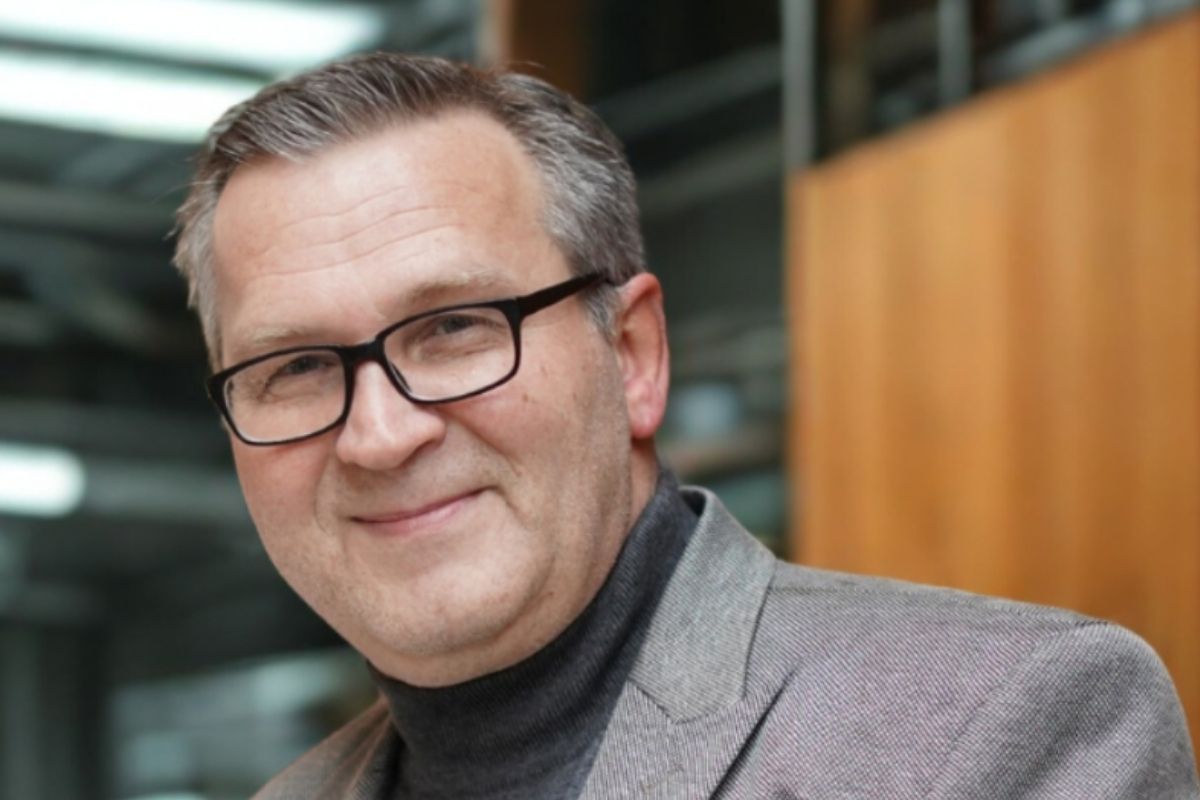
G. Stanišauskas: prepare for surrealism in reality - your farm will shrink by 50% and your cattle may eventually disappear
Don't be surprised if agriculture in Lithuania, a strategic branch of the state economy, starts to disappear not suddenly, but quietly – through decisions, documents and policies of "good intentions“. And I am not just referring to the mistakes of the current Minister of Agriculture, Andrius Palionis, which have made the past year more like a nightmare than a routine for some farmers.
It's not just about the fact that Lithuania, including the Minister's signature, has endorsed the free trade agreement between the European Union and the Mercosur bloc, an agreement that raises serious questions about the competitive conditions for European farmers.What can be read on the website of the High Electoral Commission (CEC) reveals an even deeper layer to the problem.
On 16 January, the CEC announced that the European Citizens' Initiative for the closure of slaughterhouses has received support from Europeans. On the face of it, this sounds like a significant signal from the whole of society.
But the facts show otherwise.
The NRC reports that 97 citizens in Lithuania supported the initiative. In the EU as a whole, just over 1 million people out of a population of around 450 million. This represents about 0.3% of the EU population as a whole.
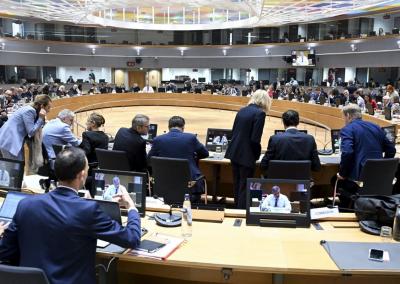
And yet, it is precisely this number that provides a sufficient basis for opening a debate in the European Parliament on the Stop Cruelty initiative. Stop Slaughter“ – proposals to gradually reduce the number of farm animals by 50% each year, to close down livestock farms and slaughterhouses, and to switch to plant proteins, artificial meat and so-called substitutes.
The authors of the initiative argue that livestock farming and slaughterhouses are a threat to public health, causing pandemics, diseases and hygiene problems. In other words, the work of the farmer, which has fed people for centuries, is now being presented as a threat to society.This is where the real political surrealism in which the state institution wants to drag us all into begins.
When the voice of 0.3% of the public becomes more important than the daily work of 130 000 farmers in Lithuania, for example, this is no longer a discussion about animal welfare. It is a question of whose voice is really heard in European politics.
No one denies the right to citizens' initiatives. It is part of democracy. But the question is – how such information is made available to the public. The CoR report does not mention that the initiative was supported by only a few hundred thousandths of a percent of the EU population. Instead, it states that it „received the support of Europeans“.
This misleading narrative creates a fertile ground for new "empty cages, empty heads" protests against farmers and the people who actually ensure the country's food security.
At the same time, we hear declarations from the Government about agriculture as a strategic sector, about livestock farming as a priority. However, real decisions are increasingly at odds with these declarations.
This is also well illustrated by the funding policy.
The National Paying Agency reported on 12 January this year that small farms were actively seeking support. In two months, 209 applications were submitted for €10.9 million against a call for proposals of only €3.8 million. Two thirds of the applicants were left behind, leaving a shortfall of around €6 million.
At the same time, almost €5.4 million was available for short supply chains, but only €1.6 million was received. More than €3 million remained unused.
So you show us where small farms are supported here? On the contrary, we see that small farms need support, but not enough of it. Does this story remind you of the scandal of tens of millions of euros for the conservation of the warbler or for the restoration of wetlands, when not a single application has been received. Those calls do not even remotely smack of farm development or competitiveness improvement.
This is not an isolated error. It is a symptom of a lack of strategy.
There is a feeling that today's agricultural policy is being developed in a piecemeal way, rather than according to a clear roadmap, without a clear idea of where we really want to go. And worst of all, this policy leads to one result in the long run – farms shrink, people become disillusioned, regions empty out. Has anyone in the Ministry of Agriculture, for example, done any calculations, any modelling, on what will happen to our grain farmers in 2026? What I hear from the farmers themselves is that they are waiting with great anxiety to see what the purchase price of cereals will be when the harvest is over. Price ranges between EUR 140-160 per tonne do not seem so unrealistic, which is the equivalent of working at a loss.
The collapse in milk prices, which started at the beginning of this year, does not seem to worry the MAFF too much either. Minister Palionis' mere mention of it in Brussels at a political meeting of agriculture ministers is not enough, because we do not see any action that would change the situation strategically.
Lithuania, with its 97 signatures, is fourth from the bottom in the European Union – only Estonia, Latvia and Cyprus are behind us. These are the countries where support for the slaughterhouse closure initiative was lowest. But it is in the context of these figures that the impression is created that Europe is supposedly united in turning away from livestock farming.
Germany (465,976), France (434,853) and the Netherlands (108,945) recorded the highest number of "progressive" voters.
If this trend continues, agriculture in Lithuania will not be banned by law. It will simply be left to die – quietly, bureaucratically and without responsibility.
And then we will wonder not why farms are closing down, but why we no longer have our own meat, our own milk, or people who still want to work the land.

Similar articles

Video