























Minister Palionis "took note" but did not formally request support for Lithuanian milk producers
A question has been raised in the public domain as to whether Lithuania has formally applied to the European Commission (EC) for support for milk producers in the context of a significant drop in milk purchase prices. The Ministry of Agriculture (MAA) claims that this problem is consistently recalled at EU level, but confirms that there has been no separate written request for compensation for losses or support from the EU Agricultural Reserve.
Is it enough just to talk?
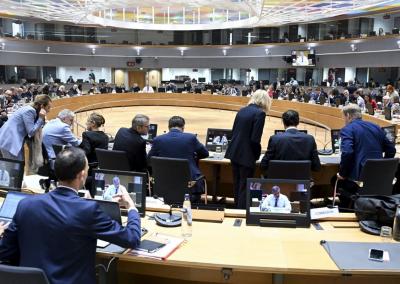
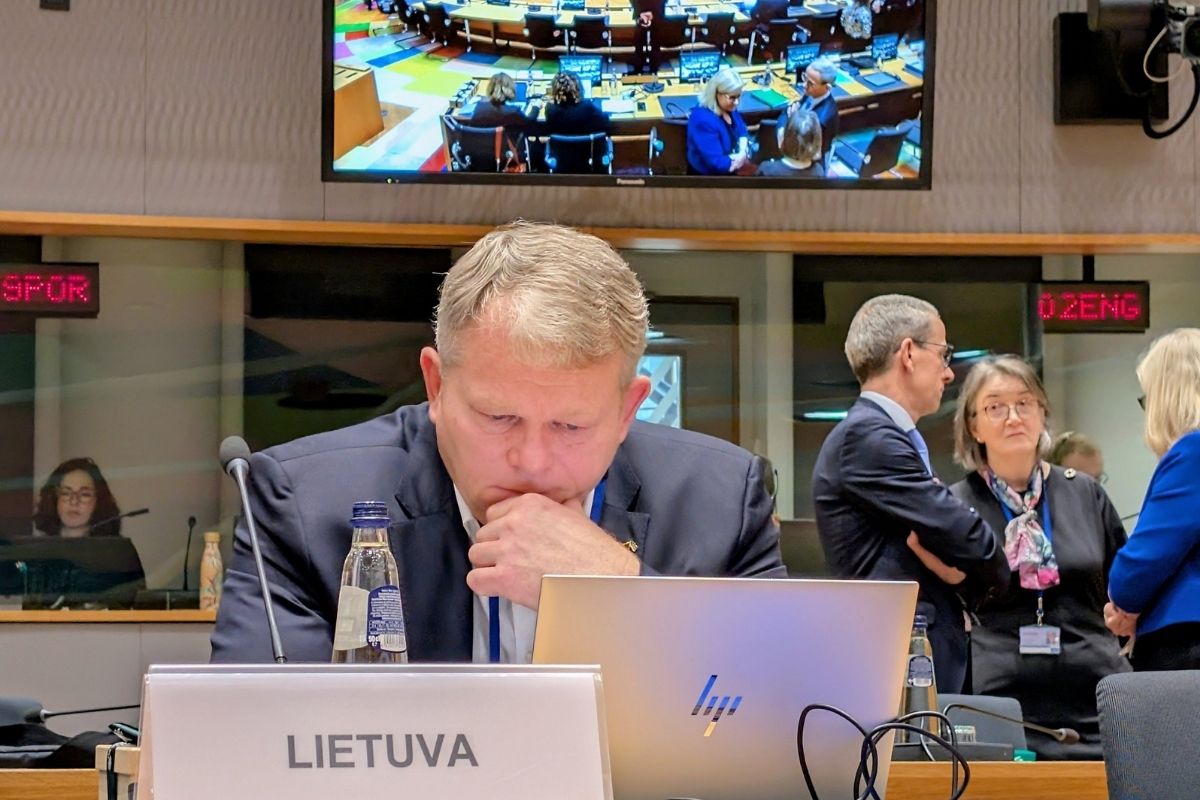
The Ministry of Agriculture (MoA) has just released a report that the Minister of Agriculture attended the European Union (EU) Agriculture and Fisheries Council in Brussels, but no decisions were taken on the milk market. „In a meeting with the EU Commissioner for Agriculture and Food (Christophe’u Hansen), Mr Palionis once again drew the attention of the EU's top official to the difficult situation in Lithuania's dairy sector“,– this much Mr Palionis was able to do for Lithuania's milk producers. A written appeal would inevitably be supported by other countries, so compensation for milk producers would be more realistic than just expressing concern. According to the MAFF, the deteriorating situation in the dairy sector was raised at the Agriculture and Fisheries Council (AFC) meetings on 27–28 October 2025, 11 December 2026 and 26 January 2026, as well as at the EU Agriculture Ministers' political meeting in Brussels on 7 January 2026. At the Council on 26 January 2026, Lithuania broadly supported Italy's proposal that the EC should draw up a crisis management plan and, if necessary, use the EU's agricultural reserve.
Price falls – pronounced, but 2025 was... record
The ministry's analysis shows a dual situation. In 2025, the average buying-in price for natural milk in Lithuania was €501.8/tonne – this is 13.8% higher than the average for 2022– 2024 (€440.9/tonne). High prices and favourable natural conditions have also led to an increase in production – in 2025, 2.7% more milk was bought in Lithuania than in 2024. Producers' income increased by €107 million compared to 2024.
But at the beginning of 2026 the situation changes. In January, the average farm-gate price for natural milk was €403.6/t, 6.4% lower than in December 2025 and 26.5% lower than a year ago. In February, a further decline of around 3.7% (to around €390/t) is forecast, while the outlook for March is mixed.The MAFF says that positive signals are being sent by the global market – New Zealand's dairy auction has seen a rise in price indices since the beginning of 2026. At the auction on 17 February, the overall price index rose by 3.6%, the fourth consecutive increase, with butter up 10.7% and milk powder by 2.5% and 3%.
National measures
The MAFF says that solutions are being sought at national level in parallel with the discussions in Brussels. The Ministry has set up a working group to prepare proposals on the regulation of contractual relations in the dairy sector to strengthen the position of milk producers in the supply chain. There is also cooperation with the Seimas Committee on Rural Affairs on the improvement of legal regulation.
The Ministry notes that the milk procurement market is dominated by a few large processors, which limits the bargaining power of raw material suppliers. In the long term, it is proposed that the processing sector should focus on the production of higher value-added products, which would lead to more stable raw material prices.
Financial instruments are also being considered – the possibility of providing soft loans to dairy operators to replenish working capital in the light of price fluctuations is being analysed with ILTE UAB. The development of a methodology for the preferential allocation of gas oil to agricultural cooperatives is also being initiated.
EU coupled support for dairy cows is paid to support dairy producers' incomes, with an allocation of €45.56 million in 2025 and €46.2 million in 2026 and 2027. For the period 2023-2027, this support represents more than half of the total coupled support.
Other countries more activeIn the meantime, on 23 February 2026, the Commission will be able to take a more active role. The difficult situation of the EU pig sector was discussed as a supplementary agenda item at the meeting of the EAA on 26 February. Since October 2025, the EU has seen a significant fall in pigmeat prices – in December 2025, prices for S-class pig carcasses were almost 20% lower than a year earlier. The situation is compounded by high costs, Chinese tariffs and export restrictions due to African swine fever.
Romania, supported by several other Member States, has written to the EC calling for exceptional market support measures in line with existing EU legislation. This shows that some countries are taking the formal route of pressure.
Lithuania has been raising the dairy issue in Brussels verbally and supporting initiatives for possible EU-level measures, but has not yet submitted a formal written request for additional support. Whether such a strategy will be sufficient if the price slump persists and farmers' financial situation deteriorates further is an open question.

Similar articles
Video