



































Keeping goats on a subsistence farm: conditions, costs and requirements
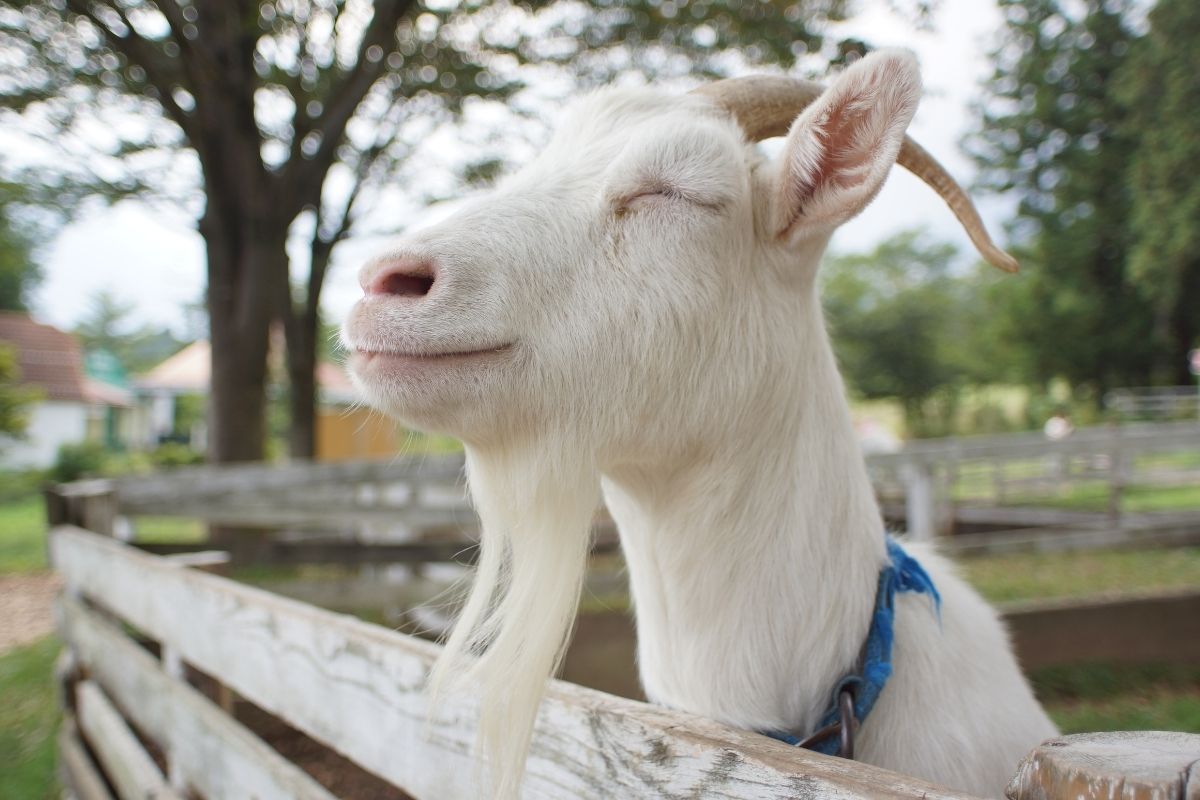
Two or three goats can certainly provide a family with milk and milk products. But it is an ongoing responsibility that requires preparation, investment and legal compliance. Andžela Dalia Ėmužytė, President of the Lithuanian Dairy Goat Breeders Association (LPOAA), says that the most important thing is to make up your mind at the outset – whether it is just a short-term idea or a conscious choice to live a more natural life. „Is it in your interest to grow your own product – to know what you are feeding it and then to drink that milk and eat the products made from it?" she asks.
How many goats to keep, which ones to choose and how much do they cost?The goat has the status of a health-promoting animal and its milk has many valuable properties. So do you want to have one? Or would you rather go to the shop and buy pasteurised milk? If you choose the former, A. D. Ėmužytė, President of the Association, advises you on what you should pay attention to.
„If conditions allow, two goats and one stillborn goat is the optimal option. If conditions do not allow it, you can start with at least two goats. Not only will you have more milk. If you breed the goats at different times, you will have milk all year round. Goats also like company. Goats kept alone get very sad and produce less milk," says A. D.Ėmužytė.
She adds that it is possible to cooperate with neighbours and, for example, keep a goat together, because it costs money to keep it.
LPOAA Chairwoman lists the three breeds that are currently the most commonly bred in Lithuania: Zaanen, Czech White and Anglo-Nubian. The latter is the most popular breed in Lithuania because these goats are beautiful and currently fashionable," says A. D. Ėmužytė.
If goats are interested in meat, Boer or crossbred goats are the most common choice, as dairy goats are lean in build – all nutrients are directed to milk production.
She recommends starting with an adult goat that has already been milked. However, it is important to pay attention to the source. A breeding adult goat costs from €500, a young goat from €250.
Living conditions, feed and daily care
„Breeding goats do not like heat and rain. They also do not like to be tied up. I would therefore advise having a barn and permanent access to the outdoors – to a fenced, secure day-care area. Keeping 2–3 goats will not require a large investment. The goats will quickly eat the grass in the day-house. However, it is possible to set up a feeding trough and continuously replenish it with as much grass as possible, – the basic conditions for housing are as follows.
The goat must have the choice of being outside or inside. At night, the animals also go into the barn. The chairwoman of the association estimates that a goat would need a preliminary space of about 3.5 square metres per goat.
„Compared to cows, maintenance is not difficult. But there is one thing to remember – goats are gourmets. Therefore, gardens, orchards and flowerbeds need to be protected. If a goat escapes from its enclosure, it will scratch everything. Also, goats jump very high, so fences need to be high enough," emphasises A. D. Ėmužytė.
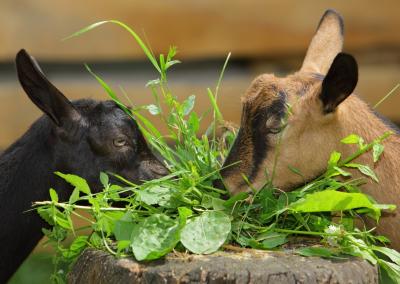
Speaking about forage, she emphasises variety: „The more natural the meadow, the better. Goats like variety – both herbs and weeds work for them. In winter, of course, hay is the basis. You can make hay or silage and give a little all winter. Goats also need grain, licking salt and, of course, water.
She adds: „It is not correct to think that goats do not need anything. If you want to have milk, you have to invest.“
Sustainability and economic return
The specific annual cost of maintenance depends on feed prices, veterinary costs and housing conditions. A goat may require about 500 kg of hay and 100 kg of straw per year. However, the final cost varies from case to case.
„This is not a cheap animal. In ecology, the payback is often in the balance," says A. D. Lamb. She said that the question should not only be asked in financial terms: „Is it important for you to know what you are feeding your animal and what milk your children are drinking? If so – it will pay off. If you're just looking for a financial return, then probably not.
Two or three goats are more likely to become a family nutrition solution than a business model.
Milking, milk, its properties and products
A typical goat can produce around 4–5 litres of milk per day in summer.
„The fat and protein molecules in goat's milk are smaller. They are better tolerated by the human body. This is why families of children with allergies or sensitive digestion often choose this milk," says A. D.Ėmužytė.
Specialists say that goats' diets can contain more than 200 different plant species, which contribute to the milk's valuable properties. Goat's milk can be used to make cottage cheese, cheese, yoghurt or kefir. It takes about 10 litres of milk to make 1 kg of cheese.
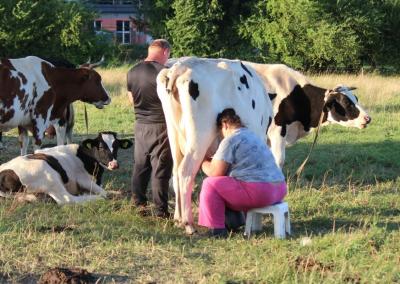
Is it difficult to milk a goat? Not really, she says, – with two goats, they can easily be milked by hand. It takes about three minutes for a goat to let go of its milk. If the animal is used to it, it doesn't take long," says A. D.Ėmužytė. However, you will need to come to the animals every day in the morning and evening.
Most important requirements of the VMVT
Even if you keep one or two goats for your own use, there are mandatory requirements. The State Food and Veterinary Office (SVVT) has the following:
• registration of the holding site;
• registering the goats in the Farm Animal Register;
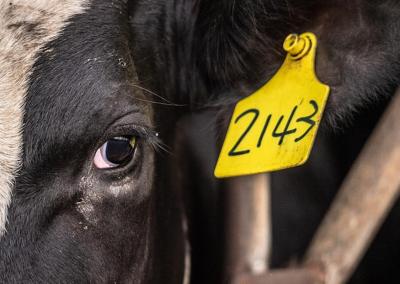
• marking them with ear tags.
The offspring must be tagged within 6 months of birth. However, this must be done at the latest before the animal is moved to another holding. All changes (birth, death, transfer) must be recorded within 7 calendar days. Animals may only be moved between the holdings entered in the register. Movement of unmarked or unregistered goats is prohibited.
If milk and products are intended for personal consumption only, no additional food handling requirements apply. However, registration as an animal food business operator is required for the marketing of milk or milk products.

Similar articles

Video