





























Frost compensation: millions distributed, farmers' 'beggar's tears'?
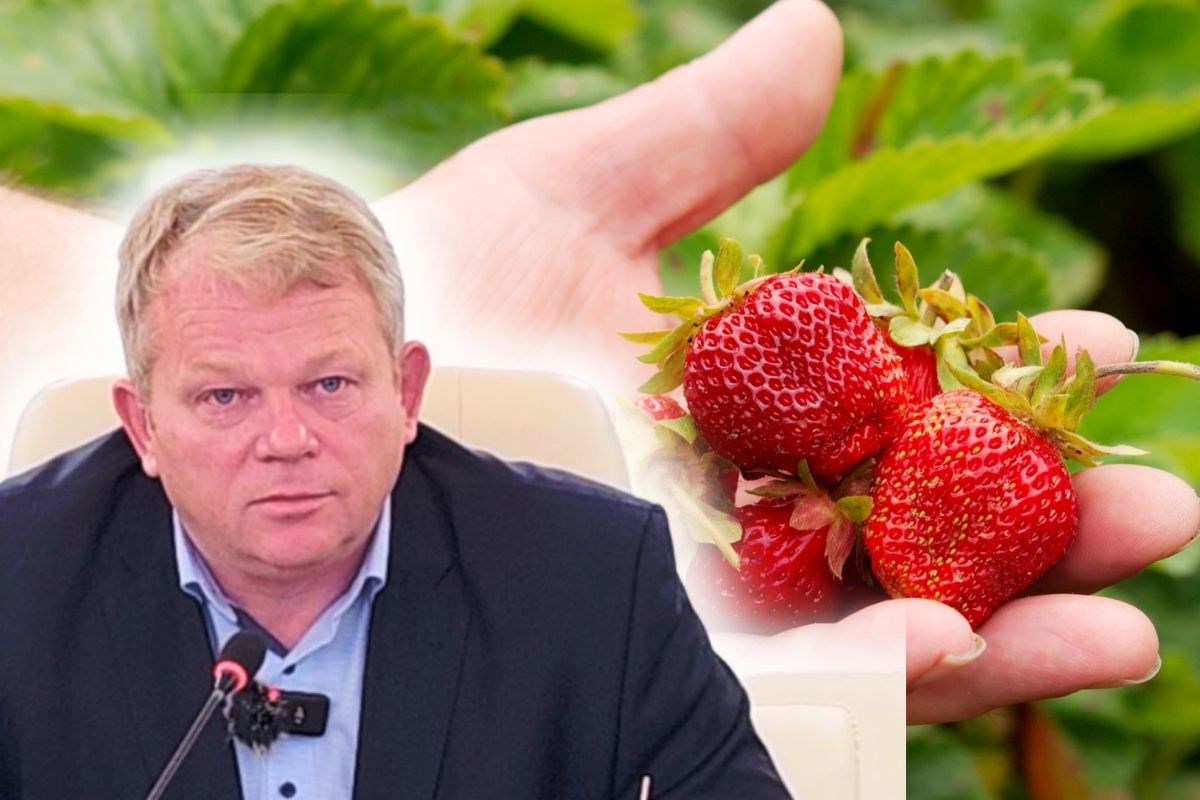
Last year's spring frosts hit Lithuania's gardens and berry-gardens hard. The Ministry of Agriculture (MAA) recently announced that farmers were compensated for losses of up to €3.3 million. However, some farmers claim that in reality these payments are symbolic and do not reflect the damage suffered. One of them is a berry farmer in Samogitia (name unknown to the editorial office), who claims that the compensation awarded is not even a tenth of the real losses.
„Where's the €900 and where's the €8,000“
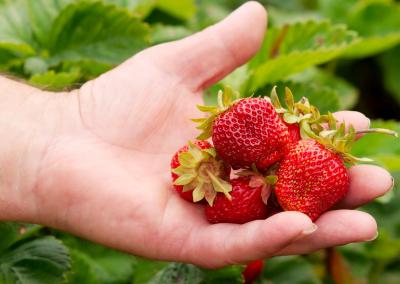
The farmer says that the frost destroyed about 60% of his strawberry crop.
„The Commission found 60% frost damage. According to the experience of previous years, the income from such an area was around €8,000,“, – he says. However, this year the compensation received is only about €900.
„Of course, it is naive to expect the state to compensate for all losses. But €900? That doesn't cover practically any of the expense bills," says the farmer.
He estimates that the total lost cash flow could have been as high as €20,000 to €25,000.
Audrius Meseckas, a member of the Lithuanian Berry Growers' Association (LUAA), also received a ridiculous amount of compensation for the damage suffered.
„In my case, they paid 100 euros, and if I hadn't froze to death, it would have been maybe 4000 euros. It's a few percent, and they advertise that they have compensated the loss“, – says the interlocutor in a straightforward manner.
The numbers raise questions
The MAFF says a total of 368 applications have been submitted and €3.3 million has been allocated for compensation.
„I read those figures and naturally wondered – where did that money go. When you divide it up, it comes out with completely different figures," said a farmer from Žemaitija, who doubts the objectivity of the compensation distribution. He said that other berry growers are discussing a similar situation.
„I am not alone. As far as I have read the comments on social media, many have received ridiculous amounts. It's just a beggar's tears," he adds.
LUAA member A. Meseckas says the problem lies in the compensation system itself.
„Compensation is calculated on the basis of area. But how much income you actually lose – the methodology does not take this into account“, – he says. This system is particularly disadvantageous for modern intensive farms, he says.
„Today, planting more densely in a smaller area creates more value. But only the area is valued. As a result, the payments do not reflect the real losses“, explains Meseckas.
Payments – at set rates
In fact, according to the approved rules and the data provided by the Ministry of Agriculture, payments to berry growers are set at a fixed rate per hectare, depending on the amount of damage. For example, strawberry growers who suffer a loss of 50–70% are paid € 580 per hectare. This means that the compensation does not depend on the income of the farm or the losses suffered, but only on the area declared and the percentage of damage.
The MAFF stresses that the compensation was never intended to cover the full extent of the loss.
„Of course, this is not full compensation for losses, but partial compensation intended to help farmers at least partially alleviate the financial difficulties they have suffered“, – the Ministry's reply states.
The ministry also points out that the maximum amount available is €1.1 million from the EU and €2.2 million from the national budget. According to the Ministry, the amounts of the payments have been established after taking into account the profitability, costs and the impact of the damage on the farms, as well as the State's financial capacity.
Small farmers feel left behindHowever, farmers say the system does not really help them to survive difficult seasons.
„The state's attitude towards small farmers... they are dying. We are a family farm, we are trying for the consumers, but when you don't get any incentive – it's hard“, – says an interviewee from Žemaitija. The lack of compensation directly limits the future of the farm, he says.
„A new season is coming – what income to invest in the new season? New areas need to be planted. Lack of cash reduces expansion. You are just forced to cut back even more, because I didn't get what I had calculated last year," he says.
This is not the first year that the compensation mechanism has come under criticism. Mr Meseckas points out that only 48 farms received compensation in 2024, while many more farmers suffered losses.
„Back then, the farms that suffered damages simply did not meet certain bureaucratic requirements“, says the LUAA member.
From 2024 onwards, not only berry growers but also vegetable growers will not be compensated for the entire harvest destroyed by natural disasters. „Agrobite.lt“ has already written a little earlier about the situation of E. Sasnauskas, when in 2024 the heavy rains destroyed 100% of his harvest and the losses amounted to 700,000 euros, of which no one compensated for any part.
Solutions are called for, but so far only promises
„If we could have frost insurance, that would be another matter. I would not hesitate to take out frost insurance. Unfortunately, only cereal farmers can take out frost insurance, but we do not," says a farmer from Samogitia. A. Meseckas echoes him: „We have sent inquiries and requests to the Ministry of Agriculture and Rural Development (MAA) to bring the compensation payments on par with those of cereal farmers. Because the latter have the opportunity to take out insurance, some do not take out insurance and then ask for compensation, whereas for berry growers there are no such conditions“.
The MAFF says it is looking for long-term solutions and is considering preventive measures such as investment in frost protection. This is also what a member of the LUAA says he has heard.
„I have heard that the Ministry is planning a programme of preventive measures against frost. The LUAA supports this idea because the compensation is low and it is better to invest in crop preservation options such as tunnel greenhouses etc. It has been discussed that this measure could start in the autumn, with a promised funding intensity of up to 80%. We'll see if that's really the case," says Mr Meseckas.
But for now, farmers are not living on promises, but on numbers – and for many, as this year's compensation shows, these numbers raise more questions than they answer.

Similar articles

Video