







































Farmers will try to encourage Palionis to work through a "manure management plan" presentation in Vilnius
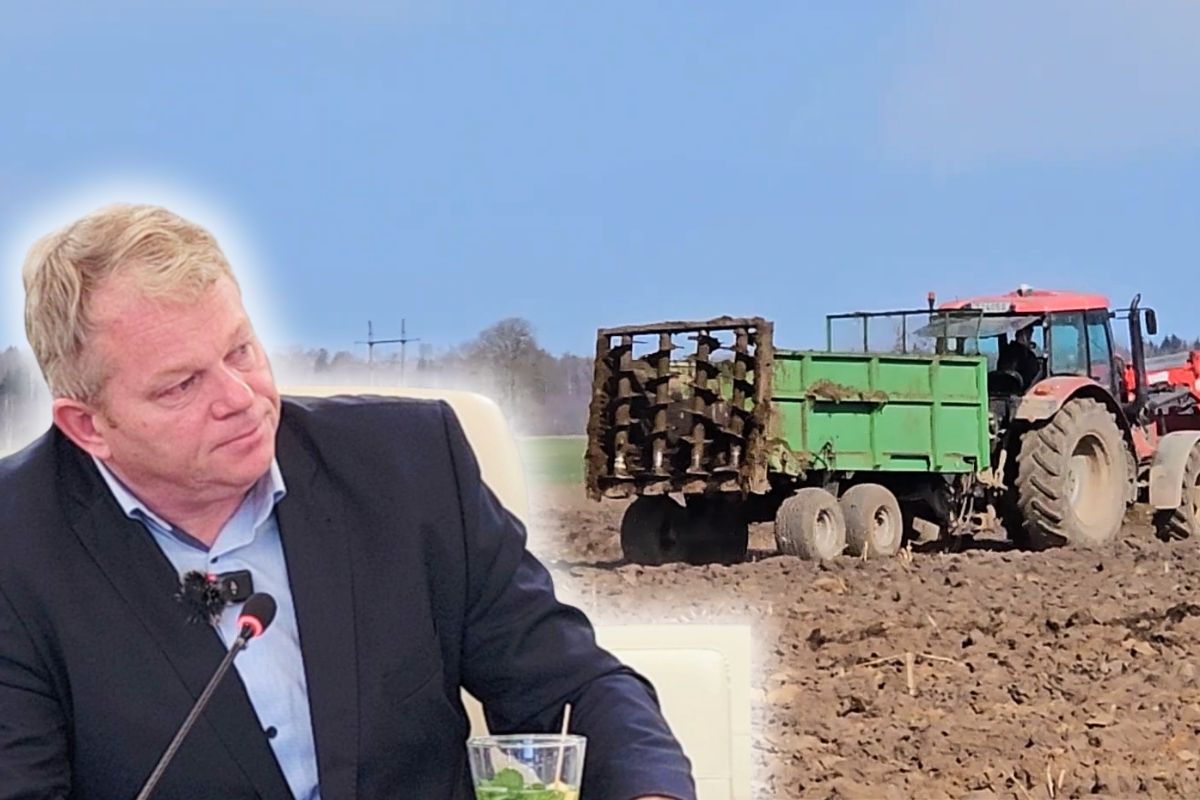
In a protest organised by Lithuanian milk producers, Zita Dargienė, Vice-Chairwoman of the Lithuanian Farmers' Union, raised one of the most pressing issues in the dairy sector - manure fertilisation plans. She called their demands an excessive bureaucratic mechanism that does not bring any real benefits. "When a piece of legislation is changed 7 times in two years – it is no longer a sign of health “, – said the farmer. This frequent practice of replacement, she said, has created a chaos that is difficult to navigate even for the authorities themselves, which is why the farmers will try to get their hands on it on 14 May. Farmers will have to make a public presentation on the issue in Vilnius on May 14.
Lack of consistency
On 16 March 2026, Andrius Palionis, Minister of Agriculture, informed the Seimas Committee on Rural Affairs, the Government and the Lithuanian Farmers' Union that the administrative burden has been reduced and that fertilisation plans no longer need to be drawn up for those who apply manure or slurry alone. However, Z. Dargienė argues that the real situation is more complex – the current procedure still provides for cases where such plans are mandatory.
For more than 30 hectares, a fertilisation plan becomes necessary when certain crops are fertilised with manure or slurry at the permitted rate of 170 kg nitrogen per hectare. The farmer also gives specific examples which, according to her, show the illogicality of the system: in one case, a plan is required for small or seed potatoes, in the other case, the same rate for large potatoes does not require a plan. A similar situation arises with combinations of plants – for individual plants, no plan is required, but for a mixture of plants, a plan becomes mandatory. These are just some of the examples, she said, that show the inconsistency of the regulation.
Formal requirement
A paradox is emerging today, according to Ms Dargienė: neither farmers nor control authorities fully understand what the rules are.
„The NMA, farmers and even the ministry itself are lost and hardly know what legislation is currently in force“, – she said.
The biggest problem, she said, is not only the constantly changing requirements, but also the very essence of fertiliser plans, which have no meaning in real farming.
The Nitrates Directive clearly sets a basic limit – no more than 170 kg of nitrogen per hectare can enter the soil. However, Lithuania additionally requires fertilisation plans to be drawn up specifically for manure and slurry, even though, according to Z. Dargienė, such an obligation is not compulsory at EU level. The Directive refers to fertilisation plans and accounting as a voluntary measure rather than a mandatory requirement.
In addition, it also highlights a broader problem – different understandings of the term "fertilisation plan" itself.
According to Z. Dargienė, in international practice, a fertilisation plan refers to a balanced calculation of mineral fertiliser requirements, taking into account soil properties, planned yields, crops, pre-sowing and other agronomic factors. In this case, manure is only one of the variables and not the main object of planning. In Lithuania, meanwhile, she argues, the manure and slurry regulation adopts a distorted approach, effectively making the fertilisation plan compulsory only for livestock farms.
„If you can't fertilise anymore, what is the point of having a fertilisation plan in the first place?“ – rhetorically asks Z. Dargienė. She points out that in control practice, it is usually not the fertilisation that is checked, but whether the document itself is prepared. This makes the system formal, she argues, – it is important that the plan is there, and the actual agronomic decisions remain in the background.Time and financial costsThe economic side of this arrangement is also stressful. According to Z. Dargienė, the average cost per farm of drawing up a fertilisation plan is more than €1 000. This is especially true in the current climate, where the dairy sector is facing stagnating or falling prices. If a farm is inspected and does not have a plan, penalties can be applied across all payments, so farmers are forced to produce a plan even if they doubt the usefulness of such a document.
An additional source of frustration is the lack of dialogue with the authorities. According to the farmers' representative, 16 comments from the social partners were made at a meeting in mid-April, but none of them were taken into account. This, she said, shows that the discussion is taking place in a formal way and that farmers' real involvement in decision-making remains limited.
„We farmers are not against real fertilisation plans. We are in favour of real ones, where mineral fertilisers are applied and the recommended rate per plant is exceeded," she noted.
MFA position
Ministry of Agriculture (MAA), on the other hand, takes the opposite position. It stresses that the development of fertilisation plans is necessary to meet the European Union's obligations and ensure environmental protection.
The MAFF says that such plans help to prevent excess nitrogen from entering waterways and are easy to draw up – farmers can use a free planning tool in the Application Information System. Furthermore, the Ministry stresses that these requirements do not have a significant impact on the competitiveness of farms or the survival of the sector.
However, this is where a fundamental difference in approach emerges. Farmers see fertilisation plans as a formal, expensive document with no real value, whereas the Ministry sees them as a necessary and proportionate tool to help meet EU requirements. The Nitrates Directive itself is also interpreted differently, with farmers stressing the voluntary nature of the Directive and the Ministry emphasising the obligation to ensure control and traceability.
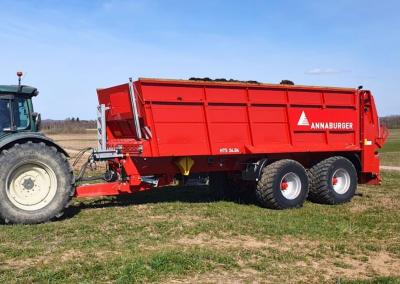
Farmers say they are not going to back down this time and will push for real change, one of their demands being direct dialogue with decision-makers.„We are not even going to go to the next meeting without a minister – finally this procedure has to change“, – says Z. "If the Ministry of Agriculture and the Ministry of Environment continue to hang noodles on farmers because of the excessive requirements to prepare fertilization plans for manure or slurry, I would like to announce that the farming community is planning a protest on May 14, 2026-05-14 in front of the Ministry of Agriculture and the Ministry of Environment, where it is planned to bring the manure and the slurry to the bureaucrats for information.
At the moment, the ministry indicates that the procedure for drawing up fertilisation plans is currently under review and discussions with the social partners are ongoing, but it has not yet given a specific timeframe as to when the changes might take place.

Similar articles
Video