










































Farmers talk about survival, MAF talks about gift vouchers for employees
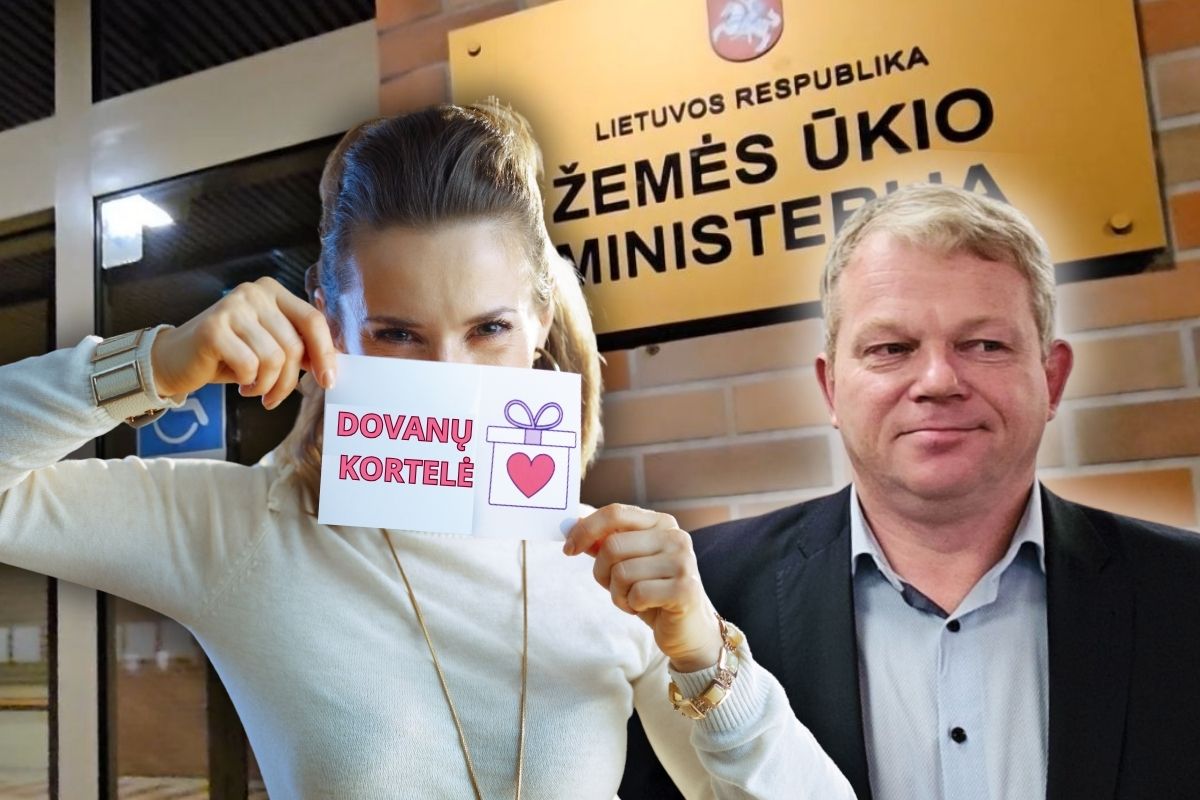
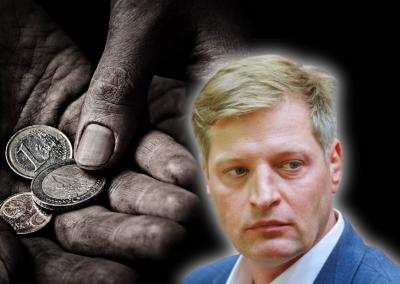
The agricultural sector is going through one of the most difficult periods ever – milk prices are falling, farms are reducing their herds, farmers in general are talking about survival and counting their losses, and the Ministry of Agriculture (MAA) is buying gift cards to motivate workers. The ministry explains that this is an incentive for „exceeding expectations“ as provided for in the collective agreement, but politicians call this decision insensitive to the situation in the sector.
Ministry's pa(si)justificationThe tender documents state that the gift cards would be used to promote staff as an indirect material incentive to „recognise high performers, motivate them and increase their commitment to the organisation's objectives“.
The Ministry of Agriculture confirmed to Agrobite.lt that EUR 16.6 thousand is planned for this procurement. The ministry explains that this possibility was made possible by an amendment to the collective agreement signed in February this year. According to the Ministry of Agriculture, employees whose performance has been assessed as exceeding expectations may be given an "employer's gift".
„This employee incentive measure is financed from the ministry's employee salary allocation and is not related to the financing of the agricultural sector“, – the ministry's reply said.
It also states that the staff appraisal process was completed on 1 March and that the staff members' performance was evaluated by their line managers in accordance with the procedures laid down in the Civil Service Law. Political trust staff will not be subject to such measures, as they are not subject to performance appraisal.
Minister: „Motivating civil servants is not the opposite of helping farmers“
„We appreciate the professional and responsible work of civil servants, especially in a difficult period when the workload is extremely high“, – said the Minister. Asked whether such decisions do not give the impression that the ministry lives in isolation from the real situation in agriculture, Palionis said that "motivating professional civil servants is not the opposite of helping farmers".
Minister Palionis highlighted among the most important results of his work the decision to recognise agriculture and food as a strategically important part of national security, the 100% utilisation of the 2014–2020 RDP funds and the reduction of the administrative burden for farmers.„Agrobite“ recalls that in the autumn of 2025, Minister Andrius Palionis promoted the then director of the State Service for Plant Breeding (SBS), Yuriy Korniyenko, who subsequently plunged the entire service into a scandal of unprecedented corruption.
When asked why the incentive was given, Palionis said that Kornijenko had exceeded expectations.
As the year drew to a close, staff and the minister's political team were also given incentives. These payments are known in society as the "thirteenth salary".
Farmers' representative: „It's an internal affair of the Ministry“
Not all representatives of the farming community are equally critical of the situation. Eimantas Bičius, head of the Lithuanian Milk Producers' Association, says that agricultural support should be separated from the internal financing issues of the ministry.
„Two things should be separated: money for agriculture and the ministry's own finances for its own employees. In the latter case, they receive certain allocations, which are intended to pay salaries and so on. I would therefore see this as an internal matter for the Ministry itself. We certainly do not intend to compete for it," Bičius told the portal.
However, he added that the farming community has long been talking about the need to reduce the bureaucratic apparatus.
„We have certainly repeatedly talked about reducing the bureaucratic apparatus itself, because it is really too big,– said the head of the association.
K. Mažeika: „This is scandalous to say the least“
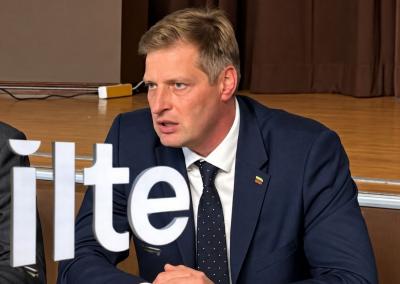
Kęstutis Mažeika, a member of the Seimas Committee on Rural Affairs, takes a tougher view of the situation and says that the signal to farmers – is very bad.
„The situation is tragic in agriculture. Realistically, in terms of numbers, it has never been this bad. Crop production, livestock production and milk production are all equally bad,– said the MP. The very idea of motivating ministry staff with gift vouchers, he said, points to deeper problems.
„This is scandalous to say the least and the management should rethink these motivational methods“, – said Mr Mažeika. Motivation should not be strengthened by cards or gifts, but by improving working conditions, training, refresher courses, more flexible working arrangements, etc.
B. Rope: „If a new – not the time“
Bronis Ropė, chairman of the Seimas Committee on Rural Affairs, said he had not heard of such a procurement before, but was cautious about it.
„If this is instead of some bonuses, that is another matter – it should be explained. If it's a new introduction, it's not,– he said. According to Ropė, if it is an additional new motivational measure, the timing is not right.
„If it comes in a new way, I don't think it's the right time and it's not necessary“, – added the MP.
Prime Minister's spokesman: Minister will have to explain
The government has also reacted to the situation. Ignas Algirdas Dobrovolskas, an adviser to Prime Minister Inga Ruginiene, told Agrobite.lt that the planned purchase raises questions.
„At a time when the agricultural sector is facing serious challenges – low milk purchase prices, rising costs and a difficult situation for farmers – public authorities have to be particularly responsible in the use of public funds“, – he said.
According to the Prime Minister's spokesperson, the Minister of Agriculture will be asked to provide detailed information on this planned procurement in the near future, as instructed by the Prime Minister. He also recalled that ministries had already been subject to cuts in their allocations, and that the authorities were expected to be „particularly sensitive in their decision-making on additional spending“.
While the Government generally appreciates the work of the MAF in managing the crisis, Mr Dobrovolskas noted that there is a lack of more active leadership from the Minister: „The Prime Minister regularly meets with farmers' organisations and is well aware of the situation in the sector. However, there is a lack of clearer and more proactive leadership from the Minister of Agriculture in responding to the difficulties farmers are currently facing.

Similar articles


Video