
























ILTE millions: helping farmers or just a numbers game?
ILTE counts tens of millions of euros for agriculture. However, the institution itself admits that it has not provided loans to farmers so far. This means that banks and other financial institutions provide the real money to farmers, with ILTE acting as a middleman. So the key question is simple – does the state count real aid to farmers or money that it does not lend itself?
The numbers are there, the clarity is not
„In 2025, €31 million was made available to agricultural clients under signed contracts, and ILTE's involvement has helped to attract an additional €64 million from funding partners“, – said the reply to a query sent by „Agrobite.lt“ portal on financing for farmers.
After a further query, the authority provides further figures: „€4.6 million for ILTE loans in 2025, with an additional contribution of €1.9 million from funding partners.“
Different figures are presented in the same response cycle, but no clear explanation is given as to why they differ.
At the same time, ILTE admits that it has not so far provided direct loans to farmers – the financing is done through banks and other financial institutions and the institution itself mainly provides guarantees. In other words, the real money is provided by the financing partners to the farmers, with ILTE acting as an intermediate link to reduce their risk.
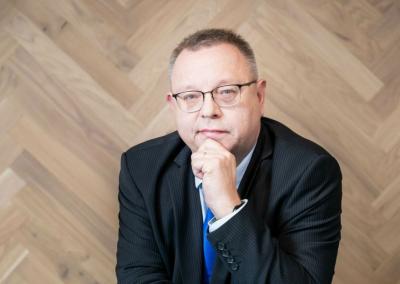
Bronis Ropė, chairman of the Seimas Committee on Rural Affairs, puts it bluntly: "ILTE does not allocate anything, it only redistributes. It receives money from certain institutions, redistributes it, and that is the end of their work.
So there are at least three different figures for the funding - €31 million, €4.6 million and €61.9 million - but which one actually reflects the funding that has reached the farmers remains unclear.
Aid or public relations effect?
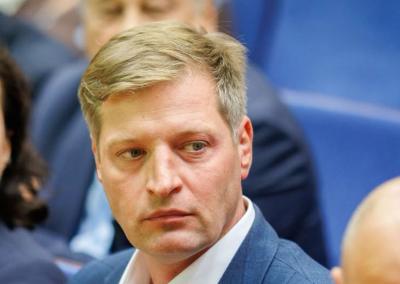
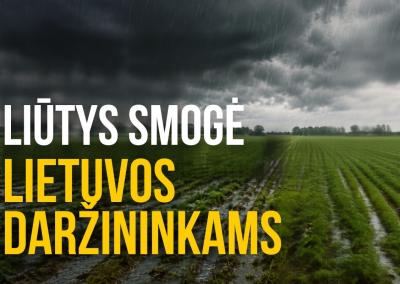
There is no shortage of criticism from politicians. Parliamentarian Kęstutis Mažeika is very sceptical about the ILTE: "It reminds me of the weather – they keep promising that it will rain, but it doesn't, or very symbolically. It doesn't have any effect.“
He said that the amounts announced do not reflect the real situation in the sector: „To a city person, €31 million seems like a huge amount, but in reality it is more of a public relations exercise. You can probably count on your fingers the number of farms that could be helped by such a sum. It's a small minority, certainly not a help to the sector.
The current situation in agriculture, he says, requires an injection of an entirely different magnitude: "At the very least, several hundred million would be needed to allow the sector to breathe normally."“
Farmers' experience: „services existed only on paper“
Gedas Špakauskas, Vice-Chairman of the Lithuanian Farmers' Union (LŪS), has a similar view of the situation.
He said that after the restructuring of the Agricultural Loan Guarantee Fund a few years ago, financing for farmers has become more difficult.
Farmers, he said, often took the easier route of borrowing directly from the banks, even on more expensive terms: „It was easier to go to your own bank and arrange a loan there than to use the ILTĖ facilities.“
He also remains cautious about the figures announced for the funding: „It may have reached agriculture, but you have to look at whether it was a few big projects. But in fact, 31 million euros is very little. It should be at least €100 million. We are not talking about aid, we are talking about loans. However, farmers will have to repay them. If it were aid, you could say that it was good, but when we are talking about loans, it is very little.
The system is still in its infancy
Member of Parliament Valius Ąžuolas sees the situation as a transitional period. He said that after the merger of the institutions (i.e. the Agricultural Loan Guarantee Fund and Invega), a number of problems have arisen which are still being resolved: "We are looking for the bottle neck, where ILTE's activities are stagnating, and how we can help farmers." One of the main challenges, he said, is the lack of working capital, which is estimated at around €1.3 billion. He stresses that the ILTE model is changing – already in May it is moving to direct lending, moving away from the chain of intermediaries and is currently launching new instruments to be implemented by ILTE itself. „The €40 million for the first programmes is just a starting point. We are well aware that this is not enough," says the MEP, adding rather optimistically: "ILTE must be the first to come to the aid of farmers. Now, unfortunately, the banks are telling us to wear iron shoes in order to get a loan, whether for the purchase of machinery or for working capital. Therefore, ILTE must be the bank that does not tell you to carry the shoes, but makes it as easy as possible for you to get a loan.
Expectations and reality are still at odds Although ILTE aims to become a true national development bank and plans to start lending directly, its role in agriculture remains limited. By its own admission, the institution's lending decisions are made by its financing partners, and it only sets general conditions and provides guarantees. At the moment, farmers' organisations and some politicians are questioning whether such a system really addresses the main problem – access to finance. „We see and hear from farmers themselves that they desperately need a financial cushion. It is possible that the same larger farms are about to be hit by a wave of closures. The situation is ominous and I don't see an effective solution“, – K. Mažeika sums up the situation. The main question is therefore whether ILTE will become a real source of funding or whether it will continue to be a system that counts millions but does not lend them.
Similar articles

Video