























How to plant a forest to make trees grow
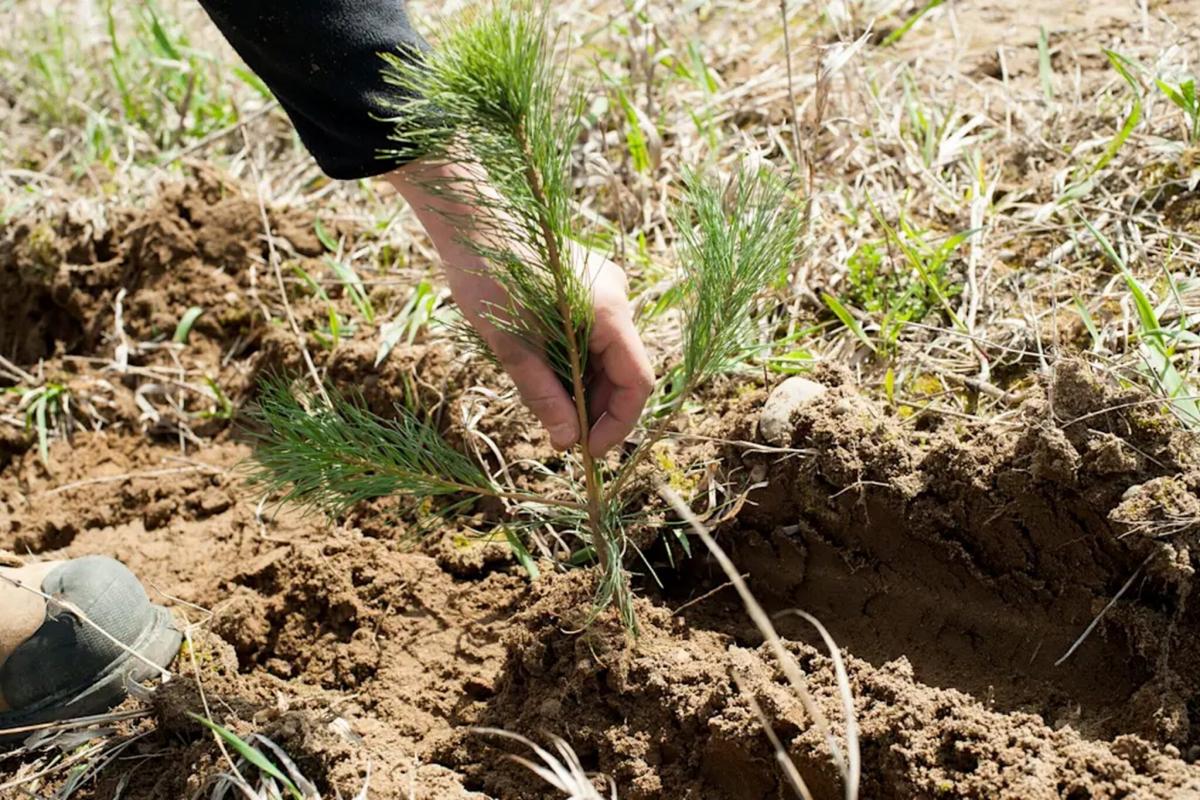
As the spring planting season gets underway, VPA experts advise on what mistakes not to make, so that you don't have to re-plan both costs and work once you've bought and planted your trees.
Tip: only buy from an officially approved nursery
For those wishing to reforest or establish a new forest, the VMT recommends that they only choose forest seedlings sold by suppliers on the Forest Reproductive Material Supplier List.
When buying planting material, always ask the seller for the origin documents and labelling. This is necessary because only propagating material that is genetically suitable for the area should be used for afforestation.
„If, for example, you buy seedlings from the Dubrava Nursery of the State Forest Enterprise and intend to plant in Zarasai, you must explain that you need forest seedlings that are suitable for reforestation or afforestation in the Zarasai district. Official sellers are well aware of the district requirements and will provide the necessary information and select seedlings suitable for the area, taking into account the place where the seed material used to produce the seedlings was collected," says Jūratė Laukineitienė, Advisor to the Forest Genetic Resources Division of the VMT.
Why is it important to know the origin of the tree?
The Forest Genetic Resources Division Advisor stresses that the region of origin is vital for seedlings. Although the territory of Lithuania may seem small, the conditions in which a tree grows in different regions can vary considerably.
„Seedlings from Scots pine seeds collected from the seaside are unlikely to be suitable in Dzūkija. Or can we expect a tree from the south of the country and planted in northern Lithuania to grow well? Will it adapt to the soil, the weather and not suffer from frost? The tree will grow best in its region of origin and conditions in another region may put it under too much stress and it will either not grow or die after a few years. The zonation of origin, which has been established for all forest tree species after extensive research, is very important for the sustainability of our forests, their resistance to climatic conditions and diseases," says Ms Laukineitienė.
The Environment Protection Department (EPD) officers check whether the requirements for the district of origin of forest seedlings are respected during reforestation and planting.To avoid paying twice
This month, the AAD is conducting raids on the "Healthy Forest Start", visiting places where forest plantations are grown, stored, traded and used, and assessing the origin of the planting material, as well as checking its quality. The first raids were also carried out by VMT specialists. They found irregularities – a consignment of 13,000 seedlings that did not meet the quality requirements was ordered to be re-sorted.
The most common quality infringement, which can be assessed visually when buying seedlings, is that the roots of seedlings grown in the open ground are twisted or folded. Seedlings with an under-rooted part (the root mass must be at least one-third of the above-ground part of the plant), a damaged root neck, severely injured lateral roots or no roots at all, and a branched, severely bent and wounded stem at the bottom are also common.„The quality of the seedlings should be assessed by the buyer after a thorough inspection, as this has a direct impact on the tree's ability to establish and grow. Purchasing seedlings that do not meet the quality requirements may result in a second purchase and replanting of the forest area. This is both repeated work and expense, so it pays to take care of the quality," says Laukineitienė.Specialists remind us that it is very important to protect the roots of the planting material from drying out. They must not be exposed to the air or the sun with their roots uncovered, as the tiny root hairs die off. This makes it difficult for the plants to take root, and once they have taken root they grow less well.
The quality requirements for forest planting material are laid down in the Forest Reproductive Material Regulations.

Similar articles

Video