








































































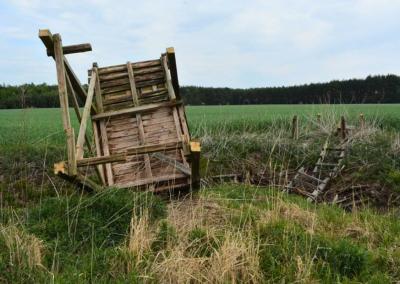
A demolished tower in the forest: where does the protest end and the danger to people begin?
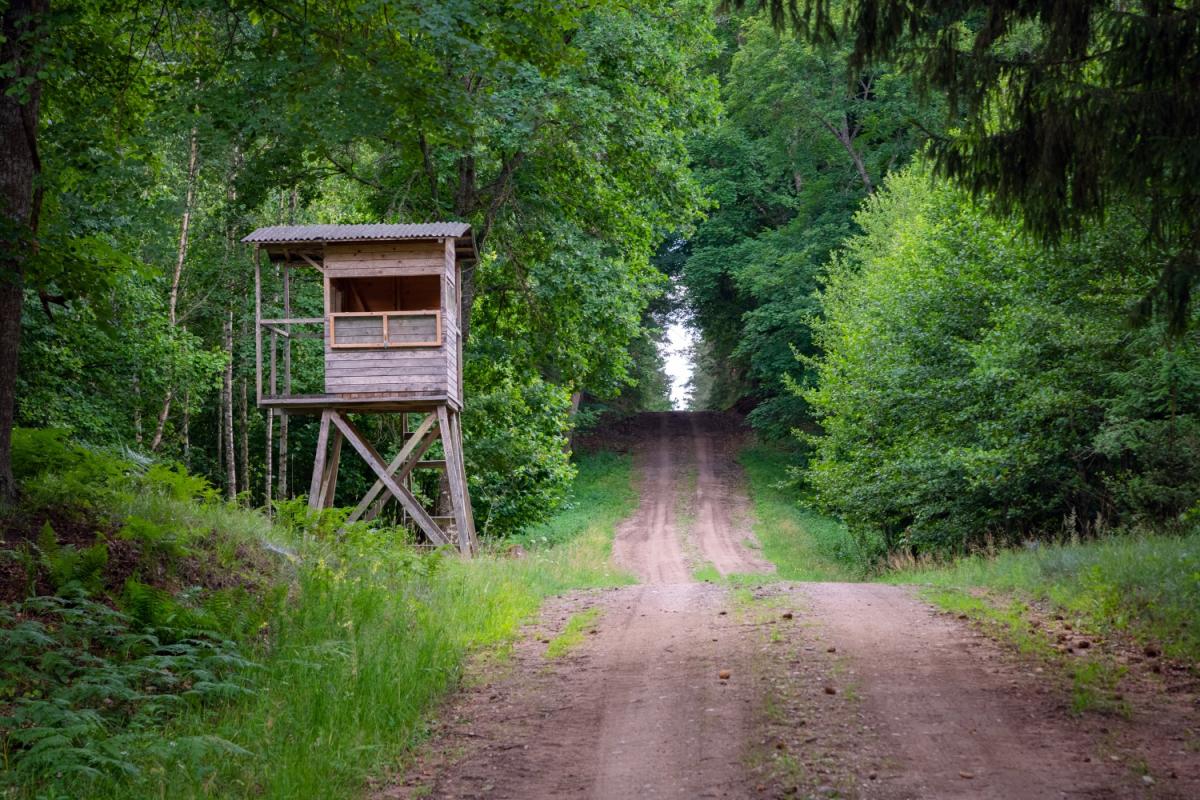
An incident recorded on 26 April in the forest of Kentraičiai village in Šiauliai district may at first glance seem like a simple case of vandalism, but its consequences are much wider. A hunting tower belonging to a man born in 1977 was found toppled in the forest. The damage to the property amounts to €1500 and the official police report was only received on 7 May. The incident has raised anew the question of where the line is drawn between protest, emotion and a real threat to people's safety.
Hunting towers are often seen by the public only as wooden structures, but their purpose is far more important. They are built not only for better visibility, but also for safety – shots from above allow for more precise trajectory control and reduce the risk to surrounding people, infrastructure and transport.
The case of the Šiauliai district in particular highlights another problem – a damaged turret can be not only a loss for the owner but also a deadly hazard.
If the structure is damaged beyond detection, a person climbing it can fall several metres. Such cases could theoretically result in serious injuries or even tragedy. Therefore, the deliberate destruction of hunting infrastructure is not only considered as damage to other people's property, but also as a potentially life-threatening act.
This story takes on a broader context when looking at a recent case in Poland. There, a 32-year-old man used a chainsaw to destroy as many as 11 hunting towers. Initial estimates put the damage at more than €7,000, and under the Polish Criminal Code, the man faces up to five years' imprisonment for such an act. The investigation revealed that the man deliberately cut the supporting structures and ladders at night, explaining that he was trying to protect wild animals from hunters.

Similar articles





Video