
























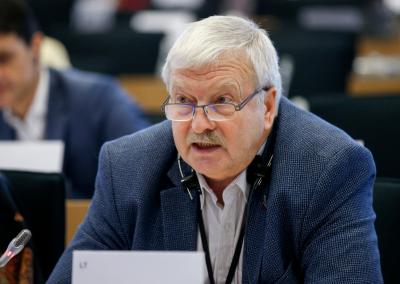
B. Ropė: Lithuania should make a bigger contribution when Brussels cuts funding for farmers
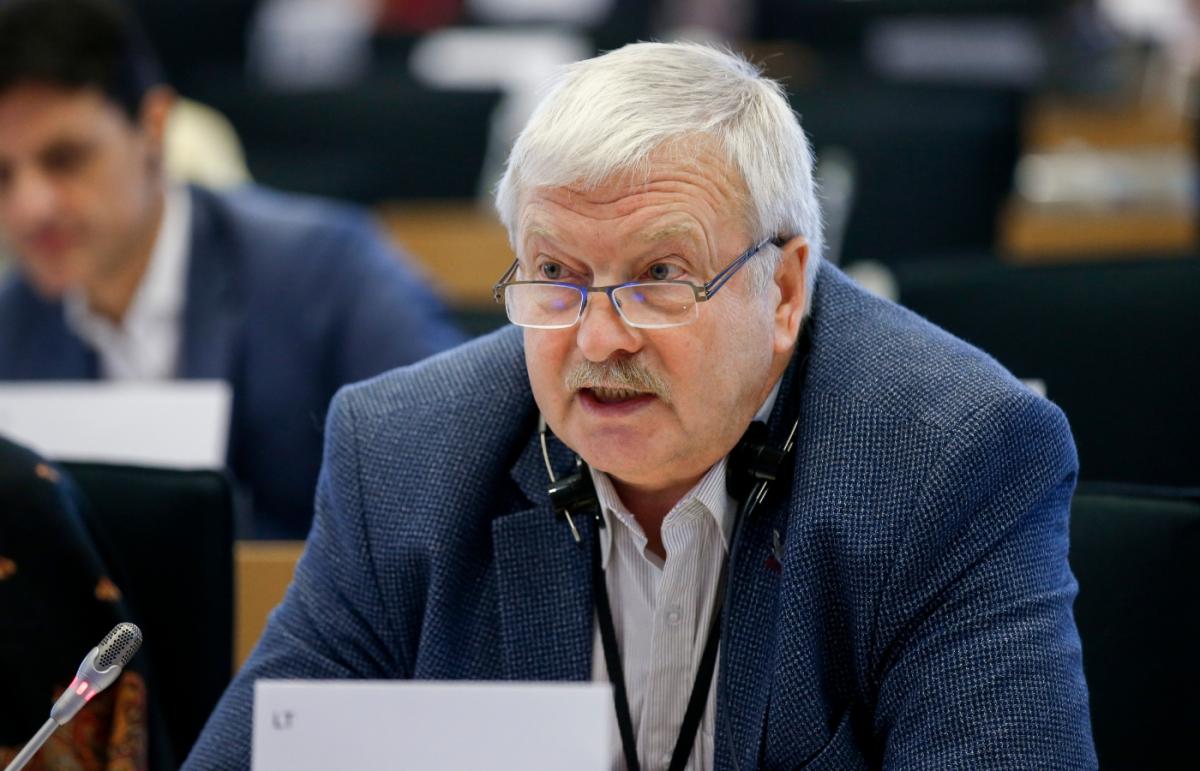
With the European Commission planning to cut funding for agriculture from 2027, including a 20% cut in direct payments to Lithuania, Bronis Ropė, chairman of the Seimas Committee on Rural Affairs, argues that the Lithuanian government should make a greater contribution to reducing potential losses for farmers.
„Action by the national government could make life easier for farmers. (...) The fact that the personal income tax (for farmers – BNS) has remained at a similar level and the maximum mechanism has not been activated is, I think, positive. But it is not enough," Ropė told LRT radio on Monday.
Farmer organisations, the Ministry of Agriculture and the committee should now look for joint solutions to address the challenges of declining funding, he said.
„We were in too much of a hurry when we drew up the 2023-2027 strategic plan, with little negotiation. But now we have to learn from those mistakes and we have to sit down together with the farmers' organisations, the ministry, we will join together so that after 2028 we really have a plan (BNS) that makes sure that the €4.3 billion of direct payments that are foreseen for Lithuania will bring the maximum benefit to everyone," said the chairman of the Committee on Rural Affairs.
According to Mr Ropė, the proposed safeguards are also a cause for concern at the moment.„It is foreseen that if there is a 10% drop in prices and a 10% drop in production, then a safeguard mechanism will be triggered and some compensation will be given. There is talk that the €6.5 billion reserve fund should at least cover most of it, but it is not clearer or more specific than that," said Mr Ropė.
BNS wrote that Lithuania is calling on Brussels to increase EU funding for agriculture and fisheries in 2028–2034, as the amount of money allocated to the Common Agricultural Policy (CAP) after 2027 is far too low.
According to the Ministry of Agriculture, the funding also fails to take into account the fact that Lithuania is an eastern border state of the EU, with neighbours Russia and its ally Belarus, which are at war, making it difficult to allocate at least 30% of the national budget to support environmental protection.
In principle, Lithuania is also opposed to the inclusion of the CAP in a common financing and management system alongside other policies. It argues that the CAP implementation and management model should remain autonomous, based on two pillars: direct payments and rural development, and separate financing.
Lithuania is set to receive €4.386 billion in support in 2028–2034, or 20% less than in the previous Financial Perspective (€5.485 billion).

Similar articles


Video