























































Own eggs all year round: how many hens to buy and what is important to know?
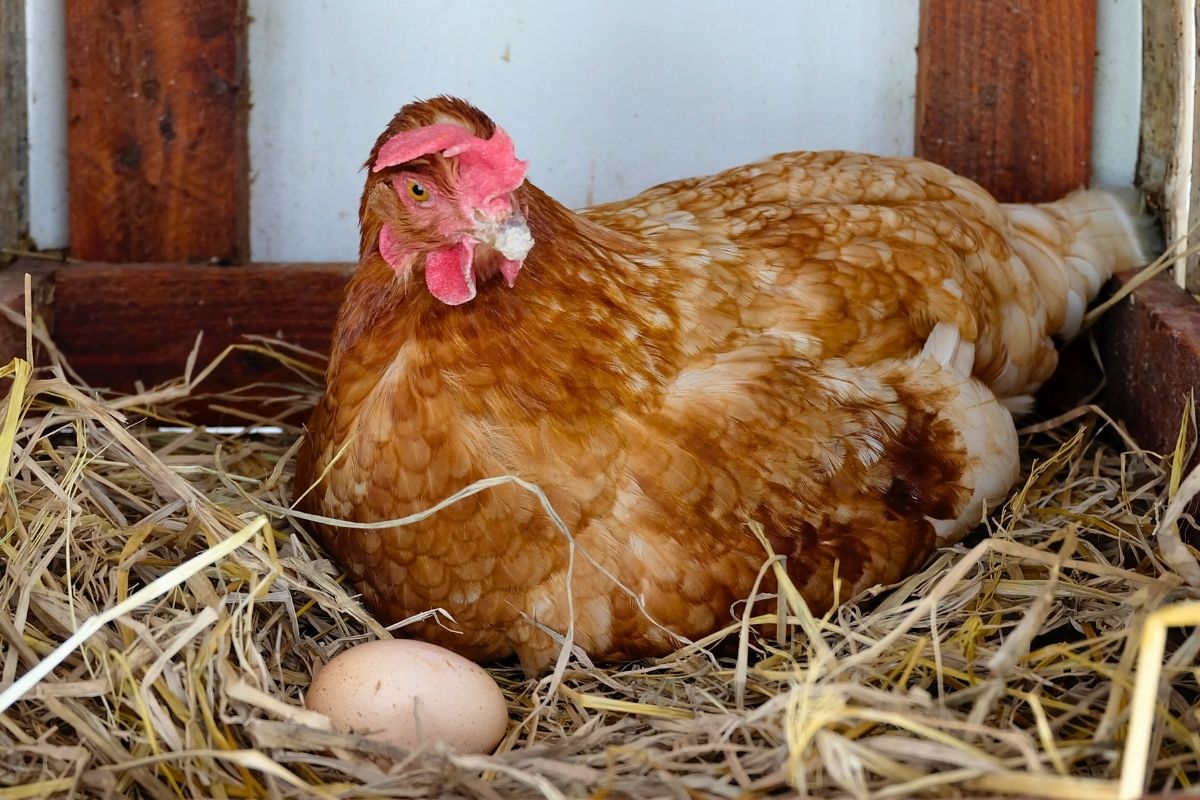
Beginners – 5-7 hens
The conversation with the farmer starts with the most important question – how many laying hens should be kept for a family of 4-5 people?
„It all depends on people's means – where they live and how. 5-7 hens to start with would probably be the optimal choice. And if the possibilities allow more – 7-10 or 8-10 hens. This would be a very safe option, because it should be understood that hens lay eggs differently throughout the year. In winter, the laying rate is usually lower," says Babarskienė, adding that the family's dietary needs should also be taken into account.
If the average person consumes 4-5 eggs per week, then 7-10 hens and a rooster (provided the crowing does not annoy or disturb the neighbours) would be ideal.
In fact, the farmer recommends starting with laying hens. „Raising meat birds requires more care, but they also have more explosive growth power – 3 months and you can eat them. However, I would recommend not to go for meat birds to start with, but to buy layers and buy them from a poultry farm. Unequivocally. Because the hens will have been vaccinated against at least 4 diseases and thus reduce their risk. It will also make egg laying more stable," she says.
Construction of the shed
„You can think of a kind of minimalist option that would cost €500-600. Thinking about long-term solutions – you may need to invest around 1 000 Eur or 1 200 Eur“, – the amount of money it could cost to construct a chicken coop, says V. Babarskienė.
How much space would the hens need? „You should consider that today you may only have 7 hens, but if you are doing well, maybe in a couple of years you will want to have double that number. So, if space is available, don't skimp on space. The most important nuance – ventilation and a dry climate. It may be a little cooler, but it is important to be dry and ventilated, – the farmer stresses the essential requirement for the hen, adding that hens are susceptible to respiratory diseases. This is why good ventilation is essential.„You can calculate that for say 5 hens, about 2 sq m. In the field, the amount of fenced and safe space should be 3-4 times more“, – she specifies, adding that the more space, the better.
„Sheds are nowadays preferably made of insulated panels called sandwich‘s. Such a henhouse does not get too hot in summer and does not freeze in winter. However, many people also keep their hens in a greenhouse during the winter after harvest. That is to say, they set up a small, warm house in which they are injected for the night, and during the day they roost in the 15 square metres. The soil in the greenhouse does not freeze over. There are all sorts of options," says the farmer about the different ways of keeping hens.
Cost of breeding and maintenance
„The egg-laying machines are called australorps, sassax, rodailands, leghorns. Other breeds are also available from the poultry farm, which, under optimal conditions, lay an average of about 250 eggs per year," says Babarskienė, adding that when young hens are bought, they start laying eggs when they are about 6 months old. But is it worth keeping meat hens on a small farm at all if the aim is to be "independent from supermarkets"?
„I would suggest a different approach – choose a breed such as the bald-necked. They are good layers, hardy, non-sticky and good for meat. You can also choose marans. This variety is a bit more complex, but the eggshell is brown, they grow big, and they are quiet enough," the farmer continues to share her advice.
She also points out that with about 10 hens a day, they will need about half an hour for maintenance, and about 1.5 hours at the weekend when they need to change the litter or do other chores.
„Hens really need vitamins, grit, extra calcium – all these can be bought in veterinary pharmacies, where specialists can even advise on what is best to buy“, – notes V. Babarskienė.
So how much does it cost to keep one hen per year? „Taking into account the various nuances (feed, vitamins, maybe even litter and other details), this amount can vary between €30 and €60 per year," says the farmer.
Is it realistic for a family to be almost independent of store eggs all year round? „Very realistic. And first of all in the moral, spiritual sense that I can, I grow my own and I know what I'm eating. Financially – maybe it works out similarly or even a bit more expensive. But one's own is one's own. Even the smell of the pot is different and the taste seems different. So it's very realistic to have both layers and, with more experience, butchers“, – concludes the interlocutor.VMVT requirements
When keeping chickens in the household, the State Food and Veterinary Service (SVVT) stresses that if the birds are kept only for the household's own use and the person is not seeking state support, registration is not compulsory.
The situation changes when eggs or other animal products are placed on the market – sold, exchanged or otherwise transferred as a product, as then keeping is already considered as an economic/commercial activity and additional requirements apply.
It is also important to be aware that the additional welfare requirements for laying hens only apply when 350 or more hens are kept or when 51–349 hens are kept and eggs are placed on the market.
Even on a small farm, it is essential to comply with biosecurity principles; purchase birds responsibly and quarantine them if necessary, restrict visitors, disinfect equipment and transport, control rodents and monitor the health of the birds at all times; and in the event of signs of disease (e.g. reduced appetite, sluggishness, change in appearance, or discolouration of the scales), it is advisable to take action and contact a veterinarian or the HPAI.
To reduce the risk of avian influenza, it is necessary to protect birds from contact with wild birds, to fence (and if possible cover) housing areas, not to use open water bodies for watering, and to store feed in such a way that it does not attract wild birds.
Last but not least, the HPAI reminds us about egg safety. In particular, it is recommended not to wash them before cooking to prevent the removal of the natural protective film. Dirt should be wiped dry and eggs should be stored on a shelf in the fridge, not in the door. They are usually suitable for consumption up to 28 days after laying. Provided, of course, that they are stored in the right conditions.
What is most important to remember when keeping chickens at home
How many hens are needed:
• For a family of 4–5 people, 5–7 hens is enough to start with.
• It is safer to have 7–10 hens, as the laying rate decreases in winter.
• 1 person consumes on average 4–5 eggs per week.
Where to start
• it is recommended to start with laying hens, not meat hens.
• it is best to buy hens from a poultry farm – they are vaccinated, more stable layers.
• a rooster is not necessary unless breeding is planned.
Shed and space
• 5 hens require ~2 sq m in the hen house, outside – 3–4 times more.
• the most important thing: dryness and good ventilation, not heat.
• setting up a hen house can cost €500–1 200.
• alternative solutions are possible (e.g. greenhouse housing in winter).
Versions
• many eggs are laid by: australorpus, sassafras, rodailand, leghorn.
• multi-purpose (eggs + meat): bald eagles, marans.
• hens start laying around 6 months of age.
Life and care
• ~30 minutes per day (10 hens).
• weekends – up to 1.5 hours for extra work.
• supplements required: vitamins, calcium, grit.
Price
• maintenance of one hen per year: 30–60 €.
• financially, it may cost about the same as buying eggs, but:
• quality, taste and knowing what you're eating – the best value.
Legal and safety considerations
• If the hens are raised for their own use only, registration is not required.
• selling eggs – leads to requirements from the HSE.
• biosecurity and protection from wild birds is required.
For more information, see the „Natūrinis farmais“ Facebook group. In this group you will find real people's experiences on how to set up your own subsistence farm so that you are less dependent on supermarkets.

Similar articles

Video