






























Own pigs on a family farm: is it realistic to keep them "just for yourself" and what do you need to know?

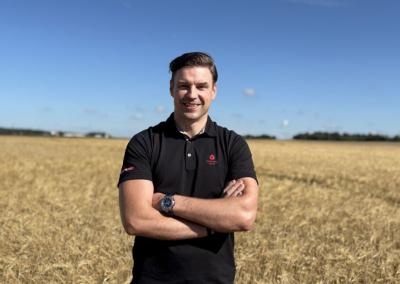
Pig housing has changed dramatically in recent decades, from breeds to hygiene and biosecurity requirements. Is it possible today for a family that wants its own meat to raise its own piglet? Audrius Banionis, a farmer in Kaunas district, says that just the desire to do so is not enough. You need a clear understanding of the conditions that will be needed, how long it will take to care for it on a daily basis, and how slaughter will be handled. In addition, certain rules must also be followed in accordance with the requirements of the State Food and Veterinary Service (VMVT).
Where to start?
„Every animal requires care, a willingness to take care of it and, of course, skills. The culture of pig farming has changed fundamentally. So just wanting to raise your own may not be enough. But if you look into it, if you have the right skills, of course it is possible," says farmer A. Banionis when asked if it is possible for a family to raise a pig on their own.
The first step, the farmer says, is not finding a piglet, but creating the right housing conditions. The impression that a pig is not demanding and can be raised anywhere is wrong. Times have changed, technology and traditions have changed," he points out, recalling that in the past, pigs used to graze in villages, whereas today, the most common breeds are cultivated pigs, which grow faster, but are more sensitive to the microclimate and the quality of the feed.
When it comes to breeds, the farmer distinguishes between the German Great Dane and the Norwegian Yorkshire. These breeds are larger, have a higher bacon accumulation and are more resistant to parasitic diseases.„One animal can be both sad and difficult, so it is possible to cooperate with other young families and buy at least two or three“, – says Banionis, adding that if the plan is not only to refrigerate the meat, but also to produce products, 2–3 pigs for a year is plenty.
Necessary conditions
„Pigs should be housed in a room with a temperature of at least 15–20°C, the air should be dry, it is important to avoid draughts and humidity“, – the importance of the microclimate is emphasised by A. Banionis. Equally important, he says, is the feed – it must be wholesome.
When it comes to space, the farmer urges people to stop stereotyping.
„Let's not imagine that a pig is a dirty animal. On the contrary, – in its space it chooses where its toilet, where it migrates, where its bed is“, – he explains.
On a small farm, a few square metres of dry space is enough for one or two pigs, according to Banionis. A few squares of dry space per pig is very optimal, about 2–3 sq m“, he elaborates.
As for the outdoor area, the farmer says simply: there is no need for it, but if conditions allow, it is possible to let the animals out in the summer. It is important to realise that modern breeds are not used to the outdoors and their skin is sensitive to the sun.
„I always stress – you should treat the animal as you would like to be treated“, – believes Banionis. However, the VVT says a firm „no“ – pigs must not be kept outdoors or in semi-outdoor conditions.
Feeding: what you can, what you can't and why it matters?
„The pig's stomach is analogous to the human stomach – anything a human eats can be eaten by a pig“, – says A. Banionis. However, he stresses that the most important thing is to have a balanced diet. He does not rule out compound feed as a safer option to start with, until he has more experience.
Later on, he said, food scraps could be included, but rules must be followed.
The FVO makes it clear: pigs must not be fed food waste. The Authority also stresses that feed must be safe and that uncooked feed brought in from the field, such as grass, can pose a risk of African swine fever (ASF).
Thermal treatment of feed is also advised by Mr Banionis – it makes digestion easier, he says.
Maintenance and care
Pig farming means routine. The farmer says pigs need to be fed at least twice a day, and some time is taken up with preparing the cow's cow or pork. However, he says, with proper care, it doesn't take much time.
„If there are two pigs and the stall is kept tidy, the daily maintenance does not take a lot of time – preparing feed takes 5–6 minutes, and on weekends removing the manure – maybe 15 minutes, – says A. Banionis.
When it comes to price, the farmer suggests not to count his labour, but to look at the cost price: „1 kg of meat will cost on average up to €1.5 to produce.“ The final amount will depend on the price of feed, the conditions of housing, the breed, and the additional services, such as slaughter or veterinary services.
Slaughter issue
A. Banionis recalls the tradition of slaughtering piglets bought in the spring in autumn – „during the first frost“, but today this is more a habit than a rule. A practical guide, he says, is the maturity and weight of the animal: „A pig should be grown up – around 150 kg. If you buy a 7-week-old piglet in March, by November the meat will be mature enough to be slaughtered.“
But the most important thing, according to the farmer, is to decide in advance who will do the cutting and how it will be done.
„The slaughtering process is complex, everything has its own requirements, so before starting to raise a pig, the first question to be answered is – whether there will be someone to slaughter the pig and prepare the meat for consumption“, – says A. Banionis. He adds that the cost of a slaughterhouse service can be up to €100, but it's not always easy to find someone to provide it at all.
Another important aspect – meat safety. The farmer recalls the risk of trichinosis and the need to check meat. The HVO also draws attention to this and says that even if the meat looks fine, some dangerous diseases are „invisible to the naked eye“ and laboratory testing – is the only reliable way to ascertain safety.
The Authority recommends that a private veterinarian be contacted even when testing is not formally required, as this reduces the risk of infecting family and relatives.VMVT: registration, biosecurity and rules for all
„For yourself only“ does not mean „without requirements“. The VMVT specifies that the holding and the animals must be registered and labelled and the information must be submitted to the territorial unit or by email.
Most practical part – biosecurity requirements. The VMVT points out that these apply to both business and non-business premises, and that biosecurity is central to the prevention of ASF: „the determining factors in the spread of the disease are human activities and biosecurity gaps.
There are therefore specific requirements for small farms: the holding area must be fenced and gated to prevent access by unauthorised persons, vehicles or wild animals.
The environment must be managed in such a way that rodents do not breed. Disinfectant mats shall be provided at the entrance to the barn, with visitor restrictions and rules on changing clothes and footwear. The VMVT also prohibits pigs coming from mass gathering places without quarantine, and drivers bringing livestock are not allowed to visit the barn.
Unfamiliarity does not exempt from finesThe MoEW stresses that biosecurity infringements are taken seriously and that "ignorance" is not an argument to avoid responsibility. The Authority points out that biosecurity infringements are punishable under Article 343 of the ANC: a warning or a fine may be imposed on natural persons from 30 to 300 Euros, and on managers or responsible persons of legal persons from 50 to 1450 Euros.
The HSE also lists the most common penalties for small farmers: the absence of a disinfectant mat or the failure to fill it with disinfectant, the failure to change clothes and clothing when entering a pig holding area, the feeding of untreated feed, and the untidy and unfenced nature of the holding area. The Authority stresses that these are significant infringements and that administrative liability applies in all cases.
Is it still worthwhile for a family to keep pigs?
Banionis suggests taking a practical approach to the question. If a family wants to know what they are eating but does not want the daily care and risks, he suggests an alternative – partnering with small farms or individual elderly farmers, who would find it an enjoyable occupation and an additional income.
„Let them buy that one or a few pigs for the elderly, let them raise them over the summer, and in the autumn share the meat harmoniously and pay as a favour“, – he suggests. That way the elderly have something to look after and feel needed, and the family gets a clearly sourced product without having to deal with the day-to-day maintenance.
It is therefore worth considering: do you really want to raise your own pigs, or is it easier to buy the meat. For more information on how to set up a subsistence farm, see the Facebook group Natūrūrinis farmais I Auginam sau.
Memory on what is most important before raising a pig „just for yourself“
First – conditions, then the piglet
Before buying an animal, it is necessary to have a suitable room: dry, draught-free, with a temperature of about 15–20°C.
One pig needs space
About 2–3 square metres of dry space per animal is optimal. It is better to keep at least two pigs.
Feed safely and responsibly
The ration must be balanced.
• food waste must not be fed to pigs.
• feed must be safe, preferably heat treated.
Maintenance – daily routine
Pigs should be fed at least twice a day, stalls kept clean and manure handled regularly.
Schedule slaughter in advance
Before buying a piglet it is important to know:
• who will do the butchering,
• where it will be done,
• who will prepare the meat.
Meat must be tested
• Post-mortem testing for trichinosis is mandatory, even if the meat appears healthy.
„Just for yourself“ does not mean without rules. Mandatory:
• register the holding and the animals,
• comply with biosecurity requirements.
• fines for natural persons can reach €30–300 for infringements.

Similar articles

Video