





























When Hormuz closes: how much could a new conflict cost Lithuanian agriculture?
On Saturday morning, Israel and the United States launched a military operation against Iran to overthrow the Ayatollahs' rule. The two sides exchanged missile strikes.
Israeli and US missiles hit dozens of targets in Tehran and other cities, reportedly destroying parts of Iran's military and security forces, including high-ranking military officers.
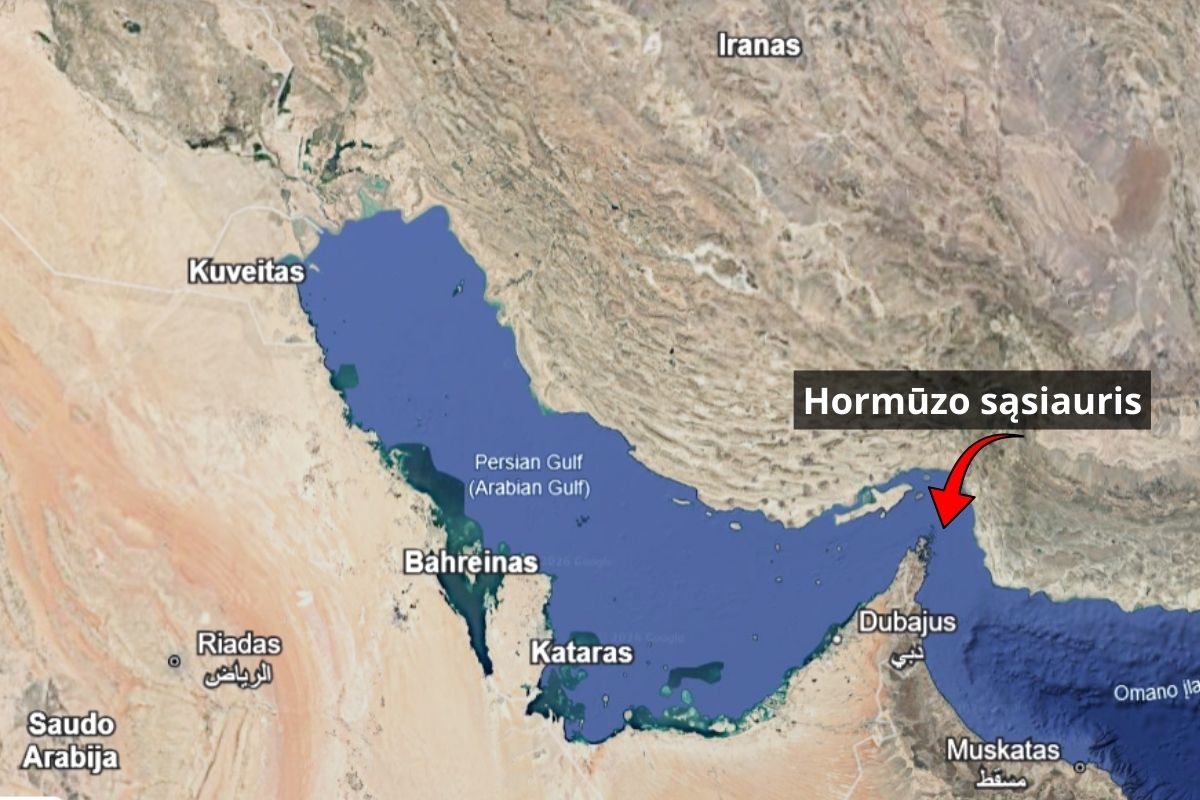
Iran responded with at least two waves of missiles, hitting US military bases in Bahrain, Qatar and the United Arab Emirates.
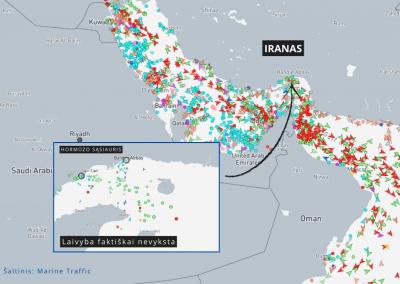
This conflict, if it does not end soon, could have dire consequences for the global economy. Iran has blocked shipping through the Strait of Hormuz, which carries about a fifth of the world's oil and gas, Israeli media reported. If this proves to be true, it would be a devastating blow to the global economy. The Strait of Hormuz is the main route for gas and oil supplies from the Middle East.
The Strait carries up to 21% of the world's oil, and up to 25% of the world's liquefied natural gas (LNG).
The rise in gas prices may also have a small impact on fertiliser prices, but it is difficult to say how much more expensive they will be – this would depend on the duration of the conflict. In the production of nitrogenous fertilisers, gas accounts for 60–80% of the cost price.
In turn, the cost of fuel would inevitably increase the cost of production for individual farms, especially for spring sowing and spraying.
More clarity will be seen on Monday, when the stock exchanges in the different countries and regions will open.
The US has so far massed a huge military force around Iran, not seen since the 2003 military operation into Iraq.
In the Lithuanian context, this military conflict may have an indirect impact on our country's agriculture, in terms of the cost of energy resources. There are virtually no direct economic ties between Iran and Lithuania.

Similar articles


Video