







































The twists and turns of ILTE statistics: few rejections or few applications?
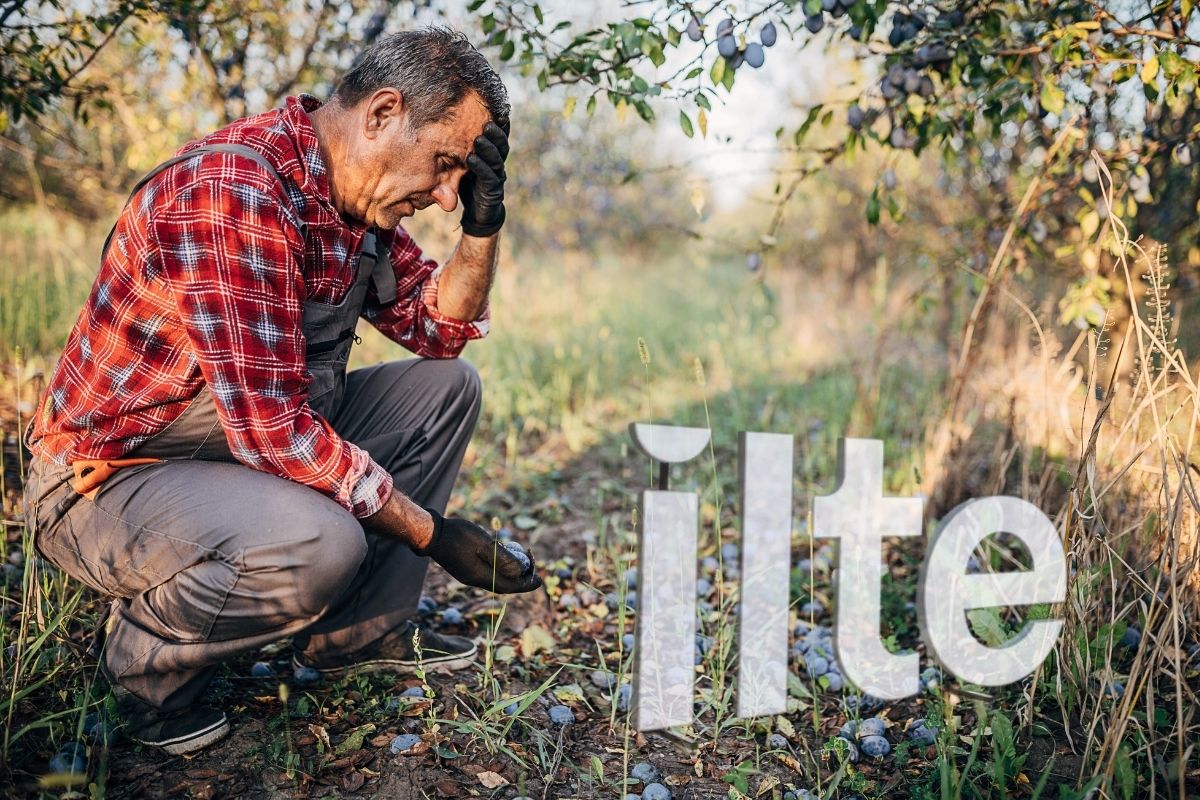
The national development bank ILTE announces that in 2025, out of 297 applications in the agricultural sector, only 3 were rejected.This is just one percent, giving the impression that financing is readily available to farmers. But does this figure reflect the full reality?
The answers provided by ILTE itself show an important detail – the institution only evaluates applications that reach it. Meanwhile, the funding partners – banks and credit unions, make the decisions to grant loans. Moreover, ILTE itself indicates that it suggests that the statistics on applications rejected or not reached by funding partners should be referred to the financial institutions themselves. Does this mean that there is not a complete picture in one place of how many farmers are actually not receiving finance?
The system only sees part of the process
Representatives of Lithuanian credit unions (LCUs) confirm that the financing process is much more complex than the official statistics suggest.
„It is not a one-step process. Projects are first evaluated by the National Paying Agency and then by financial institutions," comments Kristina Dovidonienė, Project Manager of the Credit Department of the Lithuanian Central Credit Union.
She says that projects that are already „well prepared enough“ usually reach the final evaluation, so there are not many negative decisions at this stage. However, the main problem is what is left out of this stage.
„We don't have a full view of the previous stages – how many potential applicants decide not to proceed at all“, – she admits.
Applications disappear even before evaluation
The fact that some farmers „drop out“ even before the official assessment is carried out is also confirmed by financial consultants.
„Sometimes farmers themselves withdraw their application. Sometimes the managers of credit institutions are informed that such a farmer will not receive a guarantee, so the only thing left to do is to withdraw the application," says Ignas Jankauskas, financial consultant and head of the MB „Skaičiai žemdirbiams“.
However, he stresses that he has not directly recorded such cases himself, but has heard about them from market participants.
This, he says, may explain why there are almost no official rejections – often only those projects that are considered "safe" in advance make it to ILTE.
I. Jankauskas points to another important aspect – the selection of applications before they are submitted.
„Most likely, only highly secured projects are sent, the smallest guarantee is taken in order to get interest compensation“, – he says, explaining that this means that some farmers are eliminated from the system even before the official statistics are available.
„The way it is in agriculture is that you can only get a credit if you have a guarantee, so credit institutions take the smallest guarantee, which the borrower has to pay for, and only then can you claim interest compensation“, explains the expert.
Application volumes and confidence are falling
Another signal that raises questions – the general drop in funding activity.
„Application activity itself has fallen to historic lows. We have gone back almost 10 years with the provision of guarantees,– says I. Jankauskas.
This may not be a sign of improvement, but rather a sign of declining confidence in the system, he said.
Member of the Seimas Valius Ąžuolas also confirms this trend: „Previously, about 120 million euros a year were lent to agriculture, now – 20– 30 million euros.“
Bronis Ropė, chairman of the Seimas Committee on Rural Affairs, also doubts the official figures.
„Perhaps only three of the applications that have already been accepted have been rejected, and how many were not accepted – is not clear“, – he says.
At the same time, MP Kęstutis Mažeika also points out that some farmers no longer trust the system at all.
„Many farms do not expect to receive funding, do not meet the specified criteria and do not want to bother repeating the procedures“, – he says.
Does the state even know the true figure?
„I think it doesn't and maybe it doesn't even want to know“, – says K. Mažeika.
At the same time, the MP V. Ąžuolas gives a completely different scale: „A survey, however small, shows that agriculture is currently short of over a billion euros.“
These figures hardly fit together. On the one hand – official figures of just three rejected applications, on the other – politicians' naming of a funding gap of billions.
The data is split between different institutions – banks, credit unions and state bodies, with some farmers perhaps dropping out of the process before the official statistics are available. So is the system really working effectively when only a narrow overview of the whole situation is visible?

Similar articles





Video