


















How to prepare an animal for a system that does not yet exist?
Recently, I had the opportunity to work on a very interesting project outside Lithuania. Today it is still in its infancy – there are no final solutions, no ready answers, not even a full understanding of the final direction of the system. But I found the very question that started the debate extremely interesting.
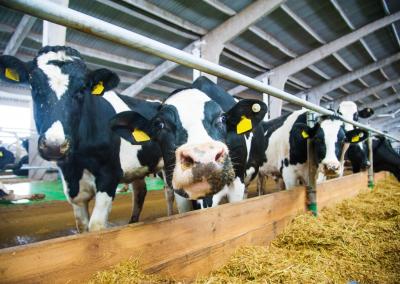
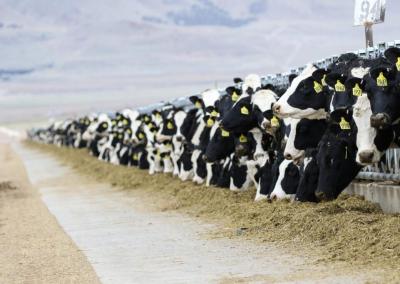
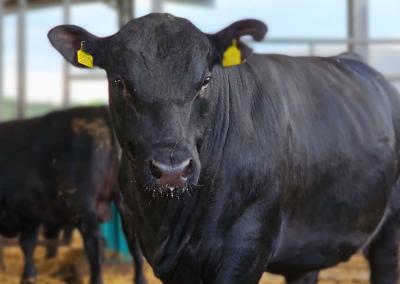
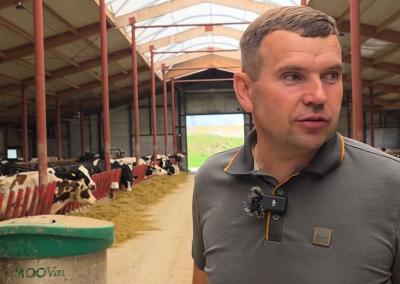
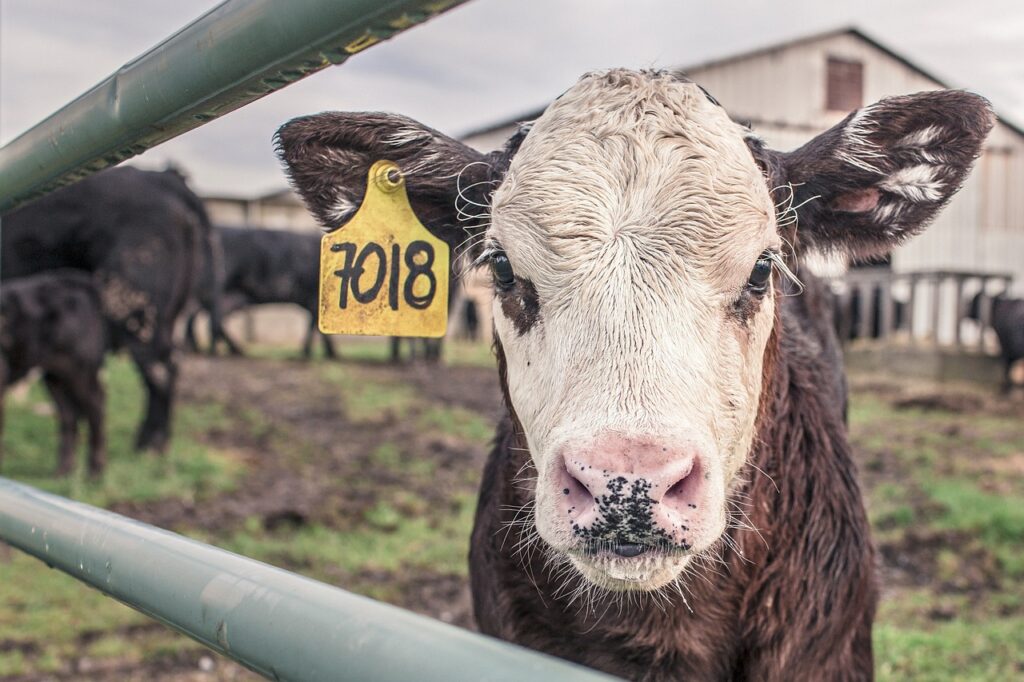
Today there are about eight thousand dairy animals in one region. They are housed on many different farms: some small, some confined, some more modern. The animals are also very heterogeneous: different types, different productivity, different genetic orientation. The whole system has developed in a fragmented way throughout history.
At the same time, the future is already being considered – the concentration of production in one or more modern complexes. And this is where the most interesting question began.
In these situations, the focus is usually on construction, technology, equipment, design. But we realised quite quickly that there was another issue that is much less talked about: what kind of animal is going to enter that new system in a few years' time?
At first glance, the answer may seem simple. A modern complex is built, the animals are moved in, and the system is up and running. In practice, however, this is often where the major difficulties begin. Because a modern infrastructure does not in itself create a modern animal.
When a new system brings in a very heterogeneous herd of different sizes, metabolic types, productivity, reproduction, adaptation to an intensive system, biological and managerial chaos quickly ensues. Some animals are less adaptable to the new housing conditions, reproductive problems increase, brooding increases, and the herd becomes difficult to manage.
And then you start to realise that the transition between the old and the new system is actually a separate phase, requiring its own strategy. This is where our discussions began to turn not only to complexes, but also to the preparation of the animal for the transformation itself.
In other words, is it possible to start preparing for a modern system before it emerges?
And is it possible to form a type of animal during the transition period that:
– be more biologically stable;
– more adaptable to unequal conditions;
reduce reproductive risks;
– allow homogenisation of the herd;
– and at the same time not close future options?
It is the last question that seems to me to be one of the most important in this project. Because today nobody can yet fully say what the final system will be in five or ten years' time. Perhaps it will be very intensive milk production. Perhaps there will be more emphasis on components. Perhaps economic conditions, the feed situation or management models will change. Therefore, trying to lock the system into one genetic trajectory very rigidly today could be a mistake.
Another very important aspect adds to this – infrastructure development almost never goes perfectly according to plan. Construction of complexes can be delayed, projects can change, and the transition period can take longer than originally planned. And then there is another important thought: the animal in transition must not only be ready for the future system. It must also be stable enough in case it has to work under the current conditions for some time to come.
In other words, a transitional animal must not be held hostage by one system.
It must:
not block the way to future genetic directions;
allow the system to remain flexible;
tolerate management unevenness;
– and at the same time not lose functionality even if part of the transition is prolonged.
This completely changes the angle of thinking.
Suddenly you start to look beyond milk or indices and you start to look at:
calving safety;
– the adaptability of the animal;
– susceptibility to management errors;
– longevity;
– metabolic stability;
– herd uniformity;
– system flexibility.
And then there is the question, which in my opinion is still under-discussed in dairy farming today: is there a type of animal that is more resistant to transition?
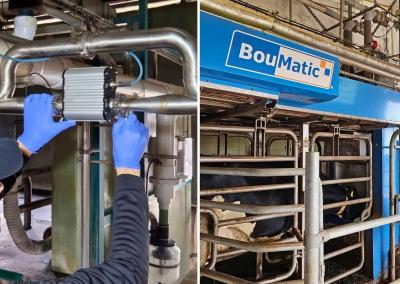
Discussions have started to go in different possible directions – consideration of transient crossbreeding strategies, the search for more functional or stable types, analysis of different biological models. However, it is not about a specific breed or a specific solution. It is the thinking itself that matters. Today, we talk a lot about farm construction, robots, ventilation, equipment, productivity. But along with the question of what kind of system we are building, another question is increasingly coming up – what kind of animal are we going to bring into that system in a few years' time.