














































The wheat harvest is in full swing: the yield is slightly above average
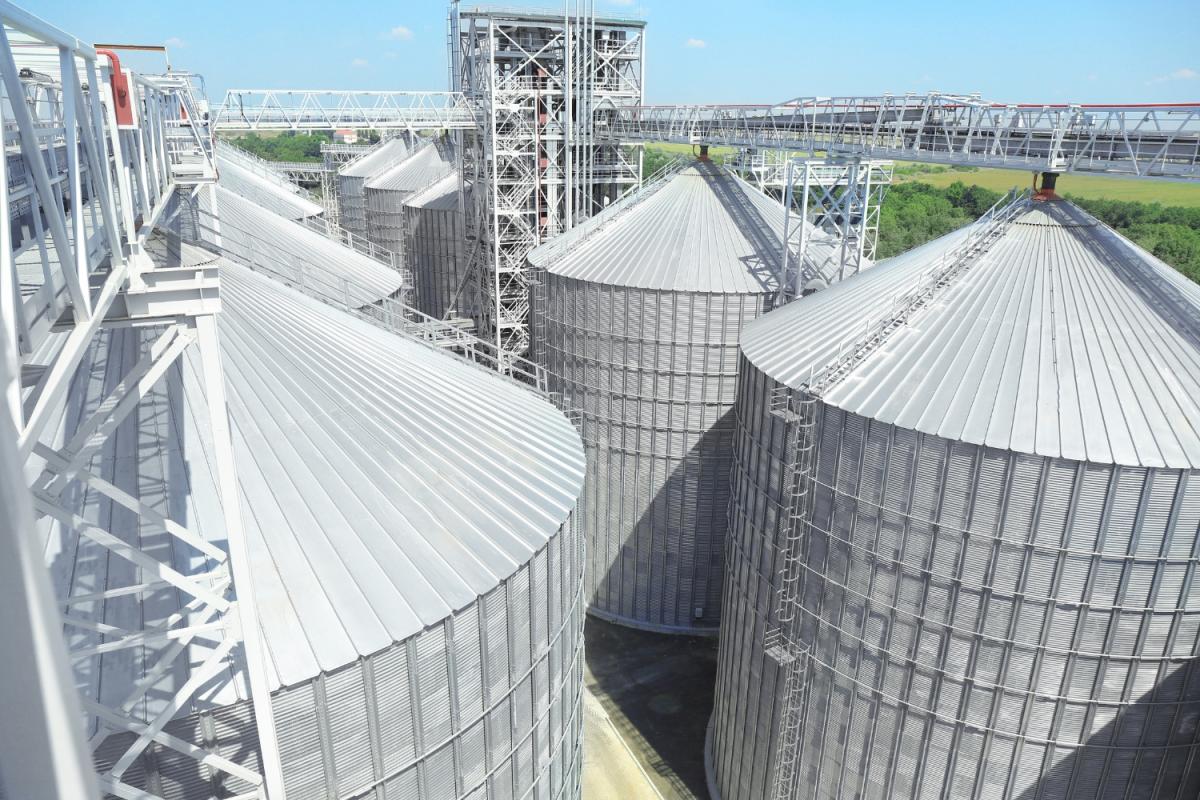
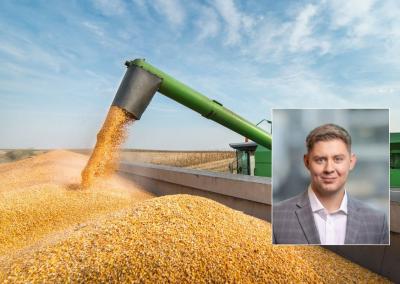
With the winter crop harvest now in full swing, farmers say this year’s yield is slightly above average. At the same time, they emphasise that they are facing rising costs, whilst grain purchase prices remain at the same level as they were 15 years ago.
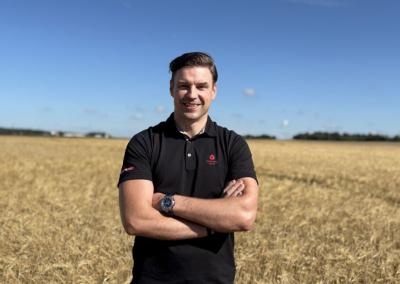
“The harvest potential is slightly higher than average,” Vytautas Buivydas, vice-chairman of the Young Farmers’ and Youth Union, told BNS.
According to him, the average yield for winter wheat is 5–6 tonnes per hectare.
“If the soil is poorer or there have been any adverse effects from the winter, then yields decline. But 6 tonnes of winter wheat is the optimal yield. The yield of spring wheat is 1–1.5 tonnes lower – if it’s 4–4.5 tonnes, that’s already very good. Oats – around 3 tonnes; peas – also 3–4 tonnes. The winter rapeseed yield is between 2 and 3 tonnes – that’s normal and not bad, but sometimes yields of 4–5 tonnes are achieved,” calculated V. Buivydas.
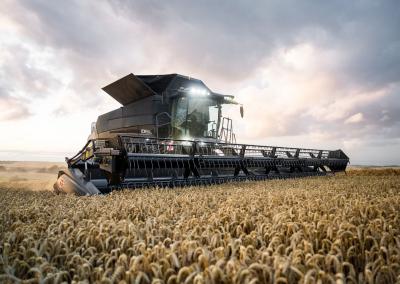
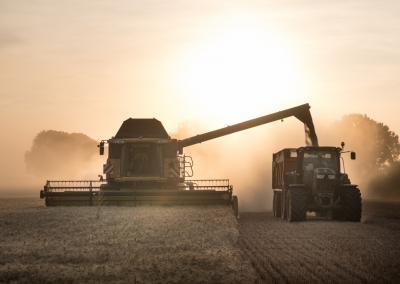
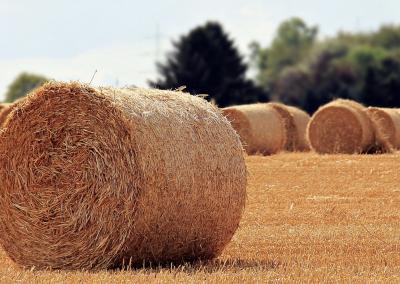
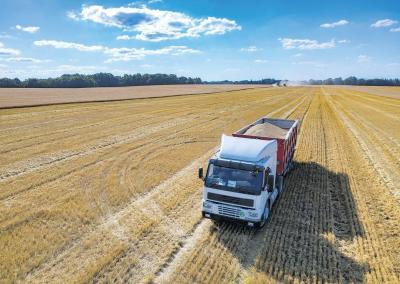
According to him, it is possible to forecast the size of the harvest by looking at the quantities already harvested, as the winter crop harvest is now in full swing: “We’re now at the peak of the harvest; the combine harvesters are able to operate and are doing so.”
V. Buivydas says that such forecasts are also made after assessing the impact of rain on the crops lying on the ground.
According to him, the weather this year has been so changeable that some farmers, worried about the effects of the drought, have started setting up irrigation systems, whilst others have decided to stop using growth regulators.
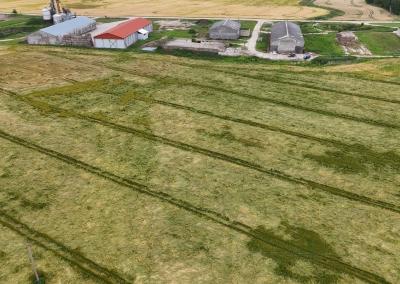
“When the rain came, they realised they’d probably made a mistake, as a lot of the grain had lodged. This lodging is because there was plenty of fertiliser, but they skimped on the growth regulator, so the stalk supporting the ear didn’t grow as tall, so the stalk straightened out after the rain and the grain became more vulnerable, and the rain flattened it more quickly, because the larger the ear of grain, the greater the risk of lodging“,” said the farmer.
The start of the harvest is marked by the beginning of the reaping of winter barley. After that, the combine harvesters move on to the fields of winter triticale, rye and, finally, wheat.
“Winter crops ripen earlier, so they are harvested first, followed by the summer crops,” – said V. Buivydas.
The harvesting of summer cereals has not yet begun: “We’ll have to wait another two or three weeks for them. It starts in the second half of August; oats are harvested first, spring barley may already be ripe, and then everything gets mixed up – one day we’re threshing winter cereals, and the very next day – the spring crops“.
Drying and transport costs have risen
Andžejus Kulevičius, Vice-President of the Lithuanian Chamber of Agriculture, says that the cost of transporting grain from the farm to the grain silo has risen by around 20 per cent this year. Furthermore, these services are more expensive in Lithuania than in some neighbouring countries.
“At present, grain drying costs around 7 euros per tonne for every one percentage point reduction in moisture content below the base level of 14 per cent, whilst in the case of a wetter harvest, the additional costs can reach 10 euros per tonne“,” A. Kulevičius stated in the report.
According to V. Buivydas, as grain drying costs have risen, some large-scale farmers, working thousands or tens of thousands of hectares, are taking the risk of incurring higher costs for drying their grain, so they are getting into their combine harvesters and heading out into the fields, whilst smaller farmers are more flexible – they can leave the grain to dry in the fields for a few days.
“If the farms are large and the threshing volumes are very high, they certainly won’t wait – they have the means and head out into the fields, even if they’re damp, and thresh, accepting the additional costs that arise from not being able to wait for the crops to dry out. But smaller and medium-sized family farms have an advantage – they do not have large areas, so they can wait (for weather favourable to harvesting – BNS). “This flexibility of small farms means that, because they have smaller areas, they can still adapt somewhat to weather conditions,” said V. Buivydas.
“When you’re a larger farm, you can’t keep up with the harvest, and then you can’t keep up with the sowing (of winter crops – BNS). The larger the farm, the greater its efficiency on the one hand, but the higher the costs on the other,” added the farmer.
The Vice-President of the Chamber of Agriculture says that natural and economic factors are posing considerable challenges and difficulties for farmers during this year’s grain harvest.
“Farmers are facing rising costs, whilst grain purchase prices remain at the same level as they were fifteen years ago. Although fertilisers, plant protection products, fuel, agricultural machinery and spare parts have all become more expensive during that time, and wages and taxes have risen, grain prices on international exchanges today are similar to those of more than a decade ago. This imbalance raises serious concerns about the competitiveness and future of farms“,” said A. Kulevičius.
According to him, this year’s grain harvest is being made particularly difficult by increased production costs. Harvesting requires a great deal of fuel – not only for combine harvesters and other machinery, but also for transporting and drying the grain.
A. Kulevičius maintains that farmers are competing not only with one another but also with producers in other European countries, so it is important that the competitive conditions are as similar as possible.

Similar articles

Video