







































































Whilst Poland has temporarily reduced VAT on fuel, Lithuania has no plans to do so, but will put forward proposals regarding excise duty

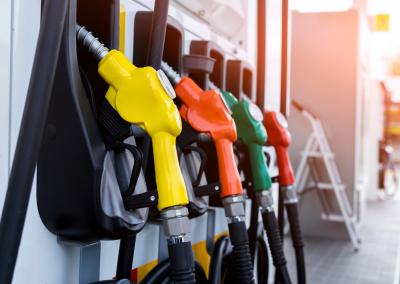
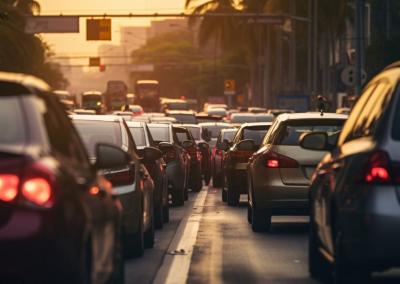
Following Poland’s temporary reduction in the value-added tax (VAT) rate on fuel, Lithuania has no plans to adopt a similar approach, the Ministry of Energy told ELTA. Instead, it is proposed to make provision in advance for the possibility of temporarily reducing the excise duty on diesel if its average price in the country were to rise significantly.
According to the Ministry, Poland’s decisions are being assessed in terms of their potential impact on the competitiveness of the Lithuanian fuel market and the risk that some sales may shift to the neighbouring country.
However, it is stated that the direct adoption of Poland’s measures is not currently under consideration.
“The measures applied by Poland are being assessed primarily from the perspective of regional competitiveness, but their direct adoption in Lithuania is not currently on the political agenda,” – the ministry told ELTA.
According to the ministry, there are also no proposals to set a maximum permitted retail price for fuel; such a measure is not being considered.
Instead, the ministry proposes to enshrine in the Excise Duty Act a mechanism that would allow for a temporary reduction in excise duty should an exceptional and sufficiently prolonged situation arise in the fuel market.
One of the possible criteria for activating such a mechanism is the previously announced average price of diesel at 2.20 euros per litre.
According to the Lithuanian Energy Agency (LEA), if the average retail price of diesel reaches or exceeds this threshold and remains at that level for at least five consecutive working days, it would be justified to temporarily reduce the excise duty.
“It is important to note that, at present, the €2.20 threshold is not an automatic condition enshrined in law, so reaching it alone does not automatically trigger a reduction in excise duty“, the Ministry explained.
The Ministry proposes that the law should specify not only the price criteria, but also the amount of the reduced excise duty or the principles for its calculation, the maximum duration of the measure’s application and the conditions for its termination.
The decision on the specific rate of reduction and the period of its application would be taken by the Government.
Final calculations of the impact of such a measure on the state budget have not yet been carried out – they would depend on the extent of the excise duty reduction, its duration and the volume of diesel sold.
The Ministry explains that at some petrol stations the price of diesel has already approached the 2.20 euro mark, but the national average has not yet reached it.
In Poland, the 8 per cent VAT reduction on fuel is valid until the end of August. According to the Polish government’s calculations, this measure should reduce the price of fuel by approximately 21–23 euro cents per litre, depending on the type.
According to data from the Polish Ministry of Finance, the VAT relief alone will cost the state budget around 115 million euros for the last two weeks of August.
Finance Minister Taurimas Valys has previously stated that introducing such a relief would be extremely costly for Lithuania, so, he said, in order to control fuel prices, the intention is first and foremost to implement non-tax measures.

Similar articles



Video