








































Economist: Rising fertiliser prices and other threats to the competitiveness of agriculture
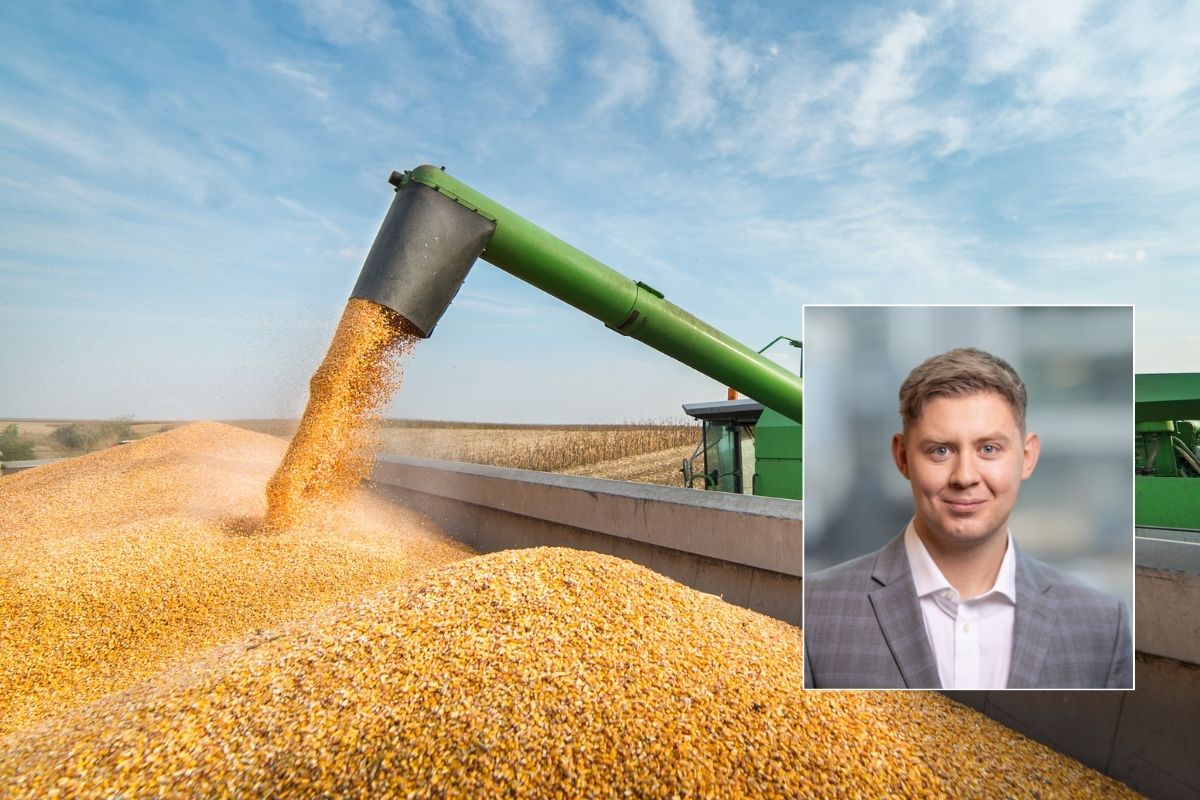
The country’s agricultural sector is facing increasing pressure on profitability. Over the past few years, fertiliser prices have risen faster than grain prices, and in the spring the ratio between them reached an all-time high. Although grain prices rose significantly again in August and the fertiliser market has stabilised, the rapidly rising cost of gas may once again exacerbate the situation. Fertilisers typically account for around 30–40 per cent of total production costs for arable farms, but other key cost categories – chemicals, fuel and electricity – have also become more expensive. Therefore, the declining profits of Lithuanian farms are not merely a consequence of the recent energy price shock, but rather a long-term trend.
Rising price pressures
The conflict in the Middle East, which has been ongoing since the start of the year, has significantly affected global trade flows and increased uncertainty regarding raw material prices. Although neither Lithuania nor the European Union (EU) has particularly close economic ties with the Middle East, and whilst Europe’s fertiliser production capacity remains substantial, local and regional boundaries have all but disappeared in global commodity markets. When supply chains are disrupted, price fluctuations quickly affect all markets.
According to August data, nitrogen fertiliser prices in Europe were 12 per cent higher than at the start of the year and are currently significantly lower than at their peak in April. However, natural gas is a cause for concern – its price has almost doubled since the start of the year. As natural gas can account for as much as 60–80 per cent of the production cost of nitrogen fertilisers, its rising price has a direct impact on fertiliser prices.
At present, farmers are being helped by higher grain prices – the price of wheat has risen by 27 per cent since the start of the year, and that of rapeseed by 23 per cent. However, current market forecasts do not predict any significant further growth, whilst the risk of fertiliser prices rising remains high.
Regulatory changes are also creating additional challenges. From 2026, the EU has introduced a carbon adjustment mechanism, which imposes an additional tax on imported fertilisers produced in a polluting manner. At the same time, the rules applicable to local producers are changing – the number of free emission allowances will be gradually reduced by 2034. This means that price increases may be felt in the future for both imported and EU-produced fertilisers.
Intensive crop farming and limited crop diversity make Lithuania particularly vulnerable
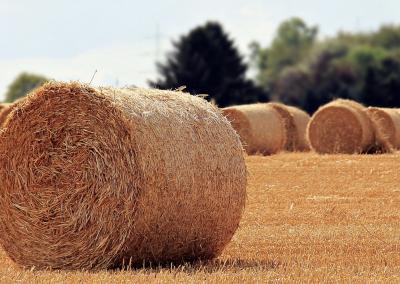
Lithuania’s agricultural sector is particularly sensitive to these changes and price fluctuations. The country is heavily focused on arable farming and is one of the EU’s most intensive grain-producing and exporting nations. Maintaining such intensity requires constant fertilisation, which is why Lithuania ranks among the countries with the highest use of nitrogen fertilisers in Europe, second only to Poland in terms of consumption per hectare.
The high demand for nitrogen fertilisers is largely due to the dominance of wheat and rapeseed in the crop mix. These crops are among the most fertiliser-intensive, and the areas under cultivation have tripled over the past 20 years, now accounting for around one-fifth of Lithuania’s territory.
Such agricultural specialisation usually allows for higher productivity, but at the same time increases dependence on fertilisers, which is why price shocks affect Lithuanian agriculture more severely than in countries with greater crop diversity.
Challenges to profitability are becoming a long-term trend
The greatest cause for concern today is not isolated price spikes, but the long-term trend. For example, over the last six years, EU wheat prices have risen by 20–30 per cent, whilst the average price of nitrogen fertilisers has increased by almost 2.5 times. Such price rises are particularly unfavourable for farmers, who are therefore forced to absorb the rising costs without receiving sufficient additional income from their produce.
Other costs are also putting additional pressure on farmers. The prices of pesticides, fuel and electricity have also risen by tens of per cent over the same period. We are therefore not talking about a problem with a single cost item, but about a general rise in the costs of agricultural production.
Small farms are suffering the most
One way to reduce costs is to improve the efficiency of agricultural operations and use fertilisers more precisely. However, this requires investment in technology, logistics and process optimisation. Such investments usually pay off economically on larger farms, which is why they are better placed to adapt to changing conditions.
It is becoming increasingly difficult for smaller farms to compete. Over the past two decades, the proportion of farms growing cereals on areas of five hectares or less has fallen from around 25 per cent to 5 per cent, whilst farms smaller than one hectare have virtually disappeared. A large proportion of their land has been leased or sold to larger farms. If cost pressures persist, this trend towards concentration is likely to continue in the future.
Organic farms are not an attractive alternative
One way of mitigating the risk of declining profitability would be to reduce the use of mineral fertilisers and switch to more environmentally friendly farming practices. However, the prospects for organic farms in Lithuania remain challenging today.
In 2025, only 3.2 per cent of the grain harvest grown in Lithuania came from organic farms. Among the main crops – wheat and rapeseed – this proportion is even lower.
This is influenced by both geographical conditions and economic factors. Depending on the crop grown, yields on organic farms in Lithuania are on average 2–4 times lower than on farms practising intensive agriculture. Furthermore, over the past five years, the prices of organic fertilisers have risen at a similar rate to those of mineral fertilisers. Consequently, a rapid transition to organic farming could have a negative impact on food prices.
Overall, agricultural productivity in Lithuania has long been based on successful specialisation in a few key crops. However, this very specialisation is now increasing the sector’s vulnerability as costs rise.
Sudden structural changes in agriculture do not usually occur, but in the long term, only more efficient use of resources and a wider variety of crops can help maintain competitiveness.

Similar articles



Video