










































The feed crisis in Europe: hay is becoming a contraband commodity, whilst farmers are being stopped by customs officers at the border
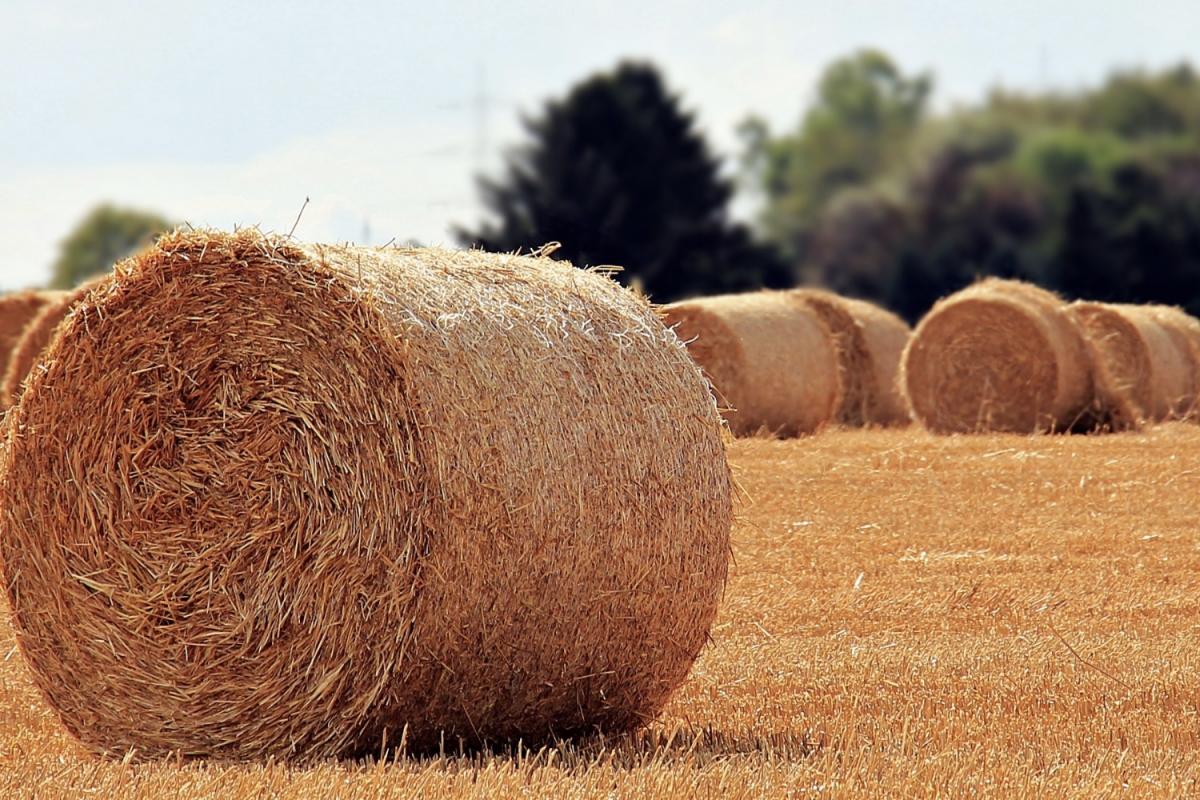
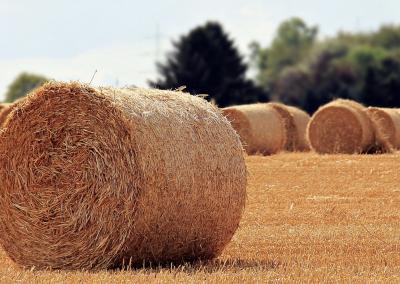
This summer’s drought in Europe has caused not only a shortage of animal feed, but also an unusual phenomenon – a surge in the illegal trade in hay and other animal feed. Customs officials on the border between France and Switzerland have stepped up checks in an effort to prevent the undeclared export of animal feed. The situation highlights the growing tension in the European feed market: livestock farms are striving to build up stocks for the winter, whilst reduced harvests due to the drought are intensifying competition for every tonne of hay, haylage and maize silage.
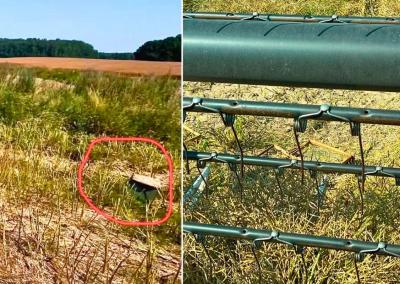
As reported by the Swiss public broadcaster RTS, French customs officials in the Haut-Doubs region, near the Swiss border, stopped a tractor on 17 August 2026 that was carrying an undeclared consignment of animal feed. It was established that the hay was being transported to Switzerland without complying with the mandatory customs procedures. The farmer was fined, and the consignment had to be sold off within French territory. The incident prompted officials to pay closer attention to cross-border trade in animal feed.
French customs officials acknowledge that, until now, the illegal transport of hay had not been a significant area of their work. However, the situation has changed this year. Local farmers have noticed an increasing number of tractors crossing the border, loading up with animal feed at French farms and returning to Switzerland. Some of these consignments are transported without the necessary export and import documentation. Customs officials confirmed to the French daily *L’Est Républicain* that such illegal shipments are on the rise due to the feed shortages being felt in both countries.
This problem is particularly acute in mountainous border areas, where a significant number of livestock farms are situated at altitudes of over 1,000 metres above sea level. Here, fodder production is heavily dependent on the productivity of natural pastures, the length of the growing season and rainfall. The summer drought has not only reduced the grass yield but has also limited the ability to build up sufficient stocks for the approaching winter feeding season.
The seriousness of the situation is also highlighted by official French agricultural data. On 16 September, during a discussion of the drought’s consequences in the National Assembly’s Committee on Economic Affairs, it was noted that on 20 August 2026, the grass yield from permanent grassland was as much as 36 per cent lower than the average for the same period between 1989 and 2018.
In many regions of France, more than half of the grasslands were severely affected by the drought. In five regions, fodder stocks were more than 50 per cent below normal levels, whilst in eight regions the shortfall amounted to at least 25 per cent.
According to data presented during parliamentary deliberations, the effects of the drought affected at least 15,000 cattle farms, 2,150 sheep farms and 570 goat farms. Twelve out of thirteen of France’s administrative regions on the mainland and in Corsica recorded a decline in livestock production or a reduction in herd sizes. Ten regions also reported increased livestock mortality.
The drought has also severely affected maize production. Preliminary estimates presented to the French Parliament indicate that yield losses for grain maize could reach around 34 per cent, and for forage maize around 30 per cent. This is particularly significant for dairy and intensive cattle farms, where maize silage forms a significant part of the cattle’s diet. Such losses mean not only a reduced supply of feed, but also a greater need for additional purchases, transport and adjustments to cattle rations.
The situation in Switzerland is also challenging. The prolonged summer drought has reduced hay yields and maize productivity in many parts of the country. The Swiss Federal Office for Agriculture has acknowledged that the rainfall in late August and September has not fundamentally altered the situation. Taking into account the needs of livestock farms, the country’s authorities have taken exceptional measures to facilitate the import of animal feed.
From 15 August 2026, Switzerland has temporarily abolished customs duties on fresh and silage maize for animal feed with a dry matter content not exceeding 60 per cent. The previously applicable customs duties and guarantee fund contributions for this category have been reduced to zero – 0 Swiss francs per 100 kilograms of gross weight. This concession was initially due to remain in force until 31 October, but on 25 September the Swiss authorities decided to extend its application until 30 April 2027.
The decision to extend the preferential regime was prompted not only by the shortage of animal feed but also by logistical difficulties in cross-border transport. Furthermore, from 1 October, import duties in Switzerland will be reduced on certain fibre-rich feeds that can partially replace coarse fodder. The aim is to give livestock farms more opportunities to build up their feed stocks ahead of next spring.
However, the abolition of customs duties does not mean that feed can be transported freely across the border without documentation.
In France, exported consignments must be declared, and the border must be crossed via designated customs clearance points when transporting commercial goods. In Switzerland, there is also an obligation to declare imported animal feed correctly, and certain categories require a general import licence. For standard imports, even after the abolition of customs duties, a preferential Swiss value-added tax of 2.6 per cent remains in force.
However, there are also exemptions for farmers in border areas. French and Swiss agriculture have historically been closely linked, which is why some Swiss farmers work land on French territory. According to François Monin, director of the Jura Cantonal Chamber of Agriculture, almost one in ten farmers in this canton has land under cultivation in France. Provided certain conditions are met, produce grown on such farms may be imported into Switzerland under simplified cross-border agricultural trade rules.
These concessions apply to agricultural activities within a 10-kilometre-wide border zone. In such cases, fodder grown by the farmer themselves may be imported without paying customs duties or VAT. However, this does not constitute a general authorisation to transport hay purchased from other farmers without declaration. According to F. Monino’s assessment, around 99 per cent of farmers and traders who purchase feed in other parts of France and import it into Switzerland comply with the established customs requirements.
It is not possible to determine the exact extent of the rise in feed prices across France or Switzerland in 2026 based on the available data, but the reduction in supply clearly points to upward pressure on prices.
For example, a herd of 100 dairy cows, with each cow consuming an average of 20 kilograms of maize silage (in natural weight) per day, would consume around 360 tonnes of this feed over a 180-day feeding period. If the farm had 30 per cent less silage in stock than required for this period, it would need to purchase an additional 108 tonnes or replace it with other feedstuffs. This is an illustrative calculation, not actual data from a specific farm, but it demonstrates the financial burden that even a partial loss of the feed harvest can cause.
The feed shortage is forcing farmers not only to seek new suppliers, but also to change their feeding strategies, recalculate the energy and nutritional value of feed, and assess the use of alternative raw materials. With insufficient stocks, some farms may have to reduce their livestock numbers. This is a particularly difficult decision for dairy farms, as rebuilding a productive herd takes time and requires additional investment.

Similar articles



Video