















Farm Europe: Europe risks increasing its dependence in the agricultural, food and energy sectors
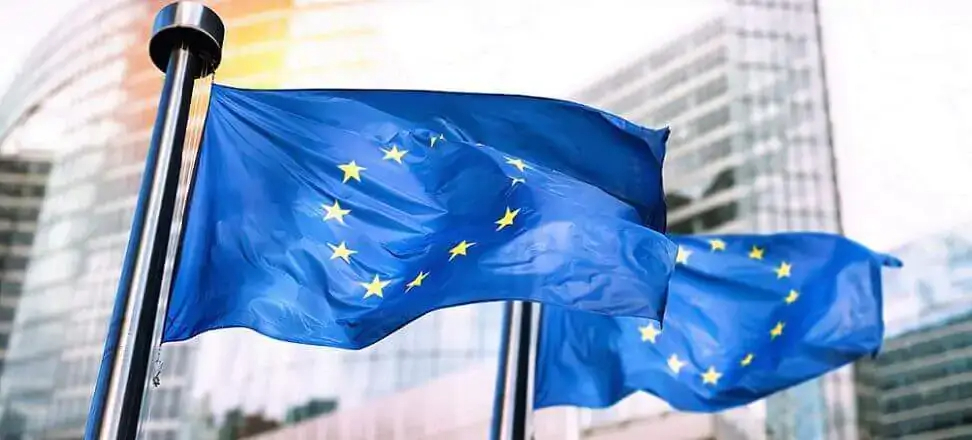
Following European Commission President Ursula von der Leyen’s presentation of the annual State of the European Union address to the European Parliament on 16 September, Farm Europe criticised the Commission’s chosen direction in the areas of agriculture, food and energy. According to the organisation, political declarations are not enough to achieve Europe’s strategic autonomy – agriculture needs concrete investment, adequate funding and a strong Common Agricultural Policy (CAP).
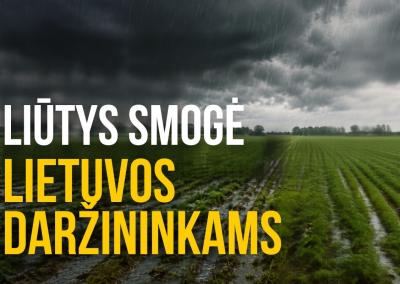
In her speech, U. von der Leyen devoted considerable attention to the consequences of this summer’s extreme weather events. The President of the European Commission noted that around 660,000 hectares of land had been burnt in Europe and around 12 million tonnes of crops had been lost. She announced that in October the Commission would present a new climate resilience framework, which would identify the 100 most vulnerable areas in Europe. A new European Water Initiative is also planned, along with measures to strengthen agricultural risk management and insurance cover.
Farm Europe: risk management alone will not be enough
Farm Europe welcomes the increased focus on water scarcity, risk management and insurance, but believes that the scale of the measures announced does not match the challenges currently facing European agriculture.
The organisation points out that the 2026 drought affected around 70 per cent of the EU’s agricultural land. Therefore, in its view, reducing water losses in infrastructure is essential, but for agriculture to adapt to climate change, significantly greater investment is required in water storage, irrigation, water reuse, precision farming and other measures to enhance resilience.
Farm Europe also emphasises that insurance and risk management measures cannot replace adequate EU agricultural funding and a strong, independent CAP.
Algimanta Pabedinskienė, Chair of the Lithuanian Farmers’ Union, notes that the challenges posed by climate change are increasingly becoming not a forecast for the future, but a daily reality for farmers.
“A farmer cannot shoulder the ever-increasing climate risks alone. If we expect them to ensure food production even in the face of droughts, heavy rainfall or other extreme events, European policy must provide the practical means to do so. When discussing water management, insurance and risk mitigation, we must also discuss investment in land improvement, irrigation, water storage, modern technologies and the ability of farms to adapt“,” – says A. Pabedinskienė.
Warning of growing dependence
Farm Europe’s greatest concern relates to long-term trends in European agricultural production and trade.
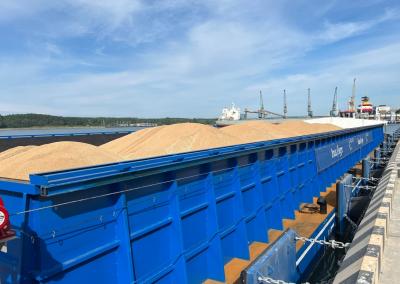
According to data provided by the organisation, since 2019, the area under cereal cultivation in the EU has fallen by approximately 4 million hectares, whilst the cereal trade surplus has halved. Between 2019 and 2023, wheat imports increased 2.4-fold, whilst EU maize exports have fallen by 48 per cent since 2019.
Farm Europe estimates that since 2019, the EU’s livestock numbers have fallen by more than 26 million, whilst the meat trade surplus has fallen by 26 per cent, from 6.5 to 4.8 million tonnes. According to the organisation’s data, Europe has also lost 1.37 million family farms – approximately one-fifth of their total number.
Dependence on imports of protein-rich raw materials is also increasing. Farm Europe reports that net imports of oilseeds and feedstuffs reached 62.3 million tonnes, compared with 58.9 million tonnes in 2019. Imports of soya meal alone amount to 41.7 million tonnes – 21 per cent more than in 2019.
According to A. Pabedinskienė, these trends raise a fundamental question – to what extent is Europe actually prepared to safeguard its agricultural production potential.
“Strengthening European agriculture must begin with a very specific answer – does Europe want to produce its own food and maintain viable farms? We cannot talk about strategic self-sufficiency whilst at the same time increasing our dependence on imported raw materials, fertilisers, proteins or food products. Every farm lost and every decline in the production sector weakens not only agriculture – in the long run, this also becomes a matter of Europe’s food security,” – emphasises the Chair of the Lithuanian Farmers’ Union.
Rising costs are putting pressure on farms
Farm Europe also draws attention to the costs of agricultural production. According to data provided by the organisation, in April 2026, nitrogen fertiliser prices were 71 per cent higher than the 2024 average. In the second quarter of 2026, fertiliser prices in the EU rose by a further 13.4 per cent year-on-year, whilst agricultural produce prices fell by 5.8 per cent.
According to Farm Europe, under these conditions, the competitiveness of European farmers is further affected by rising imports of agricultural and food products, as well as differing production standards between the EU and third countries.
The organisation is also critical of the situation where agriculture is becoming one of the most sensitive areas in the EU’s trade agreements. In Farm Europe’s view, Europe’s strategic autonomy policy should not be developed at the expense of its own agricultural production potential.
Agriculture is also important for energy autonomy
Farm Europe calls for agriculture to be viewed in broader terms than simply as a food production sector. According to the organisation, farmers can make a significant contribution to Europe’s bioeconomy, the production of biofuels and biomethane, and climate neutrality targets.
However, Farm Europe believes that this potential is not being sufficiently exploited. There is therefore a risk that Europe will not reduce its external dependencies, but will simply replace one with another.
ŽŪR: a strong CAP – a matter of strategic security
Farm Europe is also critical of the direction of the EU’s forthcoming multiannual budget. The organisation opposes the prospect of reducing guaranteed funding for agriculture and weakening the CAP’s independent position within the EU budget structure. According to the organisation, the Commission’s proposed guaranteed funding of €300 billion would represent a reduction of more than 20 per cent, whilst the disappearance of a separate CAP budget line would reduce the long-term clarity and predictability that farmers need. (Farm Europe)
The Chair of the Lithuanian Farmers’ Union emphasises that the debate on the future EU budget should not be limited to figures alone – first and foremost, it is necessary to decide what role Europe envisages for agriculture in its strategic security.
“The CAP is one of the European Union’s fundamental policies. Weakening it would not mean greater European autonomy, but rather a greater risk of becoming dependent on external factors. Food security, agricultural competitiveness and a vibrant rural community must be regarded as part of Europe’s strategic security. “That is why farmers need not a reduced, but a clear, stable and long-term European commitment to agriculture,” says A. Pabedinskienė.
In her annual report, the President of the European Commission gave assurances that Europe would support farmers and acknowledged the threat posed by water scarcity to agriculture and food security. She also announced a new European Water Initiative, a climate-resilient system, the Climate Insurance Alliance and future agricultural risk management measures.
Farm Europe, for its part, calls for agriculture to be restored to its rightful place in the European project and to be regarded as a strategic sector on which not only food production but also energy, the bioeconomy and other key European value chains.
The debate following Ms von der Leyen’s annual report highlights a fundamental question: whether Europe’s ambition to become strategically more self-reliant will be underpinned by investment and agricultural policy on a scale sufficient to preserve Europe’s own food production potential.

Similar articles

Video