




















































































Off to the shelters – with our pets
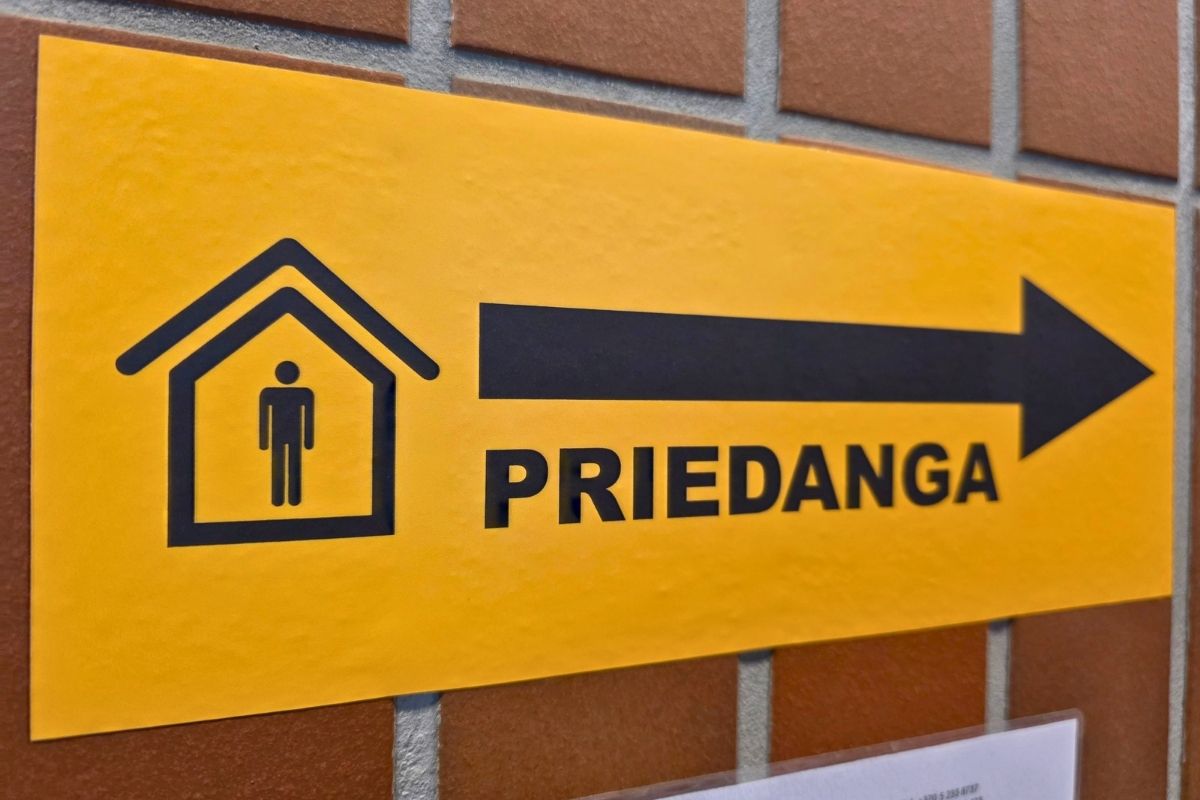
The authorities are considering where residents with pets could seek shelter in the event of an air raid, as, according to experts, there have already been instances where people with pets were not allowed into shelters. Diana Suchocka, a spokesperson for the State Food and Veterinary Service (VMVT), says that people who are unable to enter shelters with their pets will choose not to take shelter, so the service is proposing the establishment of special shelters for such residents.
“We propose that there should not simply be a ban or permission for residents with pets to enter all
possible areas (to shelters – ELTA) alongside everyone else, as we understand that there are people who are allergic or have phobias, so we propose that there should be separate rooms or areas where people with animals can go“ – a specialist from the VMVT’s Animal Welfare Department told LRT Radio on Thursday.
Aleksandra Voicechovska, an adviser to the Ministry of the Environment’s Nature Conservation Policy Group, stated that pets, just like people, need ventilation in shelters, and hygiene requirements must be met.
According to her, it could be dangerous for residents to search for shelters specifically designed for animals, so they should first look for a safe space within their own homes.
“We must first look for those two walls within our own homes, rather than driving for an hour to a shelter; this is dangerous for both humans and pets,” – said a spokesperson for the Ministry of the Environment.
The adviser stated that shelter managers themselves should ensure a balance is maintained within the shelters between the welfare of people and their pets in the same room.
She said this would be possible because pet identification and registration are compulsory in Lithuania, and shelter managers are usually local authorities, who know how many people live in that residential area – so, according to A. Voicechovska, it would even be possible to count how many animals there are on a particular street.
“We must prioritise the animals’ interests: when people go for a walk, they usually have a lead and a poo bag with them, and for a short time these measures can ensure a certain level of hygiene and safety, but on the other side of the ancient scales with two pans, we must also place people’s safety: diseases, allergies", – said a spokesperson for the Ministry of the Environment.
Mindaugas Valaitis, a spokesperson for the Civil Protection Board of the Fire and Rescue Department (PAGD), said that the priority must be to ensure the safety of residents in the event of an air hazard in all local authorities, and only then to consider the protection of pets.
He stated that, although the network of shelters is being expanded and modernised, and funding is being allocated to it, not all local authorities have enough shelters.
“Legally speaking, the current definition of a shelter is specifically a place for residents to take refuge for a short period of time; unfortunately, however, the issue of pets remains in a grey area,” – said a representative of the Civil Protection and Disaster Management Department.
D., a specialist from the Animal Welfare Division of the State Food and Veterinary Service, Suchocka, a specialist at the VMVT’s Animal Welfare Division, added that dog owners must always have a lead and a muzzle to hand, and reminded that animals must also be microchipped, have the necessary documentation and be vaccinated.
According to D. Suchocka, owners of large farm animals must provide a place where the animals can be moved to, for example, in the event of a flood risk.
As reported by ELTA, an audit carried out by the State Audit Office (VK) last June revealed that Lithuania’s shelter system does not meet essential requirements – it was reported that there was a shortfall of places for approximately 361,000 residents.
At the end of 2024, there were 6,300 shelters in the country, which could theoretically protect around 53 per cent of the population.
The audit also found that more than half of the local authorities – 33 out of 60 – are not prepared to ensure the short-term protection of the population, and the vast majority (91.2 per cent) of the selected shelters were not adapted for people with disabilities.

Similar articles


Video