



































Why might two jars of honey from the same plant cost different amounts?

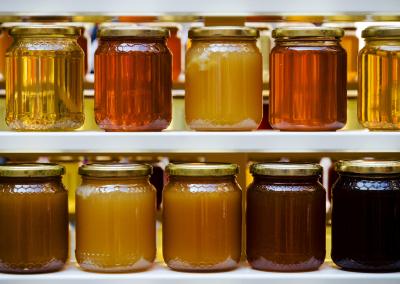
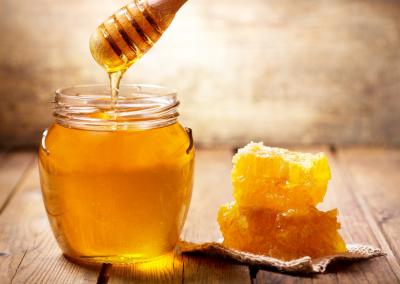
Two jars of lime blossom honey. Both were harvested in Lithuania, and both look similar at first glance. However, one costs 7 euros, the other 12 euros. Is the more expensive honey necessarily better? Or is the consumer paying for something that isn’t even visible in the jar? The price of honey is determined not only by its type or the quantity harvested, but also by the production method, the location of the apiary, the beekeeper’s labour costs and the quality assurance standards chosen.
The same name does not necessarily mean the same product
Linden, buckwheat or meadow honey is often classified according to its botanical origin. That is, from which plants the nectar was collected. However, even honey of the same type can differ in aroma, taste, colour and texture.
These differences are determined by the local flora, the weather conditions in a particular year, the variety of nectar sources and the composition of the honey. However, there is one further difference that cannot be detected by tasting the honey – the method of its production.
For example, producers of organic honey are subject to additional requirements, compliance with which is verified by an independent inspection body. Therefore, two honeys with a similar taste may have different production histories.
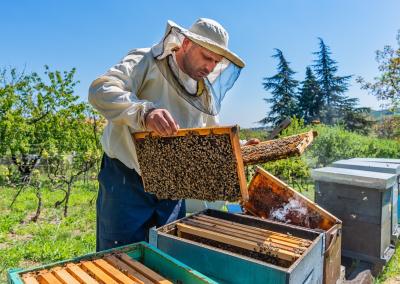
Why can’t a beekeeper simply place their hives where there are more flowers? Usually, when looking for a site for their hives, a beekeeper assesses the abundance and availability of nectar-bearing plants, the productivity of the bee colonies and other practical considerations.
In organic beekeeping, the options are more limited
According to the European Union’s organic production requirements, within a three-kilometre radius of the apiary, sources of nectar and pollen must essentially consist of organic crops, natural vegetation or areas managed using methods with a low environmental impact.
This means that not every field in full bloom is a suitable location for an organic apiary.
The beekeeper must assess the surrounding areas and potential sources of pollution. In some areas, this may mean longer journeys to the apiaries, more complex logistics or fewer options for where to keep the bees.
On the other hand, the requirements of organic beekeeping do not mean that bees never fly beyond the boundaries of the designated area. It is a system for organising and monitoring production, rather than a means of completely controlling every bee’s flight.
How much does a kilogram of honey actually cost?
Consumers usually see the final price on the jar. However, a beekeeper’s costs begin well before the honey is bottled.
Hives need to be looked after all year round. The health of the bee colonies, preparation for winter, maintenance of equipment and honey handling all require time and investment, even in years when the harvest is small.
In an organic apiary, it is also necessary to comply with specific requirements regarding bee care, feeding and the materials used. It is also necessary to manage documentation, ensure traceability and participate in the certification and inspection process.
However, it would be inaccurate to claim that organic honey is always more expensive to produce. Costs depend on the specific conditions of the farm, its size, location and the working methods chosen.
Furthermore, organic certification does not impose a mandatory higher retail price.
Is more expensive honey of higher quality?
A higher price is not in itself proof of honey’s quality. The quality of honey is assessed according to various criteria, including moisture content, enzymatic activity, hydroxymethylfurfural (HMF) content and other indicators set out in legislation.
Both organic and conventionally produced honey must meet these requirements.
Organic certification does not confirm that the honey has a distinctive flavour or greater nutritional value, but rather that it complies with the established requirements for organic production.
It is therefore important for consumers to understand that the quality of honey and the method of its production are related, but not the same thing.
What does the green leaf on the label actually signify?
The European Union’s organic production logo – a green rectangle featuring a leaf made up of white stars – helps to identify certified organic products.
The label on a packet of organic honey must also state the code of the control body and the origin of the agricultural raw materials. In Lithuania, organic production is monitored by the public institution “Ekoagros”, whose code is LT-EKO-001.
These labelling elements enable consumers to distinguish certified organic honey from products where the producer simply emphasises the natural environment or traditional beekeeping methods.
Words such as ‘rustic’, ‘from the forest’ or ‘made with love’ are not proof of organic production certification.
What should you consider before buying?
When choosing honey, it is worth considering not only the price, but also its origin, type, producer, labelling and your personal taste preferences.
If a certified production method is important to the buyer, organic labelling provides additional, verifiable information. If taste is the most important factor, it is worth sampling different types of plant-based honey to discover which ones you like best.
And if you want to understand why a particular honey costs more, it’s best to find out about its producer and the specific characteristics of their apiary.
Ultimately, the price of honey is just one of the criteria for choosing. Certification, origin and flavour provide different kinds of information, so an informed consumer should consider them all together.

Similar articles


Video