











































Demand for milk remains strong, but will all farms survive? The rules of profitability are changing

Global demand for milk remains high, but rising production costs, stricter environmental regulations and changing consumer habits are forcing farmers to seek new ways to remain competitive. The fifth “Fendt” Sustainability Forum, held in Marktoberdorf, Germany, brought together around 370 participants – farmers, scientists, and representatives from the agricultural machinery and dairy processing industries.
“RaboResearch Food & Agribusiness” dairy sector expert Tomas Booijink pointed out that changes in milk supply affect prices after around eight months, and that the US is currently one of the most important drivers of the global market. According to the expert’s assessment, milk prices are gradually rising.
The battle for consumers is no less important. In Germany alone, Generation Z comprises around 14 million people. Dairy processors must balance the differing expectations of consumers – ranging from affordable prices to products that are good for health and have a distinctive taste.
The forum emphasised that reducing the carbon footprint must be economically viable. The main focus is on animal feed, genetics, productivity and the efficient use of farm-grown feed. Additional certification and accounting requirements could place a significant financial and administrative burden on family farms.
The experience of German farmers has highlighted the potential for energy independence. Christine Löb has been producing biogas since 2009, and around 30 farmers supply biomass to her plant. By combining a solar power plant, energy storage systems and electrical equipment, Wolfgang Ehrmann uses almost no electricity from the external grid between April and October.
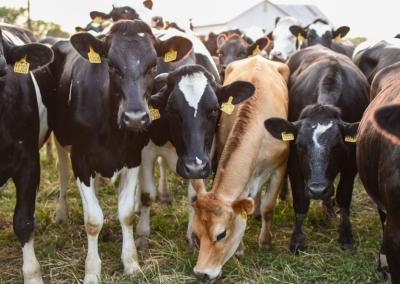
Ralf Sanderink, who looks after around 800 dairy cows in Denmark, faces different challenges. Additional environmental requirements due to come into force in January 2027 may force him to reduce his herd, even though two of his children are interested in taking over the farm in the future.
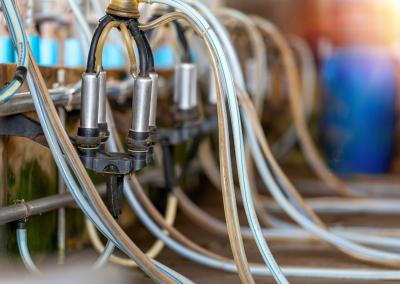
The practical solutions presented by the five farms included milking robots, sensors for monitoring the condition of livestock, quality control of maize grain grinding, automated feeding and manure removal, and the production of higher value-added products.
Digital communication is also becoming increasingly important for the dairy sector. According to data presented at the forum, 72 per cent of young people aged 19–29 look for information about food on social media, whilst content tagged with #Food has garnered around 670 billion views on TikTok.
The main conclusion of the forum is that the competitiveness of the dairy sector will be determined by the ability to reduce production costs, introduce innovations and create added value. However, long-term investments also require a predictable agricultural policy.

Similar articles

Video