





















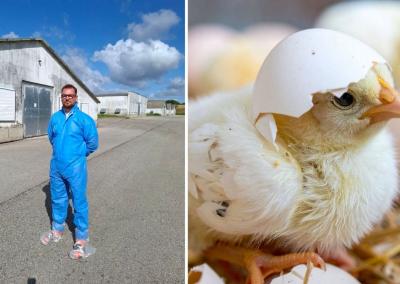














K. Mažeika urged farmers to document their losses, but as yet neither the extent of the damage nor when the farmers will receive compensation is known

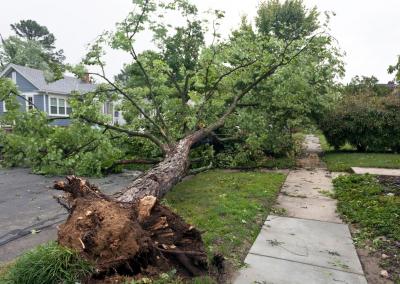
The state of emergency declared following the storm on 22 August has been lifted, but there is still no clarity on the extent of the financial aid farmers can expect, or when they might receive it. The Ministry of Agriculture (ŽŪM) has told “Agrobite” that it plans to apply to the European Commission, but has not yet specified either the amount requested or the date of the first compensation payments.
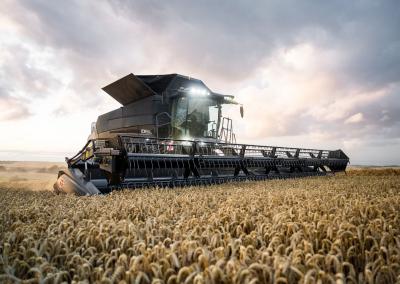
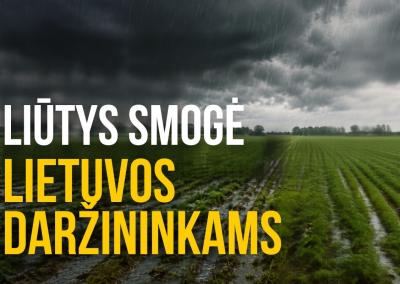
According to preliminary data, more than 24,000 hectares of agricultural land and crops have been affected. However, this does not yet represent the monetary value of the damage – its extent is being refined, and applications from those affected are still being accepted by local authorities.
Data has been provided by 55 local authorities; some inspections are still ongoing
“Agrobitė” recalls that Kęstutis Mažeika, delegated by the “Vardan Lietuvos” party to the post of Minister of Agriculture,called on agricultural representatives via social media to provide information about the operational disruptions experienced by farms.
„The more factual information we have about the situation on farms, the better we will be able to assess the impact of the storm and decide what action is needed,“ the minister wrote at the time.
Farmers were subsequently urged to officially report the damage to their local councils. However, almost a month later, it was still unclear how much financial assistance the affected farms might receive and when payments would begin.
The Ministry of Agriculture had instructed local authorities to submit information on the storm’s impact by 11 September. The Ministry’s response states that, as of 15 September, data had been received from 55 out of 60 local authorities.
“There are local authorities which, due to the large number of applications from agricultural operators, have only submitted preliminary data,” the Ministry of Agriculture reports.
According to the Ministry, in the worst-affected municipalities, the damage assessment commissions are physically unable to inspect all the areas of damaged crops. Some assessments will be carried out during the harvest – it will then become clear how many plants have actually died and how much of the crop has been destroyed due to adverse weather conditions.
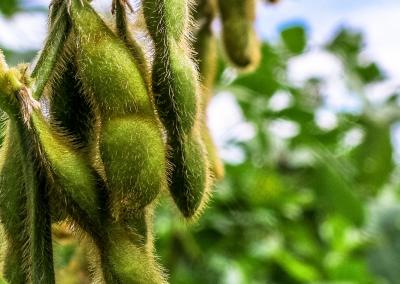
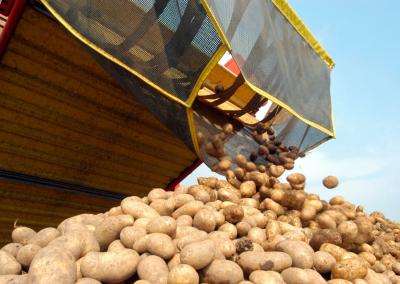
According to preliminary data, bean and pea crops have been the worst affected. Areas of oats, buckwheat, wheat, spring barley, rapeseed and potatoes have also been affected. However, the Ministry is not yet able to say how many farmers across the country have applied for damage assessment.
In Anykščiai, hectares are recorded, rather than losses in euros
The response from Anykščiai District Municipality explains what information was being collected at this stage.
“In accordance with the recommendations of the Ministry of Agriculture, at this stage we were recording the extent of the damage caused by the extreme weather event and the areas affected, rather than the monetary value of the losses,” – the council stated.
According to its data, at the time the response was issued, 53 farmers had made claims regarding the storm’s effects. The area of agricultural crops affected totalled 1,546.26 ha, of which 688.98 ha were completely destroyed.
On 11 September, the local authority sent the details of 52 applicants to the ministry. By that date, the commission had not yet had time to assess the applications of ten applicants. The local authority explained that it had been extremely difficult to gather and assess the information within the short timeframe set, and that applications were still being received.
When asked whether there were plans to assist the affected farms using local funds, the municipality replied that the use of the mayor’s reserve was not envisaged at that time.
Regarding lost income – there is no separate explanation
When the Ministry enquired not only about the extent of the damage but also about what it encompassed – direct costs, destroyed property or lost income – the Ministry of Agriculture stated that the application submitted by the mayor to the municipality must specify the date, amount, nature and circumstances of the damage, as well as the causal link to the impact of the crisis or emergency. Documents substantiating the amount of damage or the costs incurred – direct losses – must also be submitted.
However, the Ministry has not clarified whether, or how, farmers’ lost income – for example, due to a lost harvest or halted production – would be assessed.
Applications must be submitted within three years, but this does not guarantee compensation
The lifting of the state of emergency does not bring the acceptance of applications for damage suffered during the storm to an end. The Ministry of Agriculture reminds applicants that they may apply to their local authority for state support no later than three years after the damage occurred.
11 September was the deadline set for local authorities to submit information to the Ministry, not the final date for accepting farmers’ applications. Submitting an application does not in itself guarantee that the damage reported will be compensated – each case is assessed in accordance with the procedures for granting state aid.
Speaking about these national procedures, the Ministry explained that even uninsured agricultural businesses may apply for support. However, if relevant property insurance was available on the Lithuanian market prior to the damage occurring and the farm did not take it out, the support may not exceed half the amount of the damage.
Losses for which it was not possible to take out insurance are assessed differently.
“Support for losses which are generally not covered by the insurance market in Lithuania is granted in accordance with the procedure set out in the guidelines, without applying any restrictions relating to insurance”, – stated the Ministry of Agriculture.
This means that the specific restriction regarding the failure to take out insurance does not apply, rather than a promise to compensate for the full amount of the loss. If the property was insured and an insurance payout has been received, according to the Ministry, state aid may not exceed the difference between the amount of the loss and the insurance payout.
Deadlines have been extended; the amount of financial assistance has not yet been specified
When asked what specific support measures had already been taken, the Ministry of Agriculture listed the extension of deadlines for work, a more flexible application of support requirements, and the possibility of applying to ILTE for loans to acquire working capital and biological assets.
In a public announcement on 16 September, the Ministry also announced additional approved concessions: the deadline for sowing winter catch crops has been extended to 1 October, whilst for applicants without livestock, the deadline for mowing grassland and landscape features has been extended to 30 October. Mowing requirements do not apply to certain groups of applicants this year.
The Ministry has also confirmed that it plans to apply to the European Commission for support to compensate for storm damage. However, the responses did not specify the exact amount that would be allocated to affected farms, nor did they provide a payment schedule.
In response to the question of when farmers could realistically expect to receive the first payments from potential European Commission support, the Ministry of Agriculture replied: “Normally, funds allocated by the EC must be fully utilised by the first half of the following year.”
This is an explanation of the usual timeframe for utilising allocated funds, rather than a confirmed start date for payments. The amount that Lithuania intends to request from the European Commission has not been specified either.
“We are unable to comment on the amount at this stage, as we do not have all the data,” the Ministry of Agriculture notes in its response.

Similar articles


Video