



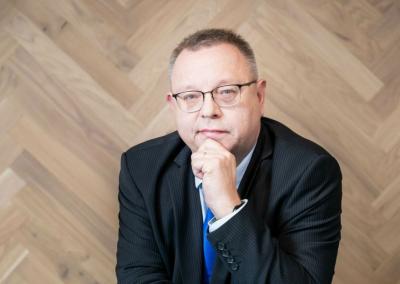














































Algis Latakas: Verifying the origin of grain imported from Russia and Belarus will reduce its volume
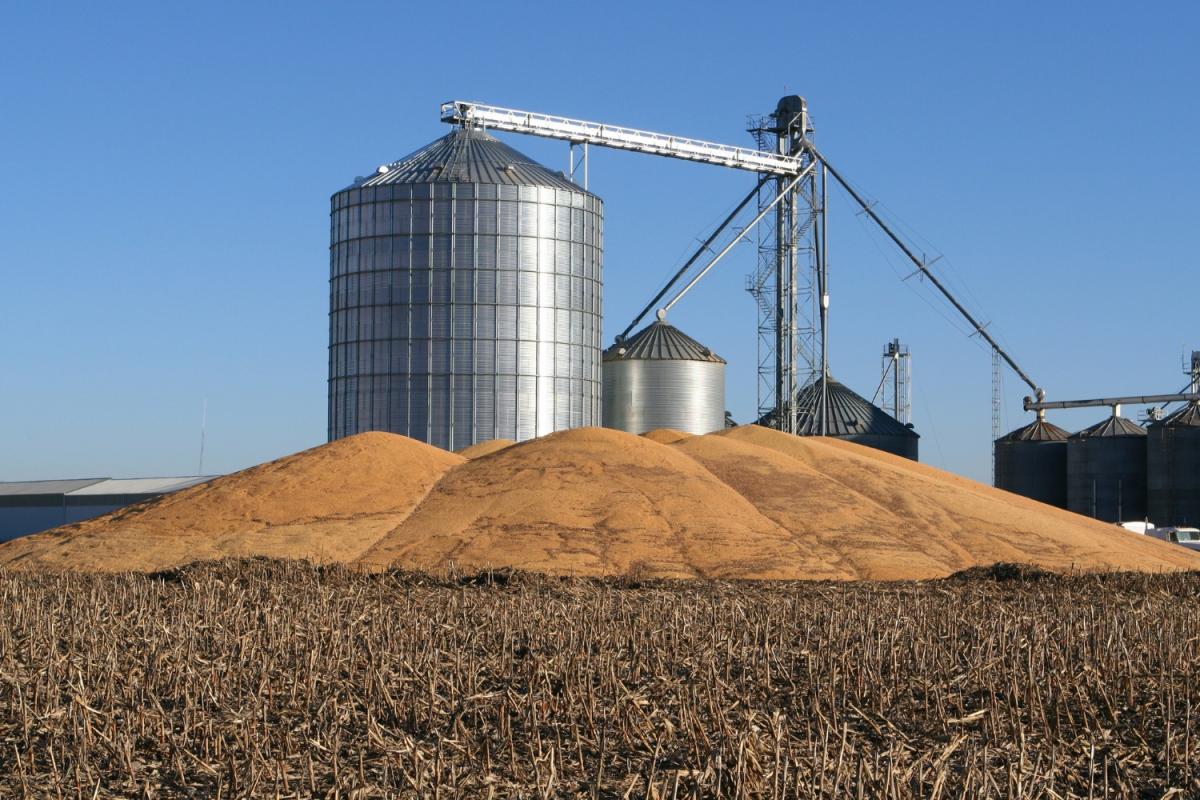
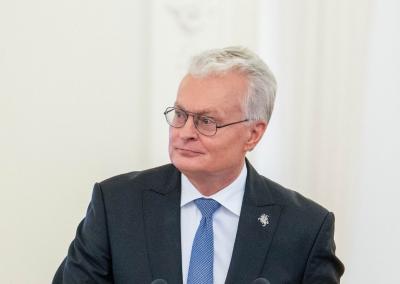
Following the Minister of Agriculture’s instruction to verify the origin of food-grade grain transported from Russia and Belarus in transit through Lithuania, the head of the Port of Klaipėda says this will reduce their throughput and the attractiveness of exports via the port.
Whilst Kęstutis Mažeika is seeking to have grain samples taken not within the territory of the Port of Klaipėda, but at the border with the Kaliningrad region and Belarus, Algis Latakas says that this is impossible.
“How will the flow of food-grade grain be affected if such a requirement to test it is introduced? I believe it would have a significant impact (...). We understand that express (rapid – BNS) tests cannot be carried out in Lithuania; the sample must be sent abroad for testing, and we realise that this is expensive, it is a very demanding process that takes a lot of time and, in any case, it definitely affects the flow of such cargo,” A. Latakas told BNS in Klaipėda.
According to him, such additional procedures raise the question of whether this supply chain is economically viable at all.
“Unequivocally, any additional procedure – whether it affects the time taken or the cost – means that, in any case, the consignor of this product, its seller or the buyer, and the entire rest of the supply chain must assess whether it is worthwhile to operate within a supply chain that takes so much time and incurs such costs,“– stated the port director.
“With the introduction of checks (on the origin of food grains – BNS), that is indeed the case,” – he said when asked whether the checks would substantially reduce the attractiveness of handling food grain through the Port of Klaipėda.
As reported by BNS, K. Mažeika stated on Tuesday that whilst the initial investigations are being carried out and their results awaited, cargo operations are not being halted, therefore there is a desire to change the procedure and take grain samples not at the Port of Klaipėda, but at the border with the Kaliningrad region and Belarus.
For his part, the port’s director, A. Latakas, states that taking samples at the border would be the most convenient option, but that this “is practically impossible”.
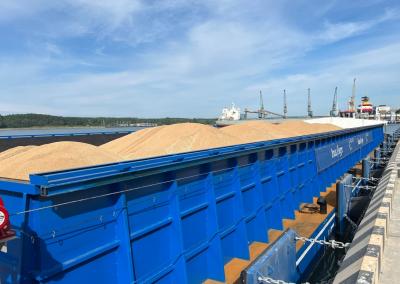
“Trains would have to be stopped; trains, carriages and everything else costs money; doing this for cargo that has already been delivered to the port is also rather complicated, as it would have to be kept in those carriages without being unloaded until the checks have been carried out“, – he explained.
Aistė Prielgauskaitė, a spokesperson for the State Food and Veterinary Service (VMVT), explained to BNS that the inspection process begins at the border when the carrier submits all the documents to customs, but physical grain samples can only be taken upon arrival at the unloading point.
According to A. Latakas, although the procedure in force until now required the origin of feed grain to be checked, such grain is not transported via the Port of Klaipėda: “All (grain – BNS) is food-grade, and food-grade grain is not included in the list of goods subject to origin checks, so it is not actually checked (and has not been checked to date – BNS).”“
According to the port director, around 50,000 tonnes of food-grade grain have been transhipped at the Port of Klaipėda over the first eight months of this year, all of it brought in from the Kaliningrad region, not from mainland Russia, and this, in his words, “minimises” the risk that grain stolen by Russia from potentially occupied territories of Ukraine is being transported to Lithuania.
„If the grain were being transported from mainland Russia, then the risk (of grain stolen from Ukraine – BNS) would be significantly higher, as no one can know where it came from, who loaded it onto those wagons, or how it was loaded. When it is transported from the Kaliningrad region, the risk is significantly lower, but theoretically speaking, anything is possible“,– said A. Latakas.
According to him, decisions on restricting the transit of Russian and Belarusian grain will depend on a joint agreement between all the Baltic states: “I cannot say what the possibilities are for any one European country to unilaterally introduce new rules for inspecting this transit grain, but, most likely, the countries would reach an agreement and adopt a decision on the matter.“
BNS reported that the State Food and Veterinary Service (VMVT) had already taken samples from one grain consignment at the port last week and will have their origin tested in foreign laboratories. According to the agency’s spokesperson, A. Prielgauskaitė, the tests will be carried out in a German laboratory, whilst the results will be assessed in the United Kingdom.
Justas Jaskonis, a spokesperson for K. Mažeika, told BNS that the Government will still have to decide on who will pay for these tests – for the time being, they are being paid for by the State Food and Veterinary Service (VMVT), but once the Government has agreed that the origin of food-grade grain should be checked, the freight customers will pay for them.
Prime Minister Mindaugas Sinkevičius stated on Tuesday that this is a common problem for the Baltic states, and discussions are therefore already underway with Latvia regarding a joint response.
Foreign Minister Kęstutis Budrys stated that if the volume of Russian grain transhipments were to increase, stricter measures would need to be taken to curb this at national, regional or EU level.
The problem arose after grain farmers recently stated that Russian grain exported from the Kaliningrad region via the Baltic states’ ports is being offered at a significantly lower price than Lithuanian grain, with the result that the latter are left sitting in warehouses, whilst farmers are calling on the authorities to halt the transit of Russian grain through Lithuania.

Similar articles
Video