























































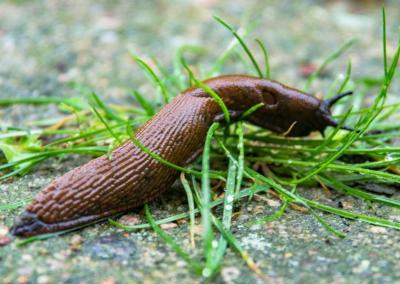
Residents are being asked to report slugs, but they may not receive any help: the 440,000 euros have long since been allocated
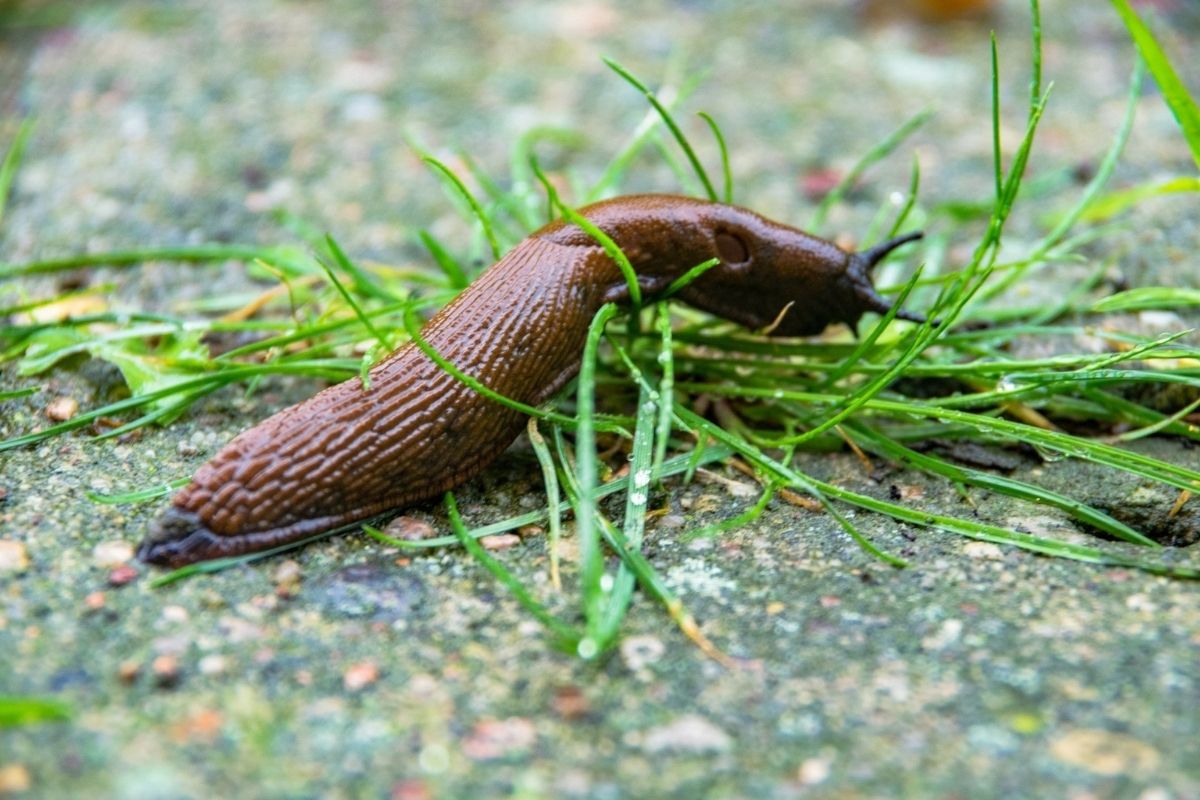
After the Ministry of the Environment issued a call for members of the public to report sightings of invasive slugs and reminded them that around 440,000 euros had been allocated for their eradication, many people were under the impression that reporting the slugs would lead to practical assistance. However, it transpired that the funding had long since been allocated, and that simply reporting a sighting does not in itself mean that the slugs will be eradicated.
Funding has already been allocated
The Environmental Projects Management Agency (APVA) explained that the €440,000 is not a newly allocated sum. It had already been allocated under the first call for proposals for the joint project “Eradication and Control of Invasive Species”, which ran from 6 January to 1 April this year.
During this period, 134 applications were received, of which 87 were submitted by individuals, 31 by local authority administrations, and 16 by other legal entities.
Thus, it was not only local authorities or state institutions that were able to benefit from the funding. On the contrary, members of the public also actively submitted applications.
According to the APVA, project implementers may use the funding not only for the eradication of slugs themselves, but also for drawing up population control plans, mowing, managing breeding sites, and purchasing traps, molluscicides and other measures. The work must be carried out for four consecutive years, and in the fifth year, project implementers will be required to fund the maintenance of the area from their own resources.
Simply registering a sighting will not automatically result in a visit
However, it was not the funding itself that caused the greatest confusion, but the Ministry of the Environment’s communication.
The announcement invited residents to register sites where Spanish slugs had been found, so some people understood that this might be linked to the possibility of receiving assistance in eradicating these invasive slugs.
However, the APVA emphasises that this is not the case.
“Registering a sighting does not in itself mean that eradication work will be organised there. Such operations may only be carried out in areas included in approved projects“,” the agency stated.
Data provided by residents is primarily used to monitor the spread of invasive species and to plan further control measures.
Gardeners are calling for clarity
Giedrius Markūnas, chairman of the board of the Lithuanian Association of Gardeners’ Communities, says that the ministry’s announcement raised more questions than it answered.
“That call from the Ministry of the Environment is strange – to register the site where the species was found, and then what? Will someone come to eradicate it?” he wondered.
According to him, the public lacked clear information that the funding phase had already ended.
“The funding was certainly substantial, so it’s interesting to know where that money is going and why this support isn’t being publicised more widely,” said G. Markūnas.
He stated that if similar support measures were made available to residents in the future, they would be utilised not only by individuals but also by gardening associations.
“It would even be possible to apply on behalf of an association – both for the eradication of slugs and Sosnovsky’s hogweed. This would be particularly useful when clearing derelict plots,” – the association’s chairman is convinced.
There will be another call for applications
According to G. Markūnas, funding alone is not enough. It is far more important that all landowners take action against invasive slugs.
“Those who look after their plots, mow the grass or collect slugs, have fewer of them there. However, there are many neglected plots. There must be a collective effort – greater accountability for unmanaged areas; otherwise, the problem will not go away,” he said.
The APVA has confirmed that the majority of the €6 million earmarked for the eradication of all six invasive species has already been allocated during the first call for proposals. However, a second call for proposals to utilise the remaining funds is planned to be announced by the end of this year.
The Ministry of the Environment is currently preparing amendments to the funding conditions, after which individuals and legal entities will once again be able to submit applications. APVA promises to provide separate information about the new call for proposals.

Similar articles




Video