
















G. Stanišauskas: The end of the A. Palionis era and a test for the new government
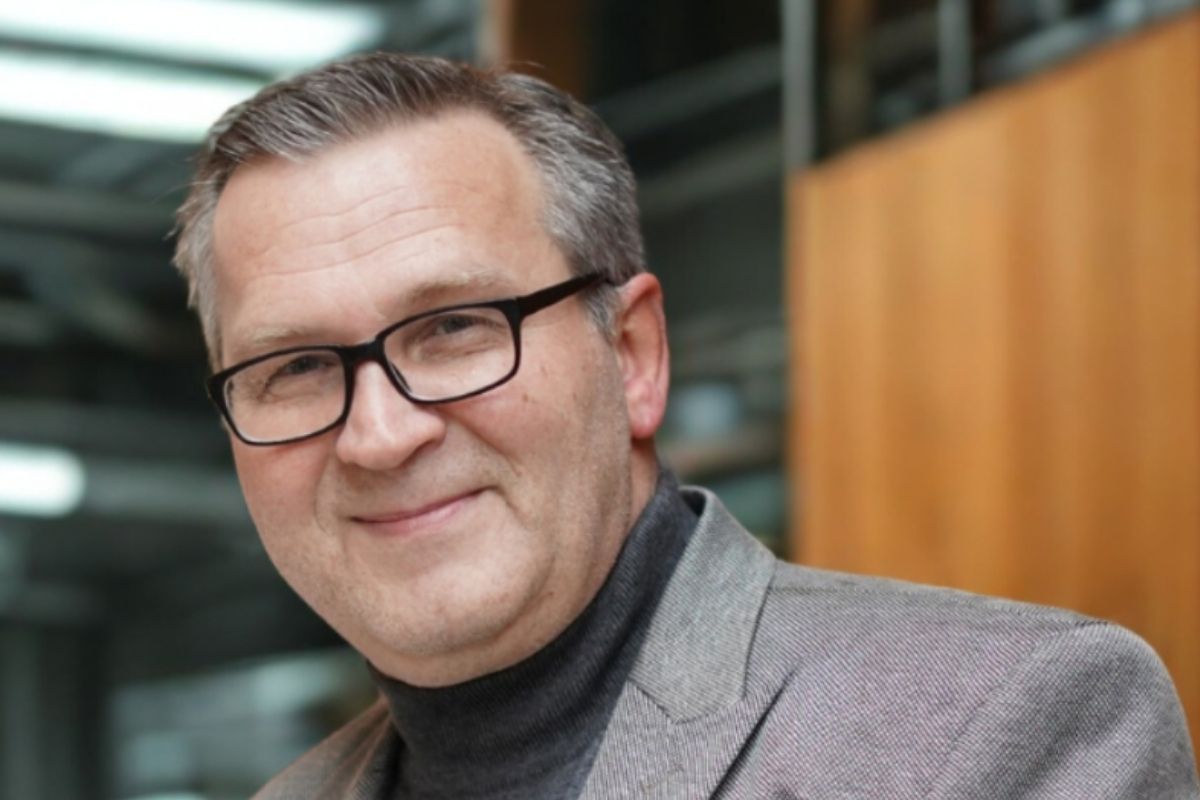
Following the Lithuanian Social Democratic Party’s (LSDP) decision to change the composition of the coalition and invite the Democratic Union “For Lithuania” to replace “Nemuno Aušra”, the current Minister for Agriculture, Andrius Palionis, is also counting down his final weeks in office.
It has been agreed that “Vardan Lietuvos” is to be allocated the Ministries of Health, Energy and Agriculture in the new government. The only possible successor to A. Palionis has been mentioned. It is said that this role is likely to go to the Democrat Kęstutis Mažeika, who has been serving on the Seimas Committee on Rural Affairs for several years now.
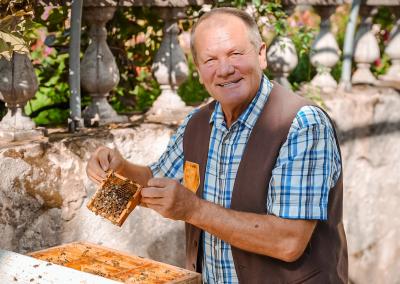
His knowledge of agricultural issues appears to be quite extensive. The MP has repeatedly raised issues of concern to farmers. He is a qualified veterinary surgeon and has been farming since 2009 (engaging in crop farming, beekeeping and ornamental bird breeding). Furthermore, he served as Minister for the Environment from 2019 to 2020. Thus, the candidate for the new ministerial post is well-qualified and has a solid track record in politics.
A. Palionis also recognised K. Mažeika’s suitability, although who cares about the opinion of a minister whose work has shown no signs of breakthrough...
And although A. Palionis will remain in his post for a little while longer, it is worth keeping an eye on which of his orders are due to be signed shortly. You will no doubt recall that, in the final days of his tenure as minister, the Conservative Kazys Starkevičius appointed Jurijus Kornijenko as head of the State Plant Service (VAT). As is well known, an unprecedented corruption scandal subsequently erupted around him, bringing down both K. Starkevičius and Saulius Skvernelis.
Remigijus Žemaitaitis, leader of “Nemuno aušra”, in an interview with Arnas Klivečka, saw no mistakes made by “Nemuno aušra” in the ministries. “In both the Ministry of Agriculture and the Ministry of the Environment, we once again stood by our position. And if we look at it from the farmers’ perspective, where we received the same thanks from the communities, that is indeed the case,” explained R. Žemaitaitis.
However, what can be said about A. Palionis’s work? There are no significant achievements that he can boast of. And he can certainly expect thanks from the communities. Especially when he’s allocated 80,000 euros to their activities, isn’t that so? It was precisely these ‘engagements’ between the communities and the government, in my view, that were one of A. Palionis’s successes and one of the communities’ failures. After all, at the protest organised by the Lithuanian Dairy Producers’ Association, we saw perhaps only about 50 ‘protesters’ with the minister on the podium. What does this show? Disappointment, or an inability to mobilise for protest? Yet this is precisely what symbolises A. Palionis’s entire brief era and the deepening crisis within the community itself.
Organisations’ dependence on the government is an extremely dangerous phenomenon for the community itself, as it must be understood that A. Palionis is a politician. The hunt for favours – that is his line of work.
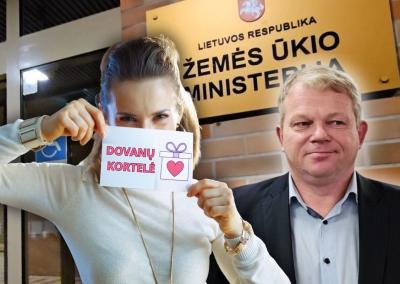
The ‘Aušrininkas’ who initially raised so many hopes A. Palionis’s tenure as head of the Ministry of Agriculture was soon marred by scandals, starting with the former head of the VAT, J. Kornijenko, being rewarded “for exceeding expectations”, the delayed payment of 20 million euros to farmers for projects that were already complete, end-of-year bonuses awarded to civil servants and his political team, and ending with the purchase of gift vouchers to incentivise staff and his inability to manage crises in various agricultural sectors.
Do you still remember how the “Lithuanian Stud Farm” affair ended? And how will the audit launched at the State Food and Veterinary Service conclude? Even a special government commission found no irregularities in the actions of the head of the State Food and Veterinary Service, A. Mikalauskienė. So what is the outcome of all this work? You can draw your own conclusions.
It is worth emphasising that A. Palionis inherited a host of problems from his predecessors. One of them – the manure management plans (which mainly affected livestock farms) – was eventually resolved. And you cannot deny that.
However, the ministry still does not even have a chancellor – a key figure required for inter-agency communication between government departments, and for coordinating and managing the Ministry of Agriculture’s internal affairs. For a long time, it did not even have a deputy minister, a role recently taken up by the experienced technocrat Rolandas Taraškevičius. And if, in the wake of political changes, Mr Taraškevičius does not continue his work within the new minister’s team at the Ministry of Agriculture, it will truly be a loss for Lithuania.
You might ask, has Minister A. Palionis taken the dairy crisis seriously? But what has he actually done apart from talking and expressing concern? Between October 2025 and May this year, the number of dairy farms in Lithuania fell by 982. Although the withdrawal of farms from the market was “in line with the average” – regardless of who the minister was – milk purchase prices nevertheless fell dramatically during that period. According to Eurostat data, the average price in Lithuania fell from 49.24 Eur/100 kg to 35.56 Eur/100 kg. And here we are talking about the average, as small-scale producers are reporting prices of 10–13 cents per kg.
It is understood that it is not A. Palionis who regulates milk purchase prices, but policy-making has a huge influence on this, ranging from regulations to actual state aid for farms. There has also been much talk of compensating Lithuanian milk producers for their losses by raising the issue at European Commission level. But again – it’s all just talk.
There is still no Milk Act (even though A. Palionis said it would be passed any day now), and the Food Council’s meetings are little more than get-togethers amongst friends. Instead of compensation for farmers, they are being offered loans from ILTE to cover their losses. This is not the path the Minister of Agriculture should be taking.
And whilst grain growers might have felt somewhat privileged a couple of years ago, today they are struggling to remain profitable. Grain prices are at rock bottom, whilst fertiliser and diesel prices are sky-high. I’ve heard from more than one farmer that they’ve only sown half the area they’d originally planned. Others are finding a way out by leasing their land for decades to developers of wind farms or solar power stations.
Everything about a politician’s work is revealed by how well they manage to communicate with the public, because if this aspect of the job is not handled properly – simple mistakes turn into deep communication crises, which are then followed by one mistake after another in the actual work.
The Ministry of Agriculture either lacks communication specialists or employs amateurs. For example, as soon as A. Palionis became minister, a breakfast meeting with journalists was organised. ‘Agrobitė’, of course, prepared perhaps not-so-tasty snacks for that breakfast in the form of questions. There were no further such meetings after that event, although previously the Ministry of Agriculture used to invite journalists every six months to address the issues and try to explain the situation.
The dairy crisis is not going to go away, and fertiliser prices will remain just as high even after A. Palionis steps down. Nobody will lift a finger unless the farmers themselves take the initiative.
This is where the new minister will find himself at a crossroads – whether to continue the ‘Palionis-style’ strategy and stand by idly whilst farms are sold off – not just dairy farms, but arable farms too. Or to take on this thankless task – that is, to get to work. To work for what the Seimas has recognised as a strategically important sector – agriculture.
This also presents a huge opportunity for the “For the Sake of Lithuania” Democratic Party, led by K. Mažeika, to somehow repair its political standing following the scandal involving S. Skvernelis. Giving due attention to solving the problems facing agriculture could significantly boost this party’s ratings ahead of the upcoming local and subsequent elections.

Similar articles

Video