






















































Kęstutis Mažeika: The Competition Council has disappointed by refusing to investigate grain drying charges

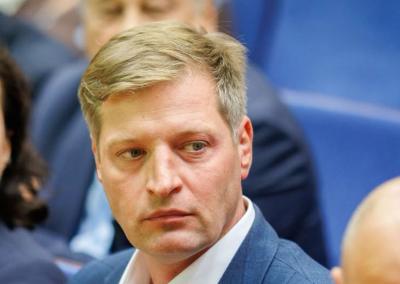
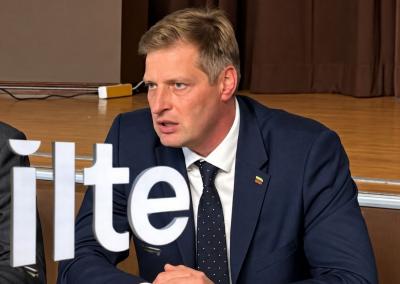
Following the Competition Council’s refusal to launch an investigation into the pricing of grain drying services, the Minister for Agriculture, Kęstutis Mažeika, says he intends to meet with the authority that made the decision, which he found disappointing.
“I plan to meet with the Competition Council; I was certainly disappointed by their response,” K. Mažeika told journalists on Monday.
“The fact that (...) the investigation was dismissed – well, perhaps the summer heat had an effect, or the holidays, or a lack of staff – but I think we’ll meet and discuss it. This is probably not the first time we’ve seen such calls, but whether it’s a lack of tools or a lack of will – we’ll talk to the Council. We will put forward our arguments as boldly as possible, " the minister added.
K. Mažeika, amongst other things, calls the council’s decision unfair and claims that it “has targeted the wrong people”, urging those with information to contact the council.
“There was a report that (the Competition Council – BNS) is urging farmers to provide information about possible agreements, but this is probably inappropriate simply because the farmer is a separate party. Agreements could be within companies, perhaps involving staff members,” K. Mažeika said on Monday.
As reported by BNS, the Competition Council decided last week not to investigate the pricing of grain dryers, stating that the Ministry of Agriculture (MAF) had not provided sufficient data for an investigation into restrictions on competition in the grain sector.
According to the Council, the Ministry of Agriculture did not name any specific companies that might have committed an infringement, and therefore there is no legal basis for a further investigation.
The Ministry approached the Council after receiving complaints from farmers regarding potentially non-transparent prices, which, according to them, are twice as high in Lithuania as in Latvia; furthermore, prices are allegedly set in a non-independent manner and are unjustified, which could indicate the presence of prohibited agreements or other factors restricting competition in the market.
According to the Ministry of Agriculture, such pricing makes it virtually impossible for farmers to choose cheaper services, whilst companies may unjustifiably raise prices and harm the activities of grain farmers.
For their part, grain processors have stated that companies set their prices independently, taking costs into account.
According to the Council, public statements regarding infringements hinder the ability to investigate them, as they allow time for evidence to be destroyed; therefore, allegations should not be made public but should be submitted to the relevant authority as soon as possible.&
The Council emphasised that, should new circumstances come to light, it could launch an investigation on its own initiative, and urged anyone with information about possible infringements to come forward.

Similar articles



Video