





















































1,432 applications per hour; a year later – an FNTT investigation: the head of LŽŪKT saw no signs of irregularities
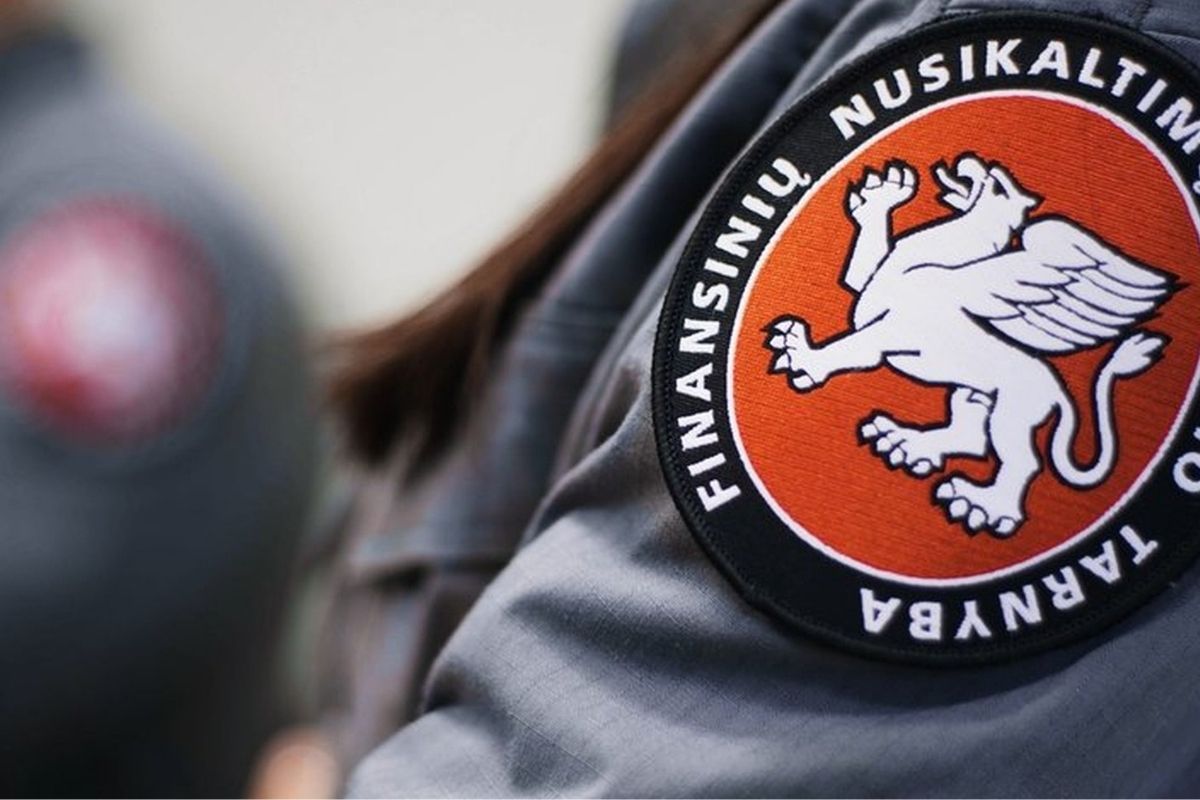
On the morning of 1 October 2025, the National Paying Agency (NMA) received 1,432 applications for funding for advisory services within the space of one hour. The total amount requested – €2.545 million – exceeded the funding allocated for the call by 50 per cent, so the acceptance of applications was suspended at 9.05 am. A year later, an almost identical figure appeared in a report by the Financial Crime Investigation Service (FNTT). Law enforcement authorities are investigating the circumstances surrounding the submission of 1,431 applications totalling more than €2.5 million. It is suspected that the Lithuanian Agricultural Advisory Service (LŽŪKT) may have submitted some of these applications in the names of individuals without their knowledge or consent. The FNTT carried out searches and interviewed more than 100 witnesses.
The NMA confirmed to “Agrobitei” that it was the NMA itself which, having suspected possible irregularities, passed the information on to the FNTT. Meanwhile, Gintas Saulius Cironka, Director of the LŽŪKT, states that the Agency only became aware of the allegations when officials arrived and had not previously noticed any signs of irregularities itself.
The NMA itself contacted the law enforcement authorities
“The NMA, suspecting that some of the applications had been submitted without the applicants’ knowledge or consent, passed on this information to the Financial Crime Investigation Service, and so the FNTT’s investigation was initiated on the basis of the information provided by the NMA“, the agency stated. However, citing the interests of the ongoing pre-trial investigation, the NMA did not confirm whether the 1,431 applications mentioned by the FNTT were the same set of applications that the agency received on 1 October 2025.
The agency also failed to provide data on how many applications were specifically related to the LŽŪKT, how many were approved, how many consultations were actually provided, and whether any support funds had already been paid out in relation to them.
G. S. Cironka: we learnt of the allegations from officials
G. S. Cironka, Director of LŽŪKT, stated that the Service’s management only became aware of the applications, which may have been submitted without the farmers’ knowledge, once law enforcement had taken action.
“We were informed of this when the officials themselves visited us,” he said. When asked whether the Advisory Service itself had identified any such cases, the director denied this.
“This is certainly a scheme in which such things have never occurred. We work mainly with our clients; these are our clients, and there is not, nor can there be, any indication of such a thing here,” said G. S. Cironka. According to him, the application system itself does not allow documents to be submitted in someone else’s name.
“If you look at the process itself of how applications are submitted, there is not even the possibility that you could submit applications on behalf of someone else – the system itself does not allow this,” – the director asserted.
An authorised representative could also have submitted the application
The explanation provided by the NMA reveals a somewhat more complex process. Under the procedure in force at the time, an application could be submitted via the Ministry of Agriculture’s information system, ŽŪMIS, not only by the applicant themselves but also by an authorised representative. To do so, a power of attorney signed by the applicant had to be submitted to the NMA. Only after the agency had confirmed the right of representation could another person submit the application on behalf of the farmer.
“Granting the right of representation in the system does not alter the obligation to act in accordance with the power of attorney granted by the applicant,” emphasised the NMA.
Thus, technically, another person could submit the application, but only if they held a valid power of attorney. The pre-trial investigation is now looking into whether, in all cases, the applicants were aware of the documents being submitted on their behalf and had given their consent. The FNTT officially states that a possible scheme involving document forgery and credit fraud is under investigation.
An internal audit has been launched within the agency
G. S. Cironka confirmed that, following the FNTT’s actions, the LŽŪKT has launched an internal investigation.
“Of course, an internal investigation has been launched. We are analysing processes, identifying areas of risk, seeking solutions that would allow us to operate normally, and communicating with stakeholders“, he said. According to the director, the Agency is taking measures to ensure that similar situations do not recur and that the entire organisation is not brought into disrepute.
However, G. S. Cironka did not specify whether staff had been suspended due to possible breaches, how many LŽŪKT staff had submitted applications on behalf of farmers, or whether the internal audit had already identified specific irregularities.
This is not the first investigation into knowledge services for farmers
The current LŽŪKT investigation is not linked to the earlier case involving Vigilijus Jukna and farmer training programmes – these are separate pre-trial investigations. However, both cases concern knowledge transfer services for farmers funded by the EU and the state, and the verification of whether the services specified in the documents were actually provided.
In the previous training scandal, it emerged that the NMA had identified the risk of potentially fictitious training courses even before the scandal broke, but additional control measures were only introduced later. In this case, the situation is repeating itself. That is to say, the NMA stated that the rules for implementing the measure were only amended in August 2026. The Agency has been granted the right to randomly call recipients of consultancy services and verify whether they actually attended the consultations. This control measure may also be applied to applications submitted previously. Changes to the ŽŪMIS system are also planned: it will only be possible to log in to the system to submit an application via the e-Government Gateway’s identity verification service. Such safeguards should help to determine more accurately who actually logged into the system and submitted the document.
There are no suspects as yet
The Kaunas Regional Prosecutor’s Office has stated that the pre-trial investigation is currently at an initial stage.
“Procedural steps are being taken to clarify the circumstances of the incident relevant to the investigation. At this stage of the investigation, no charges have been brought against anyone,” the prosecutor’s office stated. This was also confirmed earlier by the Financial Crime Investigation Service (FNTT).
Therefore, there is currently no basis for claiming that the Lithuanian Agricultural Credit and Technology Centre (LŽŪKT), its managers, employees or farmers have committed any criminal offences. Law enforcement agencies are still in the process of gathering and assessing evidence. The pre-trial investigation will determine whether the law enforcement agencies’ suspicions are substantiated.

Similar articles

Video