






























The European sheep and goat sector at a crossroads: record sheep meat prices, growing competition and new requirements for farmers

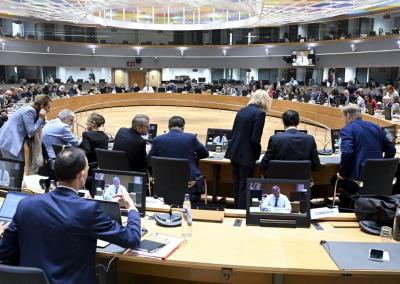
On 27 October, Gintarė Kisielienė, head of the Lithuanian Sheep Breeders’ Association (LAAA), attended a remote meeting of the “Sheep and Goats” working group of Copa-Cogeca, the European organisation of farmers’ and cooperatives’ organisations , held remotely on 27 October. Representatives from European countries discussed the situation in the sheep and goat sector, record sheep meat prices, rising production costs, the impact of trade agreements and planned changes to animal transport regulations. The discussions also touched upon issues relating to animal health, the EU’s livestock farming strategy and the wool market.
Record sheep meat prices – an opportunity for producers or a threat to consumption?
During the meeting, the working group’s chair, Raul Muñiz Cimas, presented an overview of the European sheep and goat sector market. This highlighted a contradictory situation: whilst sheep meat prices have reached record highs, producers are facing ever-greater challenges that threaten the long-term stability of the sector.
According to the data presented, sheep meat prices have reached around 6 euros per kilogramme of live weight. The rise in prices is driven by high demand for live sheep and carcasses in export markets, particularly in Algeria and Jordan.
However, there is another side to these high prices. As sheepmeat becomes more expensive, it may become less affordable for consumers, and a decline in consumption would, in the long run, have a negative impact on the producers themselves.
The chair of the working group emphasised that lamb is a unique, high-value product, the quality and specific production characteristics of which should not be assessed using the same criteria as other types of meat. It is therefore important to strengthen the image of lamb, promote its consumption and ensure fair competition.
European producers are also facing increasing pressure from imported lamb from New Zealand and Australia.
Labour shortages, generational change and climate challenges
Despite favourable price trends, the situation for European sheep and goat farmers remains challenging. The meeting highlighted that the sector is increasingly affected by labour shortages, insufficient generational renewal on farms, droughts, extreme heat and rising production costs.
Climate change is making fodder production more difficult in many regions, increasing the costs of keeping and caring for livestock, and making it harder for farmers to plan their long-term activities.
The first signs of recovery are visible in the wool market, but current purchase prices still do not ensure sufficient economic viability for this production.
Meanwhile, in Spain, prices for sheep’s and goat’s milk remain relatively stable, but milk production volumes are falling.
Working group participants agree that the sector’s future requires greater market stability, better opportunities to ensure farm profitability, and effective measures to encourage generational renewal.
Gintarė Kisielienė: it is important that European decisions reflect the actual conditions of farming
The participation of Gintarė Kisielienė, head of the Lithuanian Sheep Farmers’ Association, in the Copa-Cogeca working group provides an opportunity to directly monitor decisions being discussed at European level and to represent the interests of Lithuanian sheep farmers.
Issues of particular relevance to Lithuanian farmers include production costs, competition from imported produce, animal welfare requirements and forthcoming changes to livestock transport regulations.
“We are currently witnessing a paradoxical situation in the European sheep and goat sector – sheep meat prices are rising, but this does not mean that all farmers feel economically secure. Rising costs, labour shortages, competition from imported products and new requirements are posing ever-greater challenges for farmers. It is particularly important for Lithuania that decisions taken at European Union level are not only ambitious but also practicable, taking into account the size of farms in different countries, structure and actual operating conditions,” notes Gintarė Kisielienė, head of the LAAA.
Review of animal transport rules: between welfare objectives and practical possibilities
One of the most important topics of the meeting was the review of the European Union’s Regulation on the protection of animals during transport. Whilst the aim of ensuring high animal welfare standards is beyond doubt, representatives of European farmers emphasise that new requirements must be based on practical transport conditions and must not create a disproportionate administrative and financial burden.
The main points of debate concern the maximum permitted duration of animal transport, the transport of unharnessed animals, temperature limits, the calculation of loading and unloading times, and the conditions for keeping animals at staging points.
One of the contentious issues is the proposed option to keep animals at an intermediate stopover for up to four days. Copa-Cogeca representatives question the justification for such a period and propose reducing it to 48 hours.
It was also pointed out that, due to the application of different requirements, the total journey time for animals could, in some cases, reach as much as 63 hours.
Participants in the working group emphasised the need to assess how the proposed changes would affect animal health, the organisation of transport, trade opportunities and farmers’ costs.
Negotiations within the European Union institutions are ongoing
According to the negotiation agenda presented at the meeting, the vote by the European Parliament’s Committees on Agriculture and Rural Development and on Transport and Tourism on the compromise amendments is provisionally scheduled for March 2027, with the vote in plenary session due to take place in April.
Negotiations are continuing in the Council of the EU, under the Irish Presidency, and a vote by the Committee of Permanent Representatives (COREPER) is possible on 16 December 2026.
The position of Spain, Italy, Portugal and France could prove to be a key factor in the negotiations. These countries could block the agreement if their proposed amendments are not taken into account.
Copa-Cogeca intends to continue consultations with Members of the European Parliament, national agricultural attachés and Council representatives, with a view to reaching a compromise that reconciles animal welfare with transport rules that are practicable.
EU trade agreements: new markets or greater competition?
Another key topic of the meeting was the European Union’s free trade agreements and their impact on the sheepmeat sector. The working group discussed the progress of trade negotiations with Australia, India, Indonesia, the United Kingdom, the Philippines, Malaysia and Thailand, as well as the US investigation into sheepmeat imports.
Although trade agreements aim to reduce tariffs and open up new export markets, representatives of European sheep farmers point out that more favourable tariff conditions do not in themselves guarantee real opportunities to export produce.
Veterinary requirements, certification procedures and differing import rules in third countries remain major obstacles. Particular attention has been paid to Australia, as greater opportunities for sheepmeat imports could intensify competition in the European market.
Meanwhile, negotiations with Asian countries could provide additional export opportunities, but this requires the removal of practical trade barriers.
Trade relations between the EU and the United Kingdom also remain important, particularly the harmonisation of sanitary and phytosanitary requirements.
Participants in the working group emphasised that the impact of trade agreements must be assessed holistically – taking into account both export opportunities and the competitiveness of European farmers in the internal market.
The future of European livestock farming will depend on balanced decisions
The issues discussed at the meeting of the Copa-Cogeca working group on ‘Sheep and Goats’ show that the European sheep and goat sector faces several key challenges simultaneously.
On the one hand, rising sheepmeat prices and export demand present opportunities for farmers. On the other hand, rising production costs, labour shortages, the impact of climate change, competition from imported products and new regulatory requirements threaten the sector’s long-term stability.
It is therefore important, when shaping the European Union’s livestock policy, to ensure that environmental, animal welfare and trade objectives are balanced with the economic viability of farms.
It is important for Lithuanian sheep farmers that decisions taken at European level take into account the capabilities of smaller, family-run farms, their investment capacity and actual production conditions.
The LAAA’s participation in international Copa-Cogeca discussions enables it to represent the interests of Lithuanian farmers at European level, share experiences with organisations from other countries and contribute to decisions that will shape the future of the sheep and goat sector.

Similar articles
Video