


































First impressions of the new harvest – good
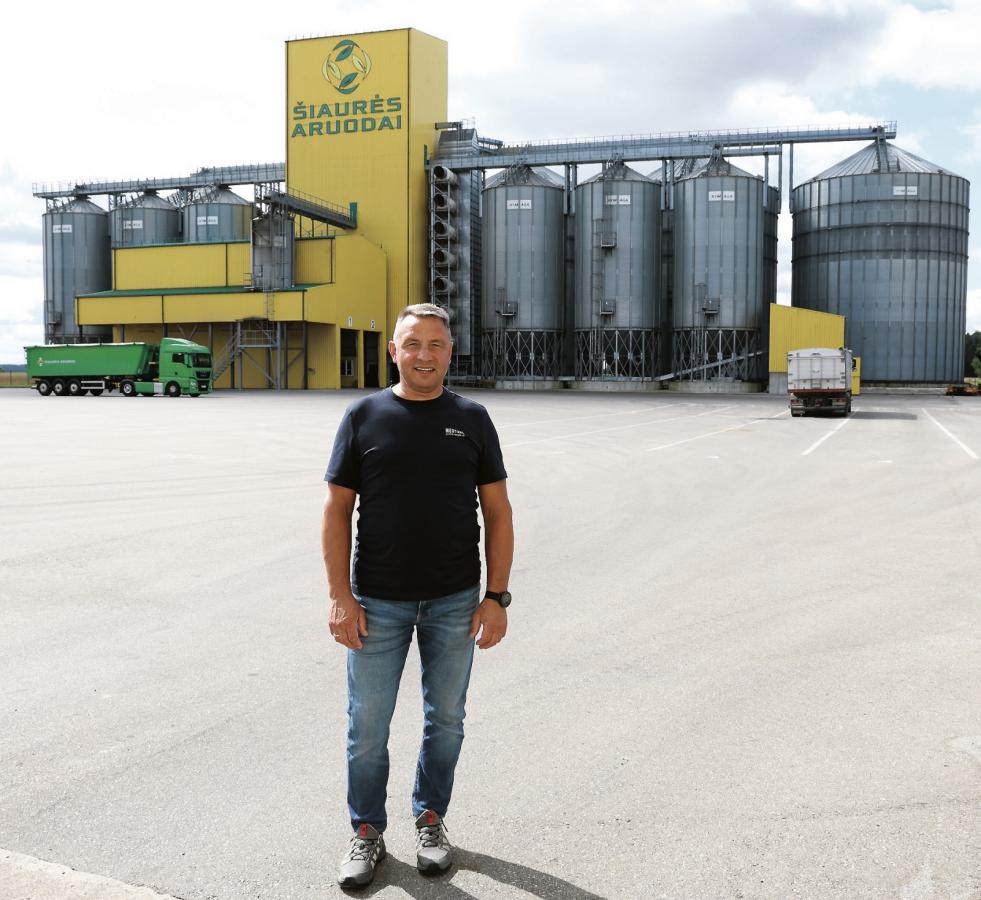
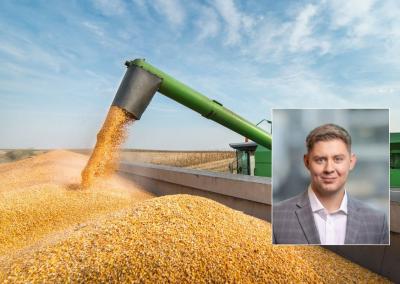
We spoke to Aldas Gedvilas, director of the district farmers’ co-operative “Šiaurės aruodai”, last Thursday, when the grain harvest had not yet got into full swing. Consequently, the initial assessments and observations regarding the new harvest may differ slightly from the current situation.
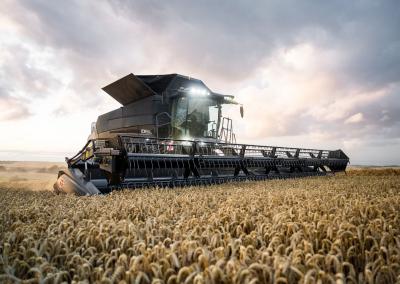
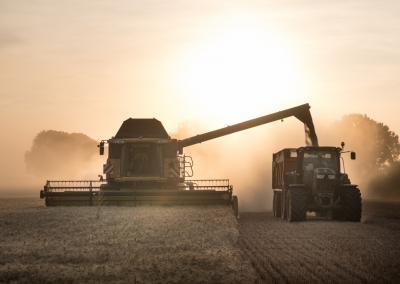
Our interviewee said that the first winter rapeseed began to be delivered to the grain elevator in the penultimate week of July. Monday 27 July can be considered the start of this year’s harvest, when farmers’ vehicles began passing through the grain elevator gates, carrying not only rapeseed but also winter wheat. The manager of “Šiaurės aruodai” recalled that one of the first deliveries of winter rapeseed was brought in by Aidas Banys, a farmer from Namišiai.
After delivering the first trailers of winter rapeseed, the farmers or their hired drivers reported a yield of around 3.5 tonnes per hectare. Meanwhile, during the first few days of the harvest, the yield of winter wheat ranged from 6.5 to 7 tonnes per hectare.
A. Gedvila noted that the quality of the winter rapeseed and winter wheat that have started to be delivered this year is very good so far. By midday last Thursday, the winter wheat delivered to the “Šiaurės aruodai” grain silo had been classified as extra, first and second grade. “We need to wait a couple of weeks or so, then the true picture of the grain’s quality will become clear,” said A. Gedvila, manager of the grain elevator, which has been receiving harvests for nine years.
“The ‘Šiaurės Aruodai’ grain elevator accepts more than just the harvests of its cooperative members. ‘Our aim is to purchase as much produce as possible,’ – said the cooperative’s director, A. Gedvila, outlining the strategy. Therefore, the harvests of farmers who have not signed advance contracts are also gladly accepted.
Speaking about the pricing policy for the harvest, he said that prices are largely determined by the contracts held with buyers. Prices on the grain exchange fluctuate constantly; even on the same day, they can vary by up to 20 euros. When we visited the grain elevator (on 30 July), a tonne of winter rapeseed was trading at around 500 euros on the exchange, whereas a few days earlier it had been 560 euros.
Meanwhile, the price of winter wheat on the exchange had fallen to 230 euros that day. At this price, a farmer can, at best, expect around 200 euros per tonne for food-grade winter wheat, and around 210 euros for grain meeting ‘extra’ class specifications. Compared with last year, according to A. Gedvila, the purchase prices for the harvest are better.
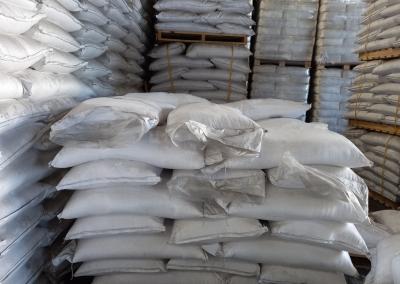
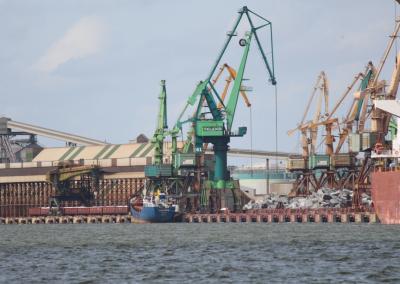
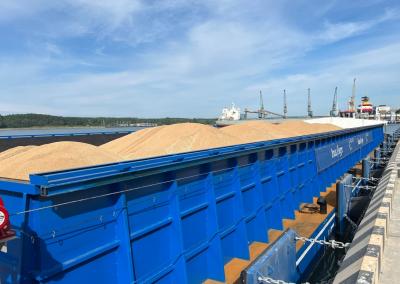
„Šiaurės aruodų“ can accept up to 20,000 tonnes of the harvest. However, it does not remain in the silo. As in previous years, grain from the Pasvalys region is transported to the port of Riga. “Šiaurės aruodai” has two heavy-duty lorries, so during the peak of the season it has to hire additional hauliers. With the two vehicles at its disposal, the company can only transport between 50 and 100 tonnes of grain per day. Meanwhile, on peak harvest days, up to a thousand tonnes of grain are transported from “Šiaurės aruodai” each day.
The wheat and rapeseed delivered to the neighbouring country’s port closest to the Pasvalys region are sold to buyers. From there, the grain travels to Africa and the Arabian Peninsula, whilst the rapeseed goes to processors. However, this is no longer the concern of “Šiaurės aruodai”.
The laboratory – the brain of the grain elevator
Once the grain harvest begins, the “Šiaurės aruodai” elevator also operates to the rhythm of the year’s busiest period. For the time being, the laboratory is open from 8 am to 8 pm. According to A. Gedvila, working hours will be extended if necessary. In total, there are 16 staff members at the “Šiaurės aruodai” grain elevator, including its manager. The laboratory continues to be headed by Jogailė Čivilienė, who is joined by two permanent staff members, Gabrielė Kavaliauskienė, Viktorija Vasiliauskaitė-Simsonienė and, as is the case every year, a couple of seasonal staff. This season, these roles have been filled by Kamilė Mackevičiūtė and Faustas Ivanovas. “Our team has remained unchanged since the granary first opened in 2018,” said A. Gedvila, director of “Šiaurės aruodai”, with delight.
The director pointed out that the quality of wheat is determined by four key parameters: protein, gluten, specific weight (an indicator of grain density) and falling number. “Without the latter component, it will be impossible to bake a loaf of bread. The falling number is primarily determined by the amount of rainfall. The worst scenario is when it rains steadily for several days, because then the grain starts to sprout on its own,“ – A. Gedvila explained the fourth quality parameter with a smile. Meanwhile, other harvest quality parameters depend not only on natural conditions, but also on the timely and balanced use of fertilisers. Our interviewee pointed out that the winter wheat already delivered has a fairly good specific weight.
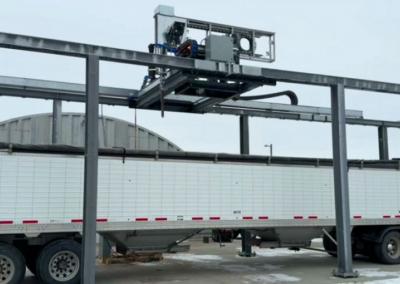
The quality of the harvest from a sample taken is determined in the laboratory within a few minutes. “The farmer leaves the grain elevator premises knowing everything about the crop he has brought in. The entire procedure, from sample collection to unloading the grain and driving out through the gates, takes about half an hour, and during the peak of the season – longer,” – said Aldas Gedvila, director of the “Šiaurės aruodai” agricultural co-operative. During this time, farmers or their hired drivers are offered ice cream.

Similar articles




Video