







































































Another blow for Russian agriculture: the oil refining crisis is now spilling over into the fields
Ukraine’s drone and missile attacks on Russia’s oil refining sector are dealing a particularly severe blow to the aggressor’s agricultural sector.
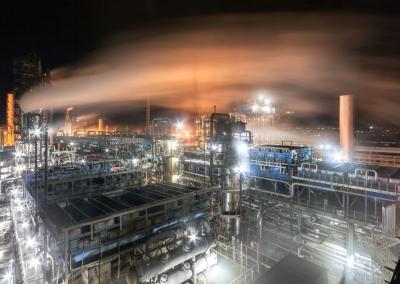
Russia’s oil refining volumes averaged around 3.91 million barrels per day in July 2026 – the lowest figure since March 2005. „Bloomberg“, citing data from EA Analytics, a division of „Energy Aspects“, reported that July’s volumes were more than 1.4 million barrels per day lower than at the same time a year ago.
Prominent Russian economist Igor Lipshits vividly described the negative impact on Russian agriculture as “yet another disaster zone”.
“The question now is whether, following these events, Russian agriculture will survive, or whether there will be a wave of mass bankruptcies among farmers,” – commented I. Lipšicas on the shortage of fossil fuels in Russia, having recently appeared on journalist Yevgeny Kiselyov’s webcast.
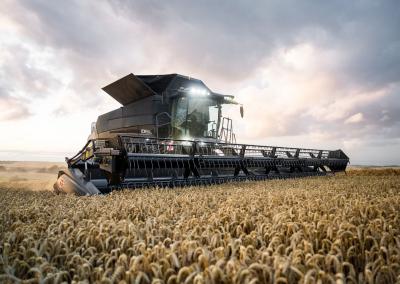
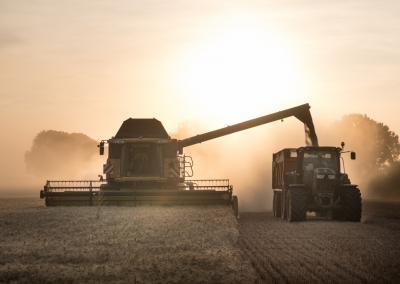
“Fuel prices have risen significantly, and the burden has fallen entirely on the agricultural sector. After all, fuel costs are very high in agriculture,” said I. Lipšicas. “A combine harvester ‘consumes’ 100 litres of diesel in two hours of work. Everything has become more expensive overall, and I’ll explain in a moment what a predicament farmers find themselves in.”
The Russian media also reported on fuel shortages ahead of the harvest season. In June, farmers in southern Russian regions said they were facing a shortage of diesel and a sharp rise in prices. It was reported that since the start of the year, the price of diesel in some regions had risen to over 100,000 roubles per tonne (around 1.06 euros per litre).
According to him, when petrol or diesel becomes more expensive, it “hits all of our wallets directly, and we understand that”.
“But you must understand that this price rise also affects farmers and agricultural holdings that produce agricultural goods. To cover these costs, they need to increase the prices of these products. So Russian farmers are facing a double blow here. Regulatory authorities are prohibiting them from raising food prices, whilst at the same time it is becoming increasingly difficult to export these products,” says I. Lipšicas.
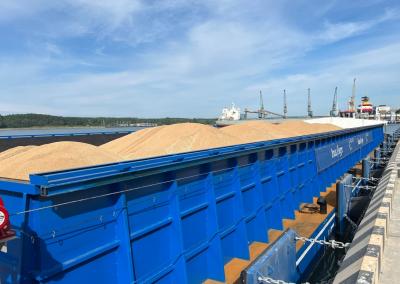
The scale of Russian agriculture is also reflected in grain production and export volumes. The Russian Ministry of Agriculture reported that the country’s grain harvest in 2025 amounted to more than 139 million tonnes. According to the Ministry’s estimates, around 55 million tonnes of grain from this harvest were planned for export in 2026.
During the 2025/26 agricultural season, Russia’s total exports of cereals and pulses exceeded 61 million tonnes – 11 per cent more than in the previous period. According to data from the Russian Ministry of Transport, wheat exports amounted to 47 million tonnes, whilst Russia’s share of the global wheat trade stood at 21 per cent.
According to data from the US Department of Agriculture, in 2025, Russia exported around 44 million tonnes of wheat – approximately one-fifth of total global wheat trade, which was estimated at 219.8 million tonnes.
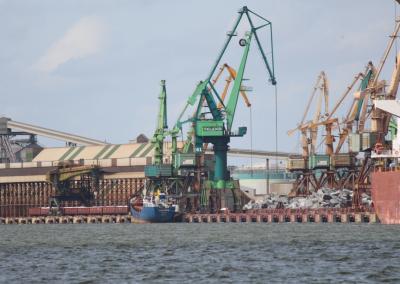
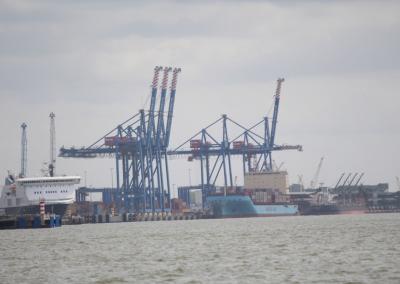
Speaking about exports, the economist highlights, first and foremost, instances where water drone attacks are hampering Russian shipping in the Black and Azov Seas.
“At present, the transport of agricultural produce by ship in these seas is being hampered. This is turning into a ‘nightmare scenario’, as it is impossible to ship the harvest out. It remains within the country. And people who know nothing about economics are delighted that the domestic market is being flooded with wheat. But in reality, this is not a good thing,” said I. Lipšicas.
Independent data shows that Russian grain exports will remain high in 2026. According to figures from the Russian Ministry of Transport, by 10 July, the country’s exports of grain and grain products had exceeded 36.1 million tonnes since the start of the year. This was 69 per cent more than during the same period in 2025, when 21.4 million tonnes were exported.
“The surplus of wheat on the domestic market is driving prices down. And if we take into account the rise in fuel prices and farmers’ increased costs in general, then such activity becomes heavily loss-making“, – emphasised I. Lipšicas, stating that a huge wave of agricultural business bankruptcies will sweep through Russia this autumn.
“This means that the area under crops will decrease for the next season and Russia will experience a shortage of agricultural produce,” – I. Lipšicas has no doubt.
The prominent Russian economist, who is critical of the Kremlin’s policies, has been living in Palanga for several years.

Similar articles


Video