



























































Raising rabbits on a subsistence farm - where to start and which breed to choose?
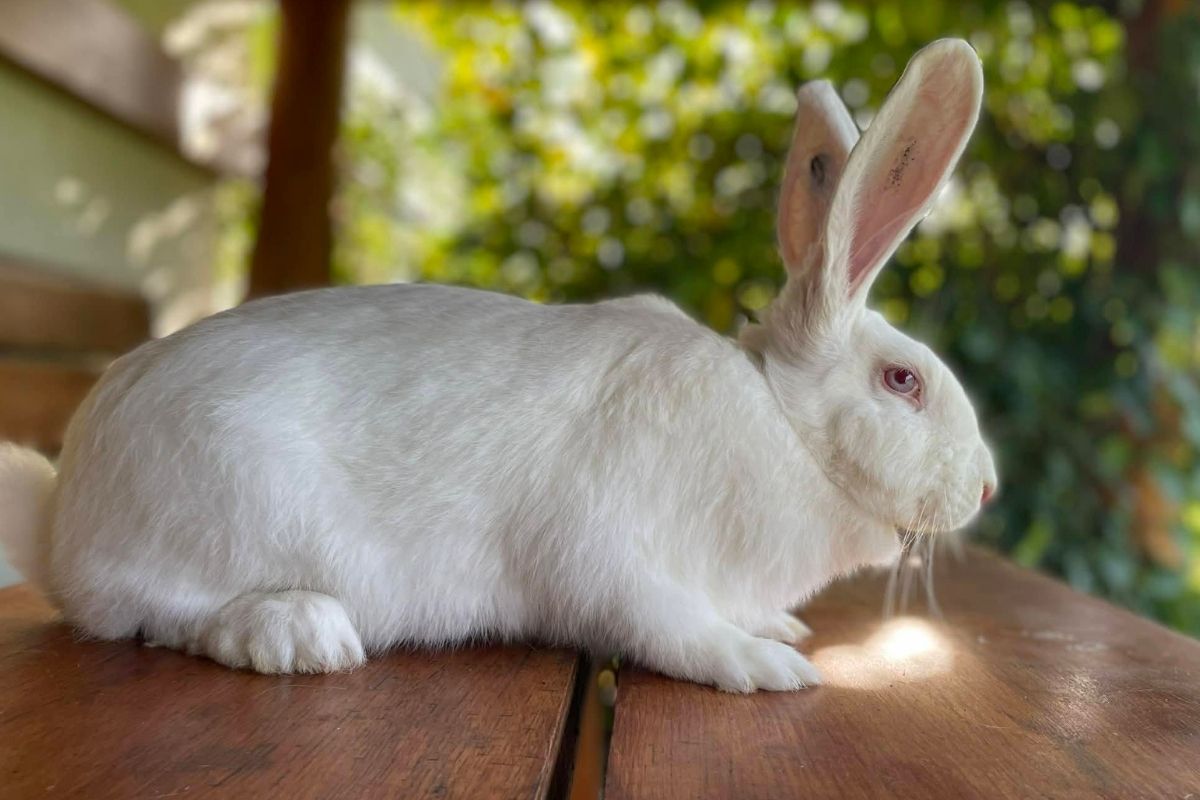
In Lithuania, the most popular meat rabbit breeds are the California, Burgundy, New Zealand and Large Light Silver, but for beginners, the New Zealand or California rabbits are the most popular. According to experts, even a small family farm may need 2–3 females and one male to ensure that the family has a regular supply of fresh rabbit meat.
How to choose the right breed for a beginner, how many rabbits a family needs, which housing conditions are most important and how to produce quality meat without high costs. It will be particularly useful for those who are who want to start a natural farm.Popular breeds and choices for beginners
„The most popular meat rabbit breeds in Lithuania at the moment are the Californian, the Burgundy, the New Zealand and the Large Light Silver. There are also meat cross-breeds – „Hyla“, „Termondai“, – lists the Chairman of the Lithuanian Rabbit Breeders' Association, Dr. Prof. Artūras Stimbirys.
According to him, the choice of a breed depends on the breeder's expectations and experience. Burgundy rabbits are considered to be a bit more timid and harder to predict, while New Zealand White or Red and California – have a calmer temperament and can be easier to raise for beginners.
How many rabbits should be kept to provide meat for a family of 3–5 people? 2–3 females and one male would be enough. If all goes well, the female produces 6–8 chicks which can be slaughtered after 4 months. In a year, 3–4 litters can be produced. This is certainly enough to start with, and then of course you can expand," says the President of the Association.
Raising a rabbit to slaughter weight, without taking into account the cost of the labour involved, can cost up to €10, especially if some of the feed is prepared on your own, the professor said.
Growth rate and housing conditions
Dr. prof. A. Stimbirys says that when fed intensively with compound feed, a meat rabbit reaches slaughter weight in 3–4 months. Although carcasses weighing 1.1–1.5 kg are the most commonly offered in the trade, he notes that consumers are increasingly asking for products weighing around 2 kg.
The rabbit farmer recommends that rabbits are kept indoors. This allows for better disease prevention, especially against mosquito-borne myxomatosis. In addition, indoors it is easier to avoid temperature fluctuations – in winter the water does not freeze and in summer the risk of overheating is reduced. Rabbits can tolerate cold more easily than heat, but must always be provided with clean water.According to animal welfare requirements, a rabbit in a cage must be able to stand on its hind legs and take at least one and a half jumps.
About 60 cm per animal is recommended, but the more space the better. Others modify the cages, making them two storeys high so that the rabbit has somewhere to climb. Variations can be many “, – says the president of the association.
Fibre is essential
„I would advise to go for natural feeding – grass in summer and hay in winter –. The digestive system of rabbits is such that it needs a lot of fibre. Feeding compound feed or cereals alone can cause digestive problems. The diet should be supplemented with natural products, – advises the interlocutor, adding that when choosing compound feed, attention should be paid to the quality of the feed, as some are made with GMOs. If you want cleaner meat, it is worth evaluating it," stresses Dr. Prof. A. Stimbirys.
A variety of root crops are also suitable for rabbits – fodder beet, carrots. The latter can be purchased inexpensively from farmers who grow them. Carrots are usually washed but unmarketable – too crooked, split or otherwise damaged, but they are good for rabbits“, – observes the interlocutor.
Rabbits should also be given a variety of twigs and hay as this helps to naturally wear down their teeth. If a rabbit is fed only concentrated feed, its teeth may overgrow.
The President of the Association also points to ideas of sustainability: „People have various plants near their homes that they can use to feed rabbits. In addition, rabbits can help use some food waste, such as cabbage or carrot leaves.“
Slaughter and demand for meat
„There are requirements from the HMVT that make it impossible to do without a slaughterhouse to market meat. That is, if you want to sell at a market or in a shop, you must have a compliant slaughterhouse. However, if a person uses rabbit meat only for his own consumption and does not put it on the market, he can slaughter the rabbit himself. This is not a difficult process. It is important to store the meat properly – refrigerate or freeze it if necessary“, – says Dr. Prof. A. Stimbirys.
According to him, there is no need for special testing of the carcass, as rabbits do not suffer from diseases dangerous to humans. Moreover, raw rabbit meat is usually not consumed – it is heat treated.Although rabbit meat is considered to be one of the most valuable meats – it is high in protein and low in fat – demand for rabbit meat in Lithuania remains limited. It is mostly used in the diet of young children.
According to a specialist, one of the reasons is lack of knowledge. Rabbit meat is lean and can be dry if not prepared properly. It is recommended to marinate it, fry it with extra fat or in a special frying sleeve to preserve the juiciness.
Common problems and diseases
Young rabbits up to 3–4 months of age can develop coccidiosis, so compound feeds with coccidiostats are often used for prophylaxis.
Another important aspect – animals should be purchased from reputable breeders and avoid buying at shows where the risk of disease transmission is higher. When buying a rabbit, it is important to check that it does not smell or have a runny nose. I would not recommend buying rabbits at shows, as they bring animals from many different places, which creates the conditions for the spread of disease. Shows are basically a mishmash of viruses and bacteria," says Dr. Prof. A. Stimbirys.
Rabbits are recommended to be vaccinated against rabbit plague and myxomatosis, especially if they are kept outdoors. Vaccination usually costs around €1 per animal.
The speaker stresses that rabbit care is easy and time-consuming. „In addition, looking after rabbits is good practice for children – they learn responsibility“, – he emphasises.
VMVT information
Raising rabbits can be a cost-effective and sustainable option for a family, but even on a small farm animal welfare and food safety principles must be respected. The scope of responsibilities and requirements increases significantly in order to market the produce.
The FVO informs that it is not necessary to register a farm when keeping rabbits for your own use, unless you are seeking state support. Rabbits do not need to be labelled or registered.
Minimum housing requirements are laid down in the Farm Animal Welfare Requirements and the Law on Animal Welfare and Protection of the Republic of Lithuania. Rabbits may be kept in cages outdoors and in winter, but the animal must be able to shelter from adverse weather conditions.
According to the HMVT, inspections of small-scale farmers usually reveal violations of housing conditions, biosecurity and hygiene.
By the way, these and other recommendations, as well as how to set up a subsistence farm, can be found in the „Natūrinis farmais I Auginam sau“ group „Natūrinis farmais I Auginam sau“.

Similar articles


Video