



















































































"S&P Global Ratings affirms Lithuania's credit rating
On Friday evening, the international credit rating agency S&P Global Ratings (S&P Global Ratings) maintained Lithuania's previously assigned long-term debt rating of "A" with a stable outlook.
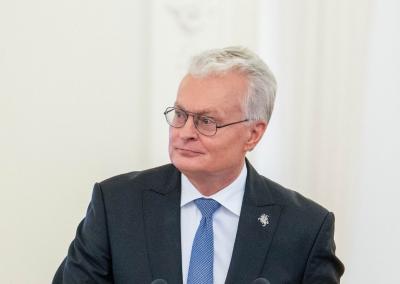
„All the credit rating agencies that have analysed Lithuania this year have assessed the state of the Lithuanian economy positively – they have either maintained the same higher investment grade rating, or, like „Fitch Ratings“, upgraded the rating &ndash. This assessment is particularly important in the context of geopolitical risks, and obliges us to continue to manage our public finances responsibly," said Finance Minister Kristupas Vaitiekūnas.
„S&P Global Ratings“ experts forecast that the Lithuanian economy should continue to grow rapidly – in 2026, GDP is expected to increase by around 3% for the third consecutive year. According to the credit rating agency, the Lithuanian economy has demonstrated resilience to the impact of Russia's war against Ukraine: the country is increasingly focusing on higher value-added production, diversifying its export markets and rapidly increasing its services exports. Investment above the EU average and strong domestic consumption have also contributed to economic growth. These factors are expected to help Lithuania withstand the challenges of the conflict in the Middle East in 2026.
The Agency's analysts predict that inflation is expected to exceed 5% this year due to rising energy prices, but that domestic demand will continue to support the economy. Consumption will be boosted by withdrawals from second-pillar pension funds, while investment will be supported by EU funds and soaring defence spending. According to S&P Global Ratings, defence spending of more than 5% of GDP is contributing significantly to the increase in public debt, although it remains relatively low compared to similarly rated countries, and external financial indicators remain robust.
The stable rating outlook reflects the CRA's expectation that Lithuania will remain resilient to external challenges over the next two to three years, including the short-term impact of the Middle East conflict and the lingering risks associated with Russia's war against Ukraine. It is also based on the assumption that this war will not spill over into NATO territory, including Lithuania.Lithuania's rating was last reviewed by analysts at S&P Global Ratings in May 2024, with the rating set at "A" (Stable Outlook) and the short-term borrowing rating at "A-1" (Stable Outlook). The agency's latest announcement can be found at here.
At the end of April, the international credit rating agency „Fitch Ratings“, after a positive assessment of Lithuania's economic situation, upgraded the country's sovereign credit rating from „A“ to „A+“ with a stable outlook after an interruption of 6 years. This credit rating by Fitch Ratings is currently the highest among the three major agencies' long-term debt ratings for Lithuania.
In mid-April, another international credit rating agency, Moody's Investment Service, reaffirmed its previously assigned long-term debt rating of „A2“ and maintained a stable outlook on Lithuania. Moody's last upgrade of Lithuania's credit ratings took place in February 2021, when the A3 (positive outlook) long-term debt rating assigned in 2015 was upgraded to A2 (stable outlook).
On 10 April. Lithuania's „A (high)“ long-term debt rating with a stable outlook was affirmed by „Morningstar DBRS“ on April 10, 2018. Lithuania's long-term borrowing rating was last changed by this international credit rating agency in November 2021, from „A“ to „A (high)“ with a stable rating outlook.
Similar articles





Video