





























The romance ends at the hay bale: how much does it really cost to keep one cow?
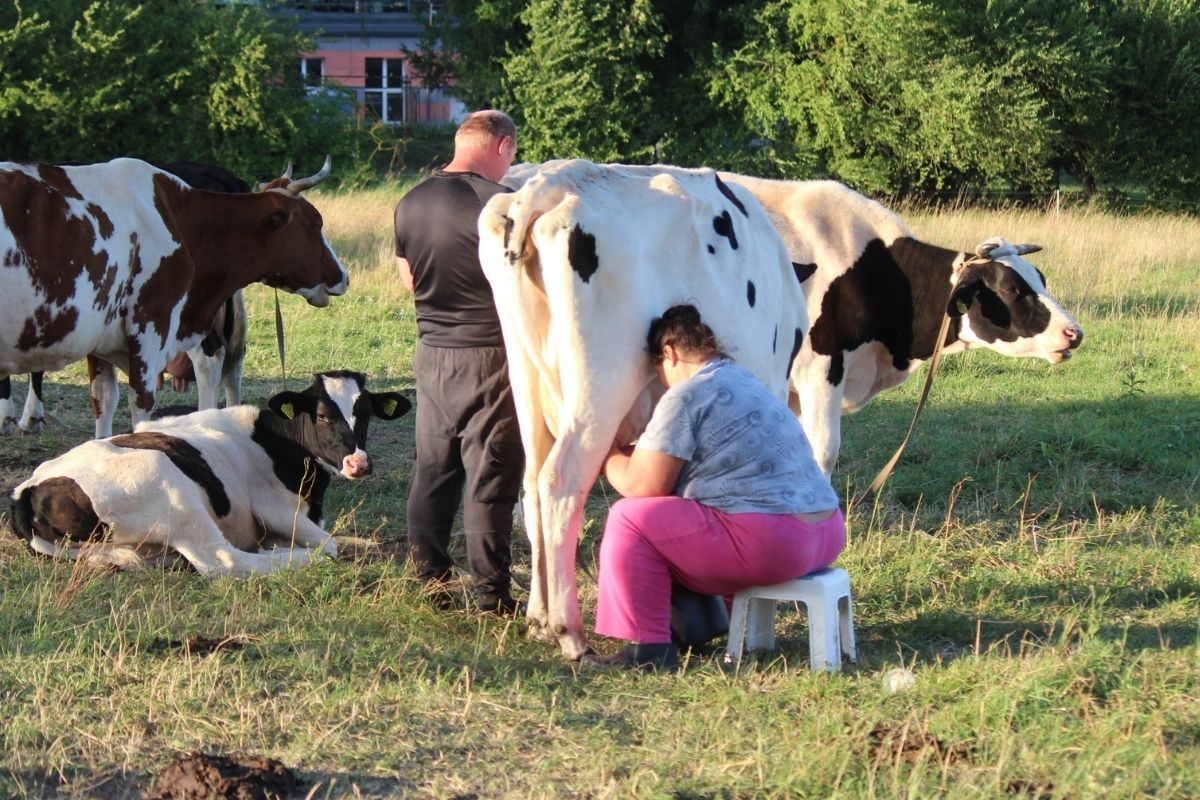
The desire to have your own milk seems quite natural today – some people are moving towards a more independent lifestyle, choosing to consume less, trying to eat what they grow themselves. But the practical question is: is it realistic to keep one cow on a subsistence farm in Lithuania today? Renata Vilimienė, head of the Lithuanian Association of Medium-sized Dairy Farms, says that it is possible, but when considering the idea, it is worth answering immediately whether it will be a practical or a value-based decision.
Challenges start with the hay harvestR. Vilimienė stresses that the most important issue is not the purchase of the cow, but what happens afterwards. The first major challenge – feed.
„Let's imagine that a person has a homestead and at least 3 hectares of land, because that's the amount of grassland needed for one cow. Another nuance – there should be farmers around to help you make the feed or you could buy it, – says the head of the association.
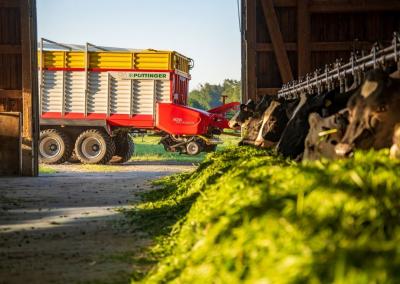
Even with several hectares of land, it is not so easy to prepare hay or other fodder, because nobody mows by hand anymore, and it is costly to maintain the machinery. Moreover, farmers themselves are not inclined to go and cut a couple of hectares, even for a fee.„It's just not worth it“, – says R. Vilimienė, but adds that this problem can be circumvented by buying fodder.
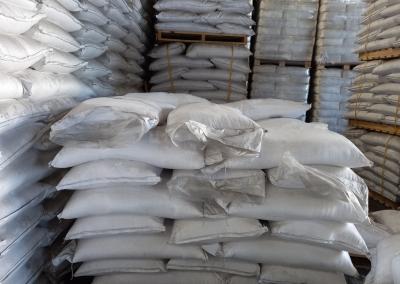
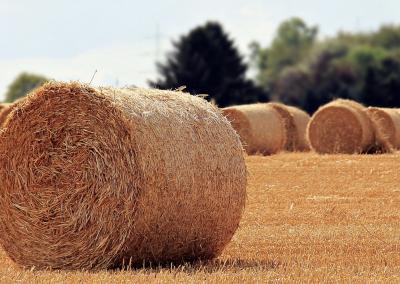
A minimum of 12 bales of hay will be needed per year. Depending on the season, a bale of hay costs €28-32, but in more unfavourable seasons it can cost up to €50 per bale. So, for the year alone, you will pay a minimum of €336 to €384 per bale, excluding the cost of delivery.
„It should be noted that veterinary care will also be needed: vets come from other towns, for which you have to pay – the costs are rising again“, – she notes.
What other things will be needed
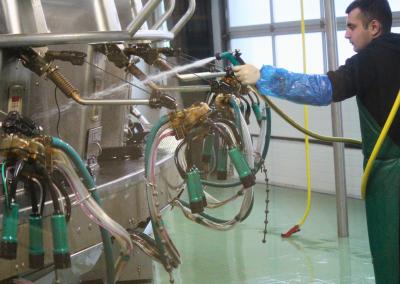
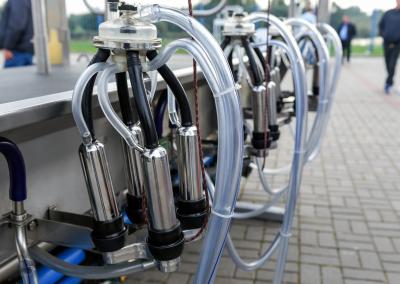
The animal needs to be housed in a barn, so investments will also have to be made in building or adapting it. Heating may be needed during the cold season, as well as a dung barn, tools for daily chores, and, for those who do not know how to milk by hand, a small milking machine.
If you want to have cream and cottage cheese, you will need to buy a small separator, which costs around €35-70.
You will also need to water the cow, so ideally you will have your own watering trough, or if not, a water supply. On the hottest summer day, a cow can drink up to 200 litres of water.
The cow will also need to be given flour, wheat, barley, supplements and lick. Vilimienė has calculated that about 100 kg of premix is needed per month. This will cost about €90 per month and about €1,080 per year.
A full supply of feed and supplements is essential for truly healthy milk.
Milk quality and responsibility
The head of the association points out that keeping a cow – is not only about milk, but also about responsibility for the health of the animal. Often people imagine that grass and water will be enough, but the reality is different.
„A cow's health must be taken care of. Grass alone is no longer enough – it needs a variety of substances, minerals and vitamins“, – says R. Vilimienė. She notes that even the idea of "organic milk" sometimes comes up against the everyday – the grassland needs to be nutritious, which means it also needs to be cared for and fertilised. Otherwise, the milk will not be abundant, lacking protein and other nutrients.
R. Vilimienė also reminds us of milk safety issues. The saying "The healthiest milk is at Grandma's in the village" is not very true. If I see someone selling cheese and I know that the milk is not tested and tested, I would hesitate to buy such cheese under any circumstances," says the head of the association.
You can apply, but you have to register
The State Food and Veterinary Service (SVVT) points out that whether a person keeps a single cow or a larger herd, the requirements for registering and labelling the animal apply to everyone.
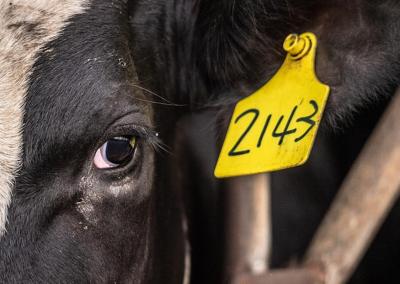
The Authority explains that if a person buys a cow, it must already be tagged and registered in the Farm Animal Register in accordance with established procedures. If an unregistered or unmarked animal is kept, it is subject to administrative liability.
„Regardless of the number of animals kept, livestock keepers are subject to scheduled and unscheduled inspections“, – notes the VMVT.
On animal welfare, the Authority stresses that no single criterion can be overriding. First and foremost, it is important that the animal is not injured or endangered, that it is protected from suffering or cruelty, that it has sufficient water (water must be clean and easily accessible) and food (of good quality and appropriate to the animal's species, age and physiological condition), and that the housing conditions are also very important: its bearing must be dry and clean, as well as space, ventilation and temperature“, – lists the service.
At the same time, the HVO reassures – if the milk is consumed solely for family use, no additional food handling requirements apply. However, the situation changes if the products are sold or given to others.
„If milk is used only for the family's own consumption, it is not subject to any requirements, but as soon as the milk and/or milk products are sold and/or given to other persons, it is already called placing on the market“, – stresses the MoVT.
What if you buy milk from farmers?
Keeping a cow today – is no longer just a nostalgic memory from grandparents' times. It is a decision that requires land, feed, daily work, knowledge and extra costs.
However, for those who consciously choose a slower lifestyle, who want to grow and provide their own food, it can be an alternative.
It all depends on motivation. Raising one cow and having your own milk is certainly possible. But it takes a lot of internal motivation and financial commitment," says R. Vilimienė, the association's director, adding that her own experience can be the solution to subsistence farming.
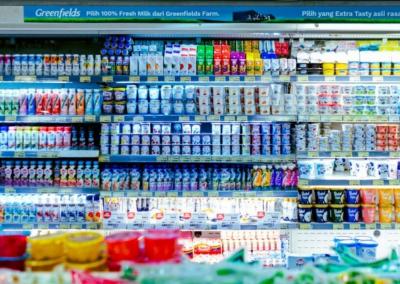
„If, in the light of the above, a person decides that keeping a cow is not feasible for him or is too expensive, it is possible to buy natural milk from farmers and use it to make sour cream or cottage cheese“, – says R. Vilimienė.
She says that when the urge strikes, she buys 10 litres of raw milk for a week after giving up her own dairy farm. With the help of a separator, she makes about 0.5 litres of sour cream from this amount. With the rest of the milk, I make about 700 grams of cottage cheese. So thank God I have neighbours who still keep cows," says R. Vilimienė.
The price of raw milk at farmers' shops ranges from €1 to €2.20 per litre, depending on the relationship and the agreement between them.
Keeping a cow today – is not a return to the old days but a conscious choice to live differently. It is a decision that requires not only love for the animal, but also time, money and daily responsibility.
This is why own milk is increasingly becoming a value rather than a necessity – one that each person values according to his or her own ability and motivation.
Be sure to check out our "Natūrinis farmais I Auginam sau" group on Facebook, where we share our experiences and best practices on how to minimize our dependence on supermarkets and maximize our self-sufficiency in food.

Similar articles
Video