




































































Frost and snow don't scare farmers, but experts identify risks to winter crops
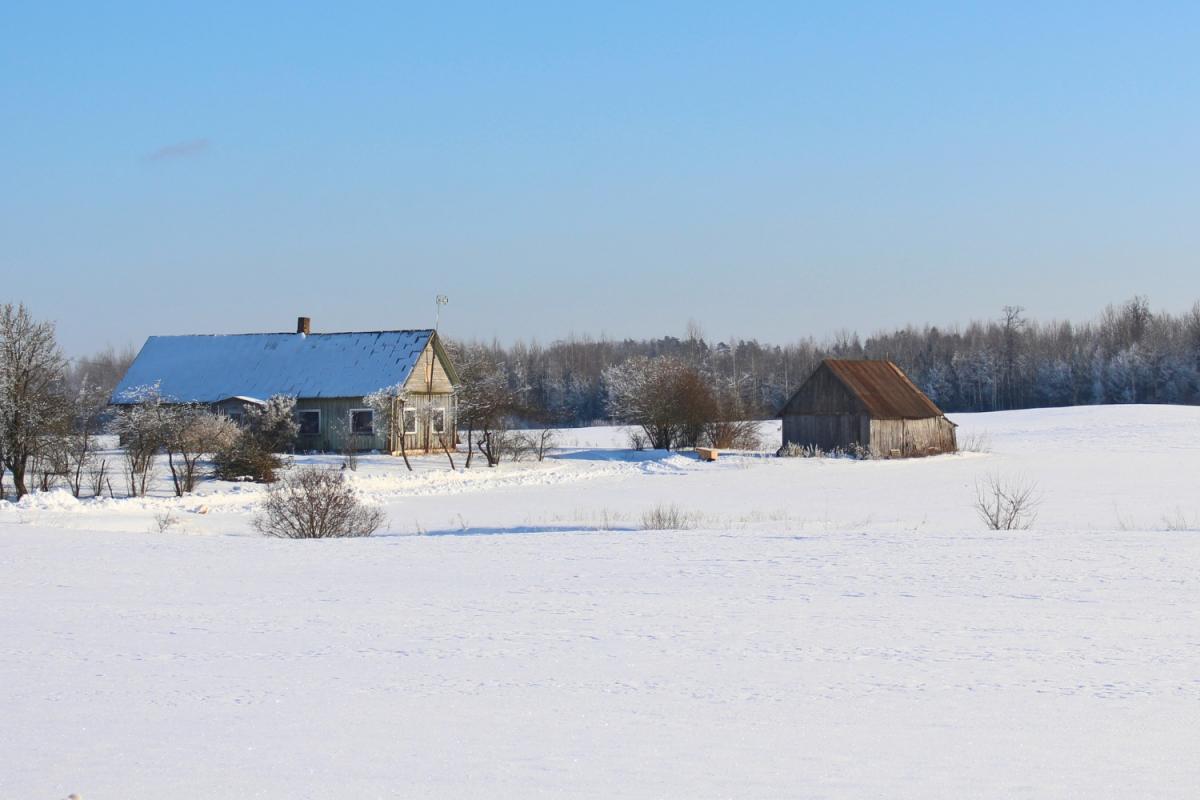
The cold and snow that have arrived in Lithuania have taken many by surprise: although the country has settled into winter weather, winters last year and in the past have been a pleasant surprise for farmers. But agricultural experts are quick to reassure farmers that the current weather is favourable for winter crops.
„Of course, until we reach midwinter – 25 January, when tradition says the badger turns on its side, it is difficult to predict how winter will end and what state winter crops will be in when spring arrives. However, in the current weather conditions, winter crops under snow in central Lithuania are doing well," says Dr Gabrielė Pšibišauskienė, an agrotechnology specialist.
Snow cover – important and necessary, but also unpredictableAlthough this year's winter – was delayed, with snow and frost only arriving in January, winters in previous years have been much worse. Snow acts as a protective measure against severe frost, which makes snowless winters and cold temperatures particularly dangerous for farmland, explains G. Pšibišauskienė.
„In the absence of a snow cover, low temperatures directly damage winter crops: they weaken, die and do not survive until spring. On the other hand, when we have a very thick layer of snow - about a metre or more - the crops underneath are frozen and also die," says the agri-technology expert.
According to Ms Pšibišauskienė, several factors are important for the overwintering of crops: the amount of frost on the ground, the thickness and density of the snow – whether it is fluffy or wet, and the periods of snowmelt. Measurements made by the company's specialists in mid-January show that the average frost depth in central Lithuania is between 16 and 19 cm, while the thickness of the snow cover is around 10 cm.„Figures may vary from region to region, depending on the prevailing air temperature and the amount of snow, soil and vegetation cover. For example, in Samogitia, snow cover can reach 40–50 cm in places and snow deposits can be around 1 m or more, which can lead to spring mould damage to cereal crops in places. In addition, the snow cover in the region is made up of fluffy and wet snow, which is heavy and less airy, and can favour the spread of this pathogen," the expert comments.As Aurimas Sabeckis, PhD student and junior researcher at the Lithuanian Agrarian and Forestry Science Centre (LAMCSC), explains, the pathogen thrives in wet environments with a permanent snow cover. According to him, the pathogens (Microdochium nivale and Microdochium majus) are most at risk of spreading when temperatures hover around 0 degrees and when there is a long-lasting snow cover, especially if it persists for a month or more.„It is even worse if the snow cover forms on unfrozen ground. It is true that even with unstable snow cover, during a wet and unstable winter, the more sensitive varieties can also be affected by pathogens of the genus Microdochium in spring mould, with plants suffering from root rots, poor overwintering, or no overwintering at all. Under the above conditions, and if the seeds are not sprayed, extremely high crop losses are possible," says Sabeckis.Spring mould can also tolerate higher ambient temperatures, he adds, so crop protection should be taken before sowing. While integrated, multi-faceted crop protection is essential, chemical disease control remains the most effective tool against spring mould and other seed-borne pathogens, he says.
„Under favourable conditions, commercially available seed treatments can be effective in controlling spring mould and root rots – particularly those containing fludioxonil. They protect the plant during the early stages of plant growth in autumn and inhibit the damage caused by the harmful pathogen during winter. Studies have shown that, in exceptional years, this insidious root-knot disease of winter wheat crops, when combined with root rot, can cause losses of up to 4 t per hectare on average, when comparing unsprayed and sprayed seed fields. In other words, the untreated seed crop would not survive the winter. Of course, the difference in yield the following year was not so drastic," explains Sabeckis.The junior researcher from the CGIAR adds that seed treatment with seed treatment is one of the most effective solutions to protect cereal seeds from the spread of diseases. „Spring mould – is adapted to live at low temperatures. So if the seed – is not sprayed, the root diseases and rotting pathogens that linger under the snow over the winter can cause irreparable damage, leading to thinning of the crop in the spring, weakened plants and poor development. On the other hand, a strong plant that has lost its leaves due to spring mould can recover quite well in the spring and will die back when the growing season resumes.“
Robbits and melting snow can pose challenges
Farmers should not worry about crops under snow now, Ms Pšibišauskienė said. While winters in the last few years have been extremes, either snowless and warm or extremely cold, the situation so far this year has been much more favourable, the expert said. However, she highlights those regions where the crops are covered with a thick layer of snow and the ground – is not frozen.
„If the snow cover is very thick and the winter rape underneath is growing, snow can break the leaves. On the other hand, these crops do not need the leaves in the spring, so even so, it makes life easier for them. The most important thing is to have a live root collar in the central rosette of winter rape, and everything will be fine," says the agrotechnology expert.
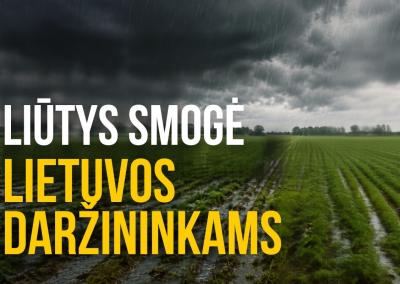
She also points out that if the snow doesn't linger too long after the thaw, the remaining moisture in the soil will be very useful in spring.„Snow is called the water of life for a reason: as it melts in spring, it moistens the fields and helps winter crops to recover and grow stronger. While previous winters were extremely dry and the soil lacked water, so farmers rushed to fertilise their crops as soon as possible, this year the situation may be reversed: a heavy snow cover can leave a large amount of water on the soil surface and prevent the fields from being entered when the weather thaws," says Pšibišauskienė, who points out that the crop is susceptible to pests, especially ground beetles.
They like a thick covering of snow: it's warm underneath, so the living conditions for rodents are favourable. If the ground is not frozen, they dig burrows and feast on winter rape. This makes pest control particularly important. However, it is currently impossible to predict whether the snow will melt suddenly or last for a long time, or what will emerge from under the snow cover.
Similar articles



Video