









































Akola Group CEO: fertiliser prices are too high for farmers
With fertiliser prices rising globally due to the conflict in the Middle East, one of the largest agri-food groups in the Baltics, „Akola Group“, one of the top executives, says that it will not have a significant impact on the Group's operations this year, but that next year could be a year of challenges, which will be exacerbated by the shortage of fertilisers on the market.
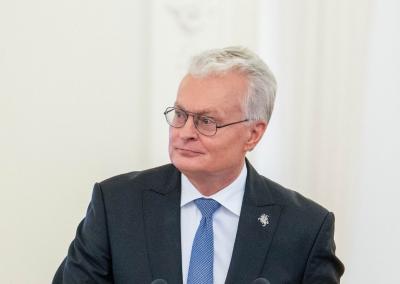
„This year's fertiliser trade and situation is more or less over. We have sold most of our volumes in the third quarter (for the 2025-2026 financial year, which ends at the end of June – BNS) and the remaining transactions will be made in the fourth quarter. However, all the fertilisers sold were bought before the situation in the Middle East escalated. So this year it will not have a big impact, because the price dynamics are more or less already fixed," Mažvydas Šileika, Deputy CEO for Finance and Investments, said in a webinar at the „Akola Group“.
According to him, the biggest challenge is looking ahead to the next financial year, as fertiliser orders, market positioning and preparations for supplying to farmers are already in place, but there is a shortage of fertiliser.„It is getting harder to get. We need to be more creative here. This will continue if the situation in the Middle East does not change," said Mr Šileika.
He pointed out that gas prices are also an issue – not all market players and factories are ready to buy gas at a high price and produce fertiliser. Disruptions in the fertiliser market lead to the need to find new suppliers.
„What you read in the news about shortages of fertiliser components or various chemicals is definitely felt in the market. Some factories are even closed because they cannot get specific chemicals for their production," explained Mr Šileika.
„Of course, there is another side to this – demand for fertilisers is also falling because the price, at least for the time being, is too high for farmers. So fertiliser demand and supply will meet somewhere in the middle, but overall the future is going to be difficult. We are watching this very closely and looking for ways to secure our supply portfolio," added the deputy head of the „Akola Group“.
Despite rising grain prices from 2026 onwards, fertiliser prices are rising at a faster pace, which is likely to result in less fertiliser being applied to crops, said Mr Šileika.„They (farmers – BNS) may apply less fertiliser in the autumn, but the spring is crucial – that's when you need to use as much fertiliser as possible to get the best yield potential. They will have to make this decision in October or November," said one of the company's executives.
M. Šileika, among others, believes that the current crop situation in the Baltic States is good.BNS wrote that in Europe, the price of nitrogen fertiliser produced from gas has risen to around €500 per tonne, compared with €380 last winter.
„Akola group“'s consolidated earnings before interest, taxes, depreciation and amortisation (EBITDA) for the first nine months of the 2025–2026 financial year amounted to €66 million, representing a 7% increase in EBITDA. The Group's net profit was €26 million, down 18% (€32 million), its consolidated revenue was €1.11 billion, down 5% (€1.12 billion) and its consolidated income was €1.11 billion.