

















































A system without accountability: who is to blame when a farmer doesn't receive funding?

ILTĖ, which is seeking National Development Bank status, talks about millions of euros for agriculture and new financing instruments. But a simple question remains unanswered – who is responsible when a farmer never receives funding? The system seems formally clear: ministries allocate the funds, ILTĖ develops the instruments and guarantees, and banks and credit unions decide on the loans. In practice, however, the chain works differently – responsibilities are dispersed in such a way that there is no responsibility at the end point.
Banks decide, but ILTE sets the rules
ILTE itself acknowledges that agricultural finance is provided through financing partners, with banks or credit unions deciding on loans. However, at the same time, the institution sets the substantive rules – requirements, criteria and conditions for financing.
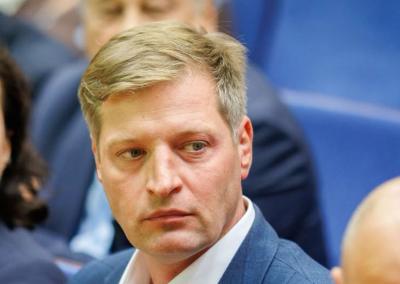
Ignas Jankauskas, a financial expert and head of MB „Skaičiai žemdirbiams“, says that in reality it is ILTE that has a greater influence than it formally acknowledges.
„ILTE is more decisive here. The bank takes the initial decision, but ILTE imposes additional requirements, shortens timetables, imposes additional conditions“, – he says. This is where the critical problem arises, he says, – the different assessments of financial health.
„A credit institution calculates that the indicators meet the requirements, but when the same indicators are taken to the ILTE, they no longer do. In this case, the farmer does not receive the guarantee and all credit stops," explains I. Jankauskas.
„Stuck between institutions“
Farmers' organisations paint a similar picture. Vytautas Buivydas, vice-chairman of the Lithuanian Young Farmers and Youth Union, admits that the system is not working smoothly.
„The system is out of balance. It is very important that funds reach those who need them most, but today they often go to those who already have more opportunities," he says. Asked if farmers are „stuck“ between institutions, he says frankly: „Farmers are always stuck – whether for one or the other. There are stucknesses, the most important thing is to create the conditions to get out of them.
When the decision chain is fragmented, the farmer often has to find his own solutions.
„The Ministry of Finance is responsible for the operation of ILTEs, the fund donors for the conditions –. The Ministry passes on the funds, the ILTE sets the conditions, but there is no sack from which you can draw as much as you want– – the situation is assessed by the Chairman of the Committee on Rural Affairs, Bronis Ropė.
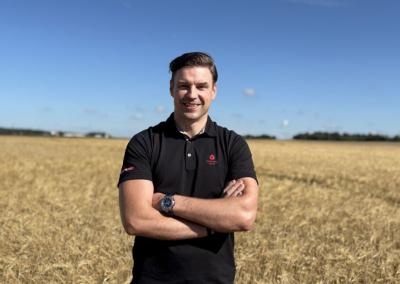
Kęstutis Mažeika puts the problem more bluntly: „Today, the responsibility is as in the saying – it is up to the drowning man to save himself. The farmer himself remains responsible for his own salvation.
This is perhaps the most accurate description of the essence of the system – formally many are responsible, in reality – none.
The system selects who will not even try
Another problem – some farmers do not apply for funding at all.
„The number of applicants is similar to the amount of finance available. It is not that many farmers are competing. The system is quite closed and restricts a significant number of farmers," says Mr Mažeika. This is confirmed by the insights of I. Jankauskas.
„Application rates have fallen to historic lows. Credit institutions have tried to send out applications, had negative experiences and those applications have fallen," he says. Often, according to the expert, it's not even possible to get to an official „rejection“.
„Sometimes managers know in advance that there will be no guarantee, so the application is not even submitted or is withdrawn“, – says I. Jankauskas, adding that even if a positive signal is received, the decision can be reversed.
„We had a case where a loan was already approved, but the decision was reversed due to a change in the market situation. The lender simply changed its mind," he says. In such situations, the liability disappears altogether – neither the bank nor ILTĖ takes on the final obligation.
So who should help the farmer? Formally, the answer is – ILTE.
„If the bank says no, you should go to ILTE. It should be the place that helps," says MP Valius Ąžuolas. But practice shows that this function is not yet working as expected.

Similar articles




Video