
















Is the leadership of the Ministry of Agriculture capable of defending Lithuanian production?
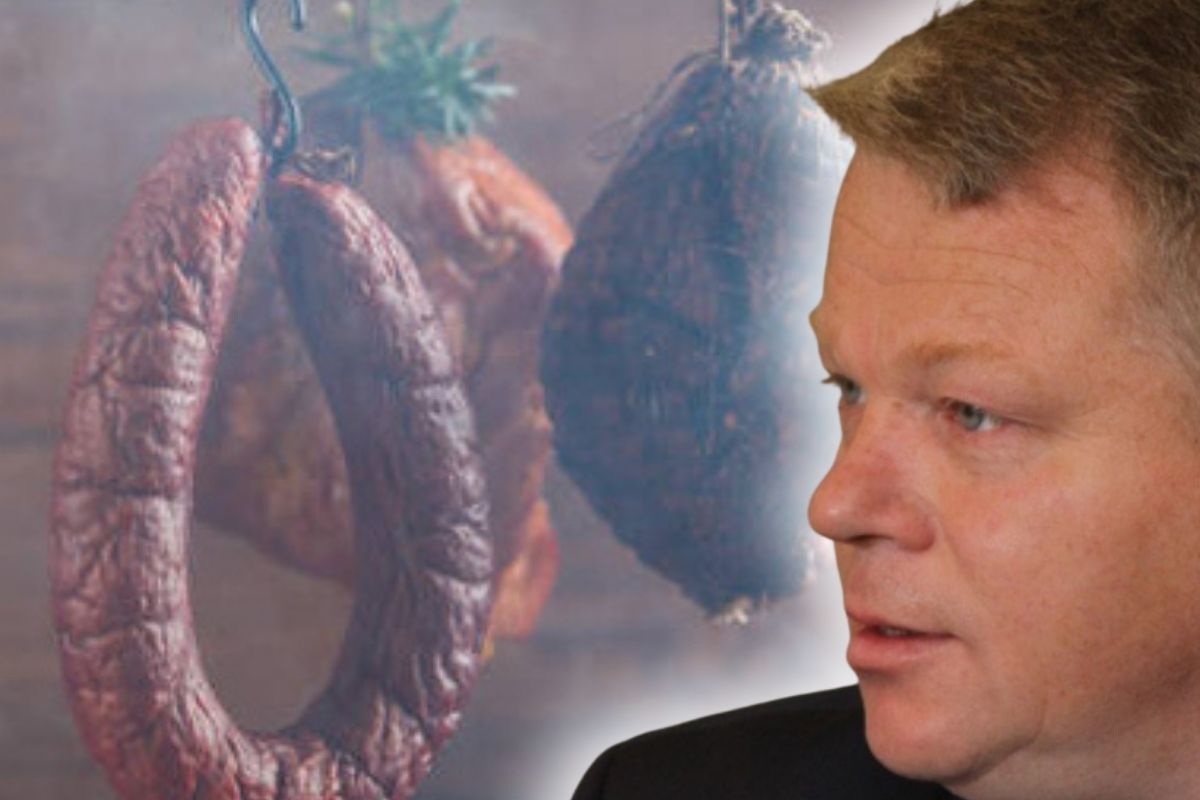
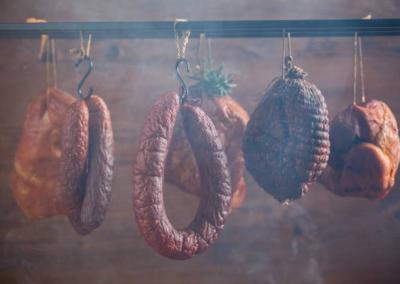
The trade agreement between the European Union (EU) and the South American bloc Mercosur includes a list of more than 300 EU products with geographical indications (GIs). However, none of the more widely known Lithuanian products, such as „Skilandis“ or „Lietuviškas varškės sūris“, were included in this list. Meanwhile, Poland has at least two protected names in the – vodka category.
The protection of geographical indications (GIs) in international agreements is seen as an important tool to protect traditional products from imitation and misappropriation of names in third country markets. Have the Lithuanian authorities done their best to represent the country's products and interests?
Big countries look after themselves, small countries are left behind
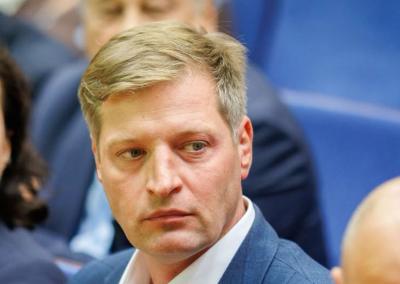
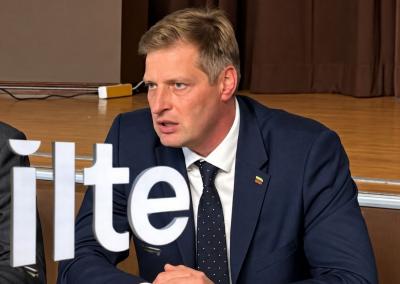
„The EU–Mercosur agreement is only necessary for the big industrial countries – Germany, France, etc. How much small countries like Lithuania will be affected was not important to them. And this situation, that Lithuanian products were not included in the GI list, confirms it once again," says Valius Ąžuolas, a member of the Seimas.
According to him, from the very beginning of the presentation of the agreement, there was a lack of clear answers as to how European farmers would be protected and how potential damage would be compensated for.
„When it came to deciding on the Mercosur agreement, there were no real answers as to what would happen. It was said that there was no need to be afraid – the EU will take care of everyone. But we can already see that the big countries will take care of themselves and the small ones will be left behind," the MEP said, adding that Lithuania will probably have to tighten its control over imports as the Mercosur countries seek to penetrate the European market more aggressively.
„When the agreement was signed, not only did the egg market in Brazil take decisive steps, it did so at national level. They are fiercely keen to invade our market. With the Mercosur agreement, the farmers of the old continent have come out fighting. We in Europe will try to hide behind certain restrictions, while other countries will push production at state level," believes Mr Oak.
Lack of a strong institutional position
„This is the answer to those who say that Mercosur is a great good – even such quite sensitive issues are not taken care of. The future is murky for everyone, even for those who have invested heavily and tried to preserve unique products– says Kęstutis Mažeika, Member of Parliament.
In his opinion, Lithuania should actively advocate for its interests and products, but so far there is a lack of clear signals from the responsible institutions.
„I find it a strange process in general when the public and even the farming community itself learns news from the public space. Meanwhile, there is no clear position from the Ministry of Agriculture or the Government“, – he says.
K. Mažeika points out that if the agreement is ratified by the European Parliament, Lithuania may have to go back to the negotiating table to address the loopholes left behind and to decide whether the country's authorities are ready to manage competition from countries with lower requirements.
FMA reply
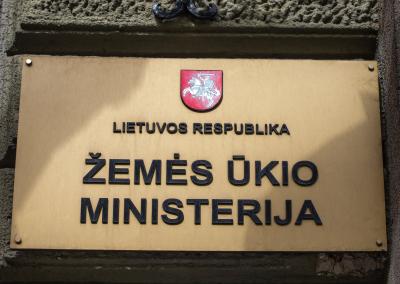
The Ministry of Agriculture (MAA) gives a different explanation of the situation. According to the Ministry, Lithuania, together with the Ministry of Foreign Affairs, regularly submits proposals for the inclusion of Lithuanian geographical indications in bilateral agreements between the EU and third countries.
„The Ministry of Agriculture, in cooperation with the Ministry of Foreign Affairs, always submits proposals for the inclusion of Lithuanian geographical indications in bilateral agreements between the EU and third countries. The economic justification for such proposals is crucial – what is the export value of a particular product to a particular third country (group of countries). The EU gives priority to commercially stronger and better known designations from larger countries," the ministry's reply said.
The MAFF points out that suggestions were also made in the case of the EU–Mercosur, and that the final list of EU GIs protected in Mercosur countries reportedly includes „Originali Lietuvosviška degtinė“.
At the same time, the Ministry points out that such lists only include geographical indications as part of the intellectual property system, and that therefore Traditional Guaranteed Products (GTGs) are not eligible for such protection.
„Guaranteed traditional products (not a geographical indication), such as Lietuvosški skilandis or Žemaitiškas kastinys, are not eligible for such protection“, – the Ministry points out.
What is a GI?
While it may seem that products such as skilandis or kastinys should automatically be protected by GIs, it actually depends on the status of the product in the European Union's quality system. Geographical indications (GIs) are an intellectual property protection that protects the name of a product when it has a clear link to a specific place and complies with a defined specification. In the EU system, two categories of GIs are commonly used: Protected Designation of Origin (PDO/PGI), where all the stages of production take place in a specific area, and Protected Geographical Indication (PGI/PGI), where at least one stage is sufficient.
While a Traditional Guaranteed Product (GTG) means that a product is recognised as traditional because of its composition or method of production, but its status is not necessarily linked to one specific geographical area, and therefore it is not usually considered as a geographical indication in international trade agreements.Can Lithuania strengthen the protection of its products in the future?
According to the MAFF, Lithuania continues to seek to include its geographical indications in international agreements, but the final decision in all cases rests with the European Commission.
„The EU has more than 50 trade agreements with third countries, of which around 30&bdash;40 include the protection of geographical indications with specific lists. (...) It should be noted that the final decision on the inclusion of a specific geographical indication in an agreement's list is taken by the European Commission," the ministry said.
Lithuanian politicians, for their part, stress that smaller countries need to look for ways to strengthen their position, one of which is through increased negotiations and cooperation with partners in the region.
„To get Lithuanian products on the protected list, we also need to work, negotiate, and negotiate. One way to find a way – is to look for allies, neighbouring countries that would produce similar products and together be included in the GI list“, – says V. Ąžuolas.
What next?„Agrobite“ recalls that the European Parliament has suspended the ratification process of the EU-Mercosur agreement after deciding by just 10 votes to refer the matter to the Court of Justice of the European Union (CJEU) for a legal opinion on the compatibility of the agreement with the EU Treaties.
This means that the Lithuanian authorities can still realistically take positive steps to ensure that as many of its products as possible receive adequate protection under the agreement.
The question is whether the current leadership of the Ministry of Agriculture is capable of taking real steps or whether it will rely more on declarations.

Similar articles

Video