



























First reaction from MEPs after the Ministry of Agriculture approves the EU-Mercosur agreement
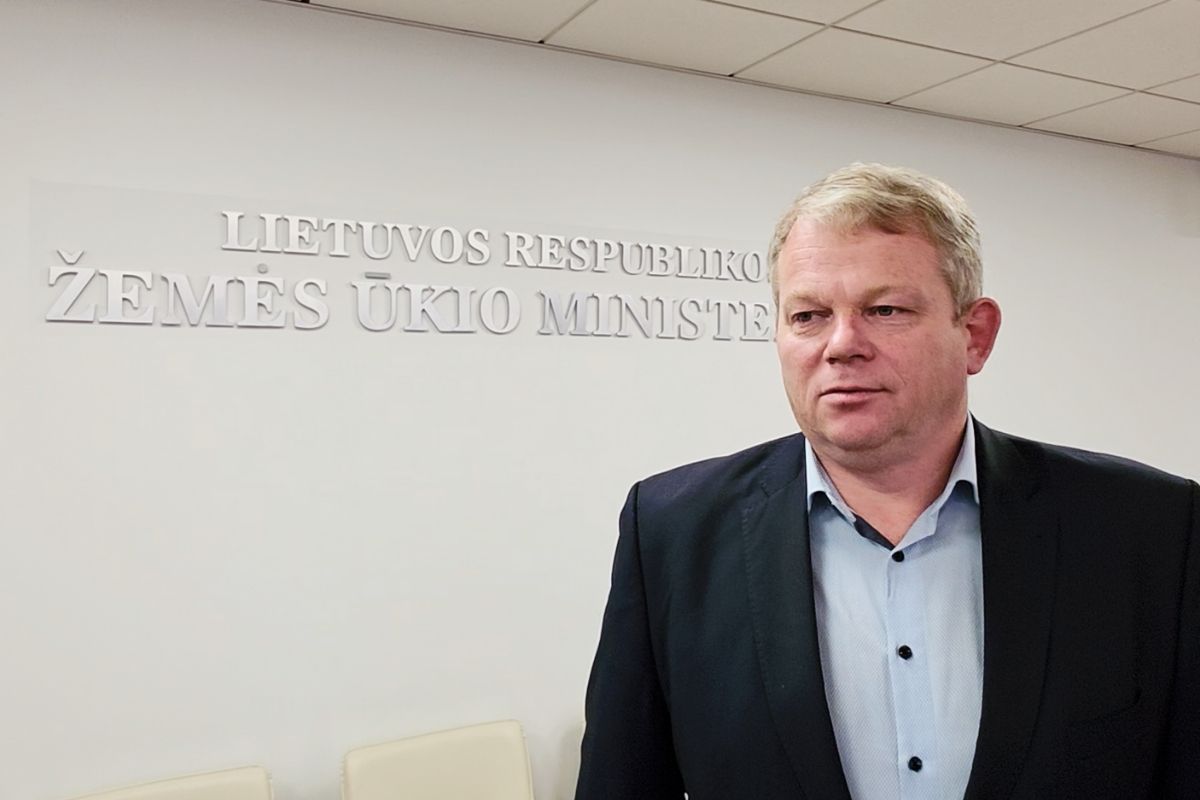
„Lithuania has not yet adopted a final position on the EU-Mercosur agreement, but after consultations with other institutions, business associations and organisations, it is in principle in favour of the European Commission's proposal to sign the agreement between the EU and Mercosur," a message from the Ministry of Foreign Affairs (MFA) reached Agrobite.lt. The Ministry of Agriculture did not oppose the agreement. How do the members of the Seimas view this information? Is it afternoon and Lithuania's agriculture is doomed?
Not only Lithuania, but also its neighbours
Bronis Ropė, chairman of the Seimas Committee on Rural Affairs, confirmed that the EU-Mercosur agreement discussed in the committee was not approved. Similarly, another document, which, according to the MEP, attempted to identify the agricultural safeguards that would be applied, was not approved. "It is foreseen that the European Commission will intervene if prices rise by more than 10% or turnover decreases by more than 10%," Ropė said, explaining what is stated in the document.
„However, in our committee it was decided that this is not sufficient protection for our agriculture. Therefore, we did not support this document either. At the moment this document is at the disposal of the European Committee on Rural Affairs and how the committee will act, I can't say," continued the MEP, adding that the MERCOSUR agreement is opposed not only by Lithuania but also by neighbouring countries, so it is difficult to say what the final decision will be, according to Mr Ropė.Kęstutis Mažeika – experts are not being listened to, political decisions are being made
„It seems that the Ministry of Foreign Affairs is forming a position that has completely disregarded what the Committee on Rural Affairs proposed“, – Kęstutis Mažeika did not hide his disappointment. He said that the Committee on Rural Affairs had really paid a lot of attention to this issue – it analysed the proposals of the agricultural sector, the fears, and looked at the safeguards that had been put forward.
„The impression is that in the end we will all participate in the free market on equal terms – GMOs, pesticides are not taken into account. We can see that this is a threat to our farmers and that only the processors will benefit. Well, maybe the cheese producers, the exporters, will benefit a little. But basically, the first – link between the farmers and the producers – it will be a huge blow to them. The competition will increase significantly and it will be impossible to produce equivalent products at the same price," said K. Mažeika, who shared his insights on the threats of Mercosur to Lithuanian agriculture and added: "We have assessed this, we have made recommendations and it is really a shame that experts in the field are not being listened to and political decisions are being taken. So why was there a need for this debate in the first place?!Kazys Starkevičius – the farming sector is not united
„I was cautious about the agreement and suggested that this issue should be discussed with various associations, i.e. agricultural associations and NGOs, and that a consensus should be sought“, – noted MEP Starkevičius, adding that not all farmers' associations were in favour of MERCOSUR.
„Dairy farmers are in favour, but meat producers are not. Therefore, a common solution should be sought, as the agricultural sector is not yet united," said Mr Starkevičius. If the divisions persist, he said, the Mercosur agreement would probably be the way forward.
Viktoras Pranckietis – Seimas should ratify every EU treaty
„We debated this position in the Committee on Rural Affairs about a year ago and made it clear that we did not agree and this opinion was passed on to the European Committee on Rural Affairs, which promised to provide further details and clarifications, but they were not forthcoming. And now the MFA seems to be taking its own decisions without the Seimas," revealed the attitude of the MEP Pranckietis, who added: "We, for our part, could probably invite them to our committee to explain the situation and why the unambiguous opinion is being expressed, but this would require an initiative from the chairman of the committee.
The MEP makes no secret of the fact that the EU-MERCOSUR agreement is a major and, unfortunately, another blow to Lithuania's agricultural sector from its European partners. Mr Pranckietis also pointed out that the agreement initially had more critics across the old continent. However, he said, there was pressure from individual countries to accept the agreement.
If the EU-MERCOSUR treaty is finally formally approved, will it still have to be ratified by Parliament? "Probably all EU treaties have to be ratified by the Seimas," said Mr Pranckietis, who did not rule out the small possibility that Parliament might not approve the treaty after all. 
Similar articles



Video