





































Lithuania has tacitly accepted the EU agreement with Mercosur
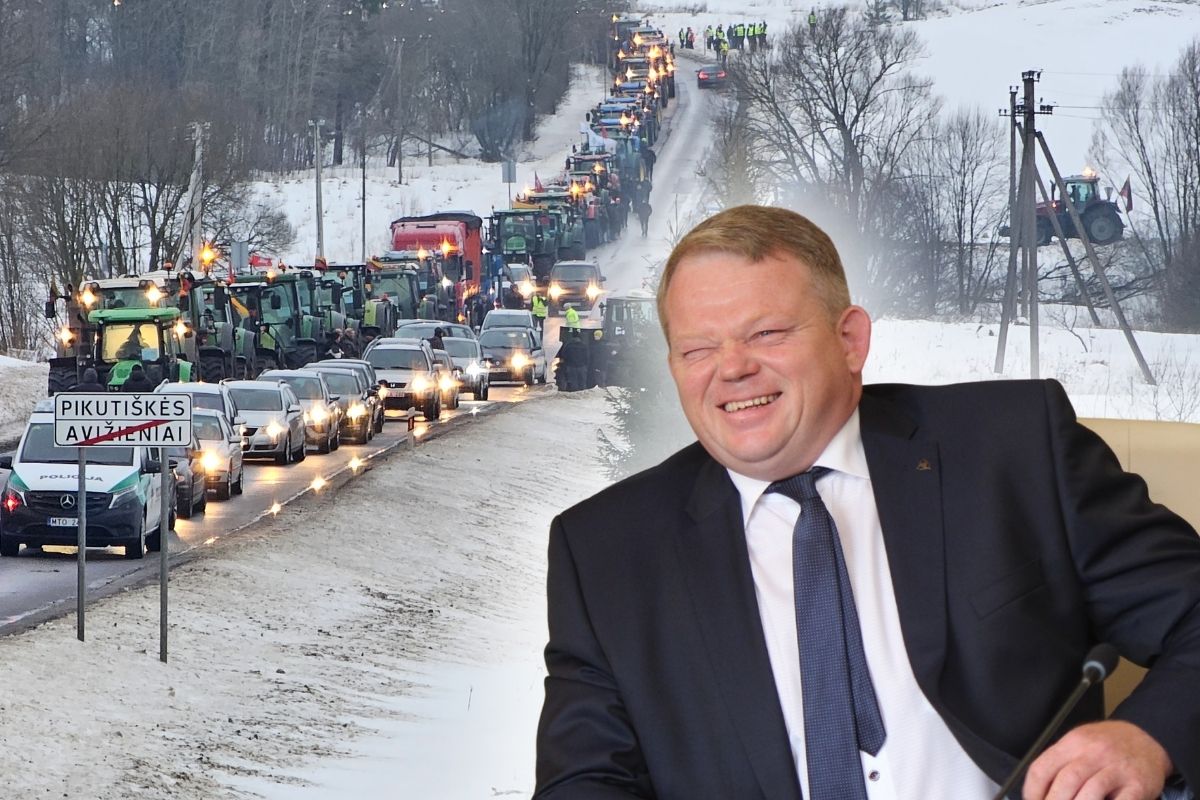
Although until recently the Ministry of Agriculture (MAA), headed by Andrius Palionis, did not express an unequivocal position on the European Union's free trade agreement with Mercosur, it is clear that our country has already agreed to this agreement in principle. This was confirmed to Agrobitei“ by the Ministry of Foreign Affairs.
Accepted in principle
„Lithuania has not yet adopted a final position on the EU-Mercosur agreement, but after consultations with other institutions, business associations and organisations, it is in principle in favour of the European Commission's proposal to sign the agreement between the EU and Mercosur“, the Foreign Ministry's Department of Communication and Cultural Diplomacy said in a reply to a question about Lithuania's position on the EU-Mercosur deal, which was sent to „Agrobitei“ on Wednesday.
On 18 December, the European Parliament and the European Council agreed on the agreement. On 18/18 in Brussels, an EU-wide farmers' protest is to take place, with around 10,000 farmers expected to take part.„Lithuania's positions on the agreement with MERCOSUR and the additional safeguard mechanism were coordinated between the state institutions in the Lithuanian EU Membership Information System (LINESIS), discussed in the Government's EU Affairs Commission and in the Seimas' European, Foreign and Rural Affairs Committees, – the MFA covered the progress of the approval.
The European Commission plans to sign the agreement on behalf of the EU in December 2025, but the exact date is still under review.
MFA approves agreement with Mercosur
On Tuesday, „Agrobite“ reported on the rather vague position of the MAFF on the EU-Mercosur agreement.
„The MAFF has consistently supported open, rules-based international trade, but has consistently stressed that agricultural and food imports from third countries must meet the same quality, food safety, animal welfare and environmental requirements as EU producers. Only uniform standards can ensure fair competition (...)“ – said the MAFF in a reply to „Agrobitei“.
However, after the MFA's reply, it is clear that the Ministry of Agriculture is in favour of Lithuania's acceptance of this agreement, which is not beneficial for agriculture.„The MAFF participated in the coordination of the position with the Ministry of Foreign Affairs through the EU information system (LINESIS) and confirmed the position within the scope of its competence, and participated in the above-mentioned meetings with the social partners and other institutions in the course of the coordination procedure,“,– according to the Ministry of Foreign Affairs.
Market will not survive on cheap raw materials
EU farmers are not coincidentally opposed to the agreement with the South American bloc Mercosur (Argentina, Brazil, Paraguay and Uruguay) because it would flood Europe with cheap grain and meat.
It is estimated that this agreement will bankrupt tens of thousands, if not hundreds of thousands, of EU farmers, who will not be able to compete at cost with farmers in the Mercosur bloc.
This agreement is one of the reasons why on 18 December the European Commission will launch a new EU trade agreement. Copa-Cogeca, the most influential farmers' organisation, is organising a major protest in Brussels on 18 December.
„Around 40 farmers' organisations from across Europe have already confirmed their participation. We hope that 10,000 farmers will send a strong and united message to the EC. We can no longer be satisfied with rhetoric," says Copa-Cogeca.
European farmers are demanding that any agreement with Mercosur must be accompanied by safeguards: quota systems for sensitive products, strict import standards in line with EU requirements and transition periods.
What will the agreement mean for Lithuanian agriculture?
The EU–MERCOSUR agreement could have a significant impact on Lithuanian agriculture, as more cheaper agricultural products from South America would enter the EU market.
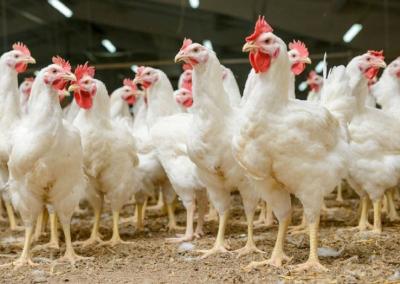
Because of lower production costs and lighter environmental and animal welfare requirements, MERCOSUR countries can offer lower prices, which would put competitive pressure on Lithuanian farmers. The most vulnerable sectors would be beef, poultry and cereals, which traditionally have higher costs in the EU.
As Lithuania's exports to MERCOSUR markets are very small, the agreement would have little direct benefit for agriculture. The only exception could be processed dairy products, but there is no guarantee.
In turn, an increase in imports on the Lithuanian market could further depress farm gate prices for cereals and meat, thereby further straining the financial situation of farms. The EU-Mercosur agreement could have long-term negative consequences for Lithuania's food production and regional economic stability.

Similar articles




Video