


















A slap in the face for farmers: a contract with MERCOSUR without their consent
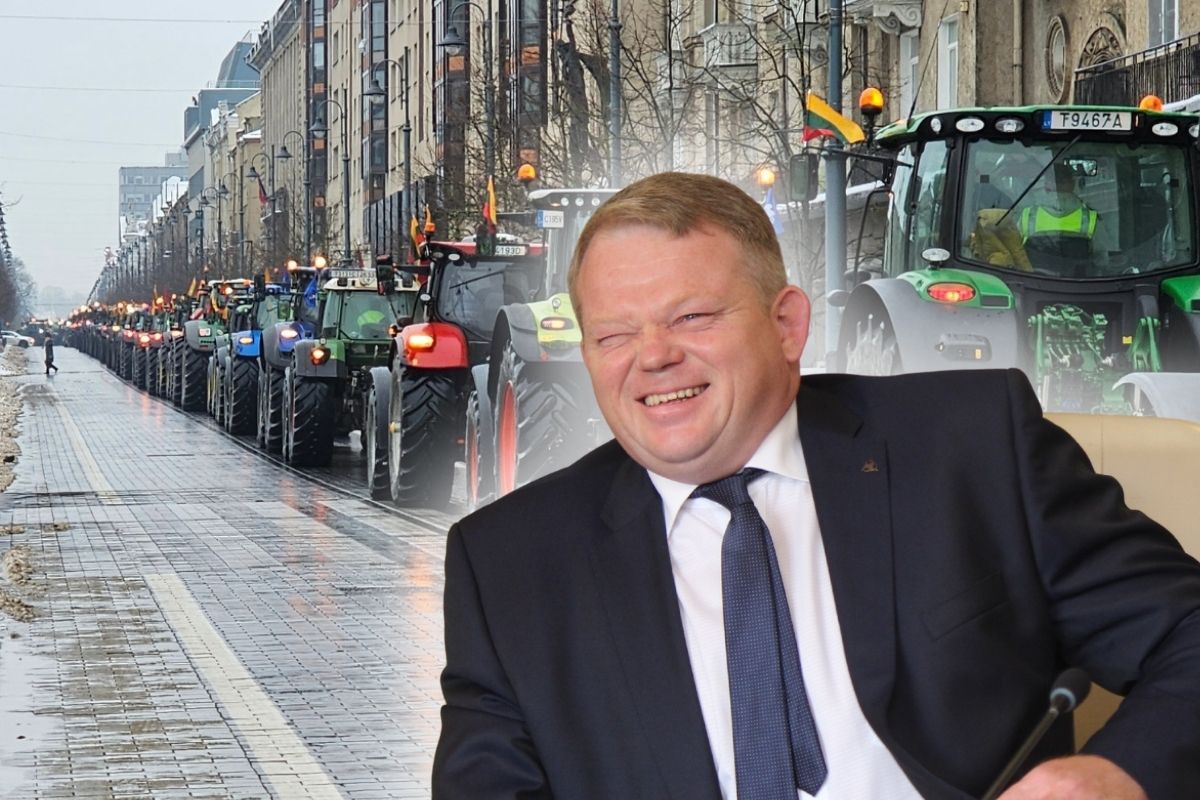
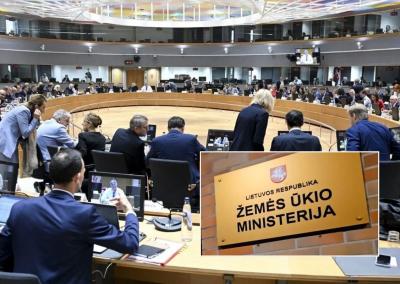
While the Ministry of Agriculture (MAA) claims to have consulted the social partners when formulating its position on the EU-Mercosur Free Trade Agreement and its approval, the leaders of farmers' organisations themselves say the opposite – there was no approval for the agreement, and their concerns went unheard. Moreover, none of the interlocutors interviewed has seen the final form that the MAFF claims to have sent to the European Affairs Committee...
Agriculture sector (un)heard
„All agricultural organisations are fundamentally opposed to the Mercosur agreement“, – says the President of the Chamber of Agriculture (CAA), Arūnas Svitojus, firmly, and was echoed by all the interlocutors without exception – – Eimantas Pranauskas, President of the Association of Lithuanian Agricultural Companies (LŽŪBA), Raimundas Juknevičius, President of the Lithuanian Farmers' Union (LŪS), Audrius Vanagas, President of the Lithuanian Grain Growers' Association (LGAA), and Jonas Vilionis, President of the Lithuanian Agricultural Council (LŽŪT).
The only exception is „Pienas.lt“, which, according to Raimas Juknevičius and Jonas Vilionis, would see opportunities in the new market once the Mercosur agreement comes into force. Nevertheless, the LFA President confirmed that he had made one clear proposal to the Government – to oppose the EU-Mercosur Treaty and he is sure that Prime Minister Inga Ruginiene had heard this position.
„We are very surprised that now support seems to be coming from the agricultural sector. It is strange, because even from the Prime Minister we had heard that the agreement should not be supported at least. It seems that in this case, as in the case of accession to the EU, we have not done our calculations, we take what we get and that's it, and the impact on our country could be significant," Vilionis was echoed by Svitojus.
We recall that Argentina, Brazil, Paraguay and Uruguay are members of the MERCOSUR bloc.
A game of Big Aces
„This treaty is a game of big aces. It is first and foremost an attempt by the EU to find markets under pressure from China. It is said that the old continent is also under great pressure from the car industry – we know who the big manufacturers are. On the other hand, we know who the guarantors of our national security are. We can only speculate as to whether this is related. But I have little doubt that all these factors play a role in the decision-making process," Pranauskas went on to discuss why Lithuania suddenly changed its position on Mercosur.
„Politics is a combination of different interests. It is possible that the Ministry of Agriculture is under pressure from other government ministers who support the agreement seeing that most businesses outside the agricultural sector are also in favour of it seeing the potential to expand markets.",– R. Juknevičius, the chairman of the Lithuanian Agriculture Union, also made his own speculation.
A. Svitojus also discussed the possibility of political pressure. „It seems that there is a certain political pressure to please somebody, but the people and their needs are not being taken into account. If a document is going out, it should at least be coordinated with the representatives of the sector. This is not the first time this has happened. It is not positive," he said, "and this is not a disappointment.
Compensation protection – a bluff?
„Protection, compensation measures are a bluff“, – said Mr Vilionis bluntly. Mr Juknevičius also expressed strong doubts that the compensatory safeguards presented by the EU would work.
„So the main focus for politicians on our side would be to regulate the market and compensate if it fails to regulate itself. The conditions are clear, the money is allocated. But we are clearly aware that there is not enough money for everything, so to expect a compensation mechanism to be able to compensate for real losses is hard to believe. All the more so with a specific amount of €6 billion allocated to all EU Member States for a period of 6 years – the math is clear“, – noted the President of the LŪS.
However, the compensation in case of market imbalances is the last straw for farmers if the EU finally approves the entry into force of the Mercosur agreement.„If this agreement has negative consequences, everything must be properly compensated. Moreover, everything must be spelled out in black and white so that there are no misunderstandings later on," Vanagas noted.
A protest in Brussels – farmers' last trump card?
All the leaders of the associations interviewed, without exception, confirmed that their deputies or members, if not themselves, will be going to the general EU farmers' protest in Brussels on 18 December. However, the EU-Mercosur treaty will be only one of several issues raised by farmers in the Old Continent at the protest.
„The protest in Brussels will be primarily against the abolition of the Common Agricultural Policy. Why against it? Basically, the Common Agricultural Policy funds are being cut off – there are no more funds because there is no funding for them. And these funds are provided for in the Treaty on the Functioning of the EU. What is a policy without funding? Probably no one," Pranauskas noted.
„This protest – throwing away the last trumps in negotiations with politicians. Will this change the situation? It is impossible to answer. But it shows the determination of European farmers to fight to the end, but whether this can guarantee a result – I really don't know“, – shared his thoughts on the protest with R. Juknevičius.
Why wasn't there a protest in Lithuania?„There may not have been a bigger protest, but that doesn't mean that the topic was not discussed with politicians. After a few successful protests, there is a misconception that this is the only way to shape agricultural policy. However, the protest is the last decisive trump card – after that, there is no other way to influence politicians and the public. Apart from law-breaking acts of defiance... But is this the way to go“, – the situation why Lithuanian farmers in our country have not spoken out more strongly on the EU-Mercosur was highlighted by the LŪS President. The chairman of the LGAA also hoped to agree, talk and negotiate in a civilised manner.
A. Svitojus noted that there was nothing to protest about as it was clearly agreed with the Government not to support the EU-Mercosur agreement. The decision to support Mercosur was ultimately a joke," concluded the MAA President.

Similar articles




Video